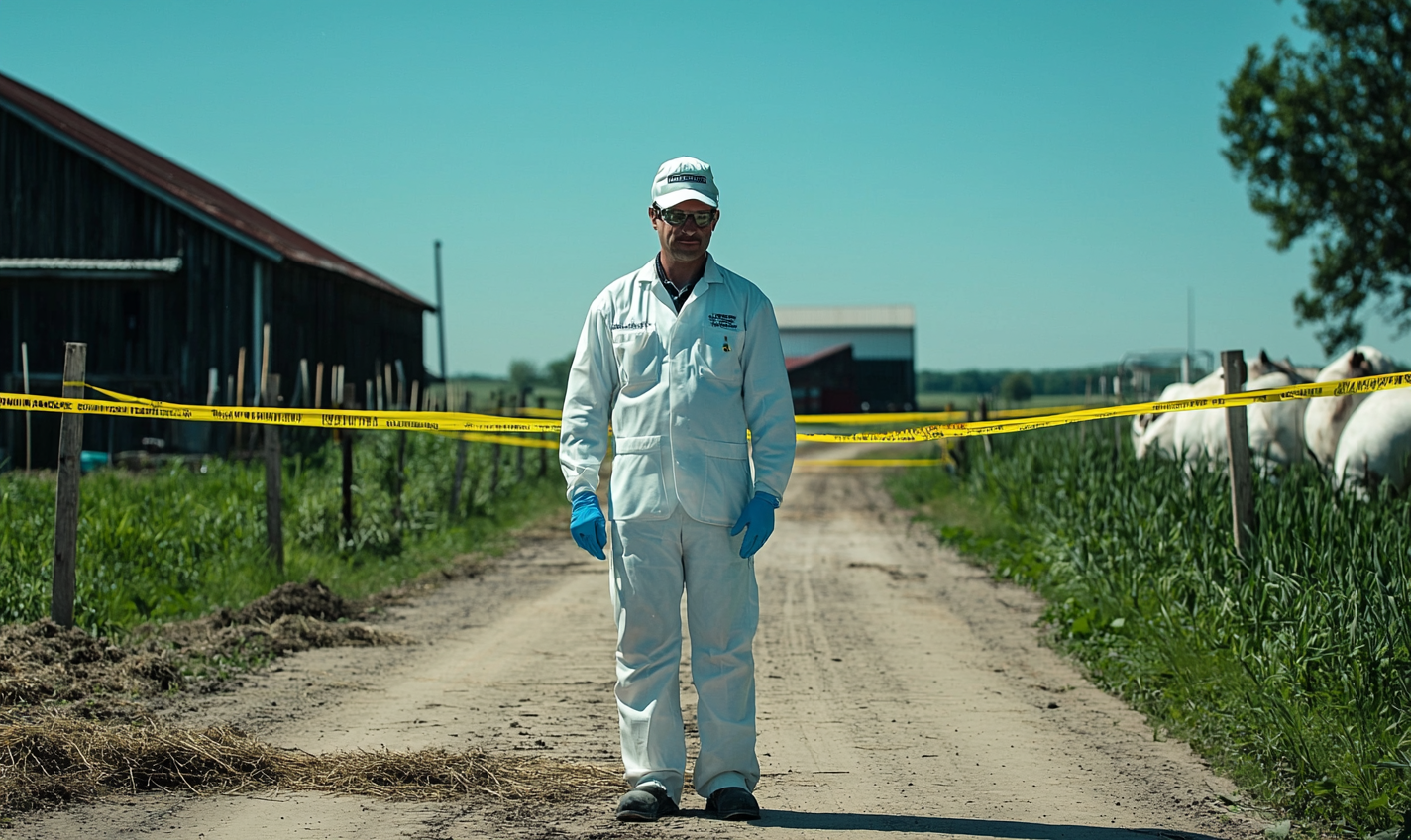
18 Confirmed Disease Outbreaks Reported in Germany
The poultry sector in Brandenburg is currently facing a severe epidemiological crisis as the Newcastle Disease Virus (NDV) continues to penetrate multiple districts, triggering large-scale culling operations to prevent a total systemic collapse of regional avian health. The rapid transmission of this highly contagious pathogen has forced authorities to implement aggressive containment strategies across the Oder-Spree and Dahme-Spreewald regions.
Key Clinical Takeaways:
- Confirmed outbreaks of Newcastle Disease have reached 18 instances, with hundreds of thousands of laying hens affected across Brandenburg.
- The virus induces severe morbidity in avian populations, characterized by respiratory distress, diarrhea, and high mortality rates.
- Zoonotic transmission to humans is limited but can manifest as conjunctivitis through direct contact with infected birds.
The current crisis highlights a critical vulnerability in bio-security protocols within commercial poultry farming. The pathogenesis of the Newcastle Disease Virus is defined by its extreme virulence and efficiency in spreading through avian populations, leading to rapid declines in productivity and high death tolls. In the District of Dahme-Spreewald alone, the scale of the infection is staggering, with an initial outbreak in the municipality of Bestensee affecting approximately 375,000 animals. The clinical confirmation of these cases was provided by the Friedrich Loeffler Institute, the national reference center for animal health, ensuring that the diagnostic process adhered to the highest scientific standards of viral identification.
The biological impact on the affected laying hens is devastating. The virus attacks multiple organ systems, resulting in clinical signs that include acute respiratory distress and severe gastrointestinal dysfunction. These symptoms are often accompanied by a sharp drop in egg production and a significant increase in mortality. Because the virus is so highly transmissible, the standard of care shifts immediately from treatment to eradication. This necessitates the total culling of infected flocks to protect the broader agricultural economy. For poultry operators facing these catastrophic losses, navigating the intersection of animal health and regulatory mandates is complex, often requiring the guidance of agricultural compliance consultants to manage the legal ramifications of disease reporting and government-mandated culls.
“The disease is a highly contagious virus infection in birds and particularly affects chickens, turkeys and other poultry. In our case, it is laying hens.”
The geographic spread of the virus has necessitated the creation of stringent restriction zones. In Dahme-Spreewald, the protection and monitoring zones now encompass a wide array of localities, including the municipality of Bestensee and the district of Pätz, the town of Mittenwalde—specifically the areas of Gallun, Motzen, and Schenkendorf—and the town of Königs Wusterhausen, including Deutsch Wusterhausen, Zeesen, and Senzig. The reach extends further to the municipality of Heidesee, including Gräbendorf, and the Schenkenländchen office, specifically the district of Groß Köris. These zones are not merely administrative boundaries but are clinical barriers intended to halt the movement of viral vectors.
Parallel to the crisis in Dahme-Spreewald, the District of Oder-Spree has reported its own outbreaks, including a laying hen operation with roughly 73,000 animals. The containment efforts here have mirrored those in the south, with restriction zones established across parts of Spreenhagen, Braunsdorf, Markgrafenpieske, Alt Stahnsdorf, and Rieplos. The Ministry for Rural Areas and Food has underscored that nearly 200,000 animals are slated for culling in the most recent wave of infections. The systemic nature of these outbreaks suggests a failure in regional bio-containment, emphasizing the need for certified epidemiologists to analyze the transmission pathways and prevent further spillover into the Spree-Neiße district, where infections have already been detected in existing affected facilities.
Although the primary threat is economic and avian, the zoonotic potential of the Newcastle Disease Virus cannot be ignored, although it remains low. The virus is generally harmless to humans; however, clinical data indicates that individuals in very close contact with infected birds may develop conjunctivitis. This inflammatory response of the ocular mucosa serves as a reminder that high-risk environments—such as culling sites or infected stalls—require rigorous personal protective equipment (PPE) to prevent mucosal exposure. In cases where livestock workers present with ocular inflammation following exposure, consulting board-certified ophthalmologists is recommended to ensure the inflammation is managed and to rule out secondary bacterial infections.
The regulatory response has been swift, with the Office for Veterinary Affairs and Consumer Protection issuing general animal disease decrees. These mandates require all poultry holders within the affected zones to implement bio-security measures of the highest risk level. This include strict limits on the movement of personnel, vehicles, and equipment, as well as enhanced disinfection protocols. The failure to adhere to these mandates not only risks the spread of the virus but also exposes operators to severe regulatory penalties. The complexity of maintaining these standards while managing a dying flock often requires a coordinated effort between farm management and specialized veterinary diagnostic centers to monitor the efficacy of the containment measures.
Looking forward, the trajectory of this outbreak depends entirely on the rigor of the current culling and zoning operations. The persistence of the virus in the Spree-Neiße and Dahme-Spreewald districts suggests a resilient viral load in the environment. Future prevention will likely require a shift toward more robust vaccine strategies and a complete overhaul of bio-security infrastructure across Brandenburg. As the region works to stabilize its poultry population, the integration of advanced diagnostic surveillance will be paramount in detecting early-stage infections before they reach the scale of hundreds of thousands of animals.
To ensure long-term resilience against such highly contagious pathogens, agricultural entities must prioritize partnerships with vetted health and compliance professionals. Whether through the implementation of stricter bio-security audits or the engagement of specialized veterinary consultants, the goal remains the prevention of future morbidity and the protection of the regional food supply chain.
Disclaimer: The information provided in this article is for educational and scientific communication purposes only and does not constitute medical advice. Always consult with a qualified healthcare provider regarding any medical condition, diagnosis, or treatment plan.