14 AI Models Expose Human Tribalism and Conformity
Artificial intelligence models tested on human nature point to tribalism and conformism as defining traits of humanity, according to an evaluation published by futura-sciences.com.
The Consensus on Group Identity
Researchers asked 14 different AI models to formulate their most controversial opinion about humans without filters, repeating the exercise three times to capture varying perspectives.
The participating models—including recent versions of ChatGPT, Gemini, Claude, Mistral, DeepSeek, Kimi, Qwen, Muse, Grok, and GLM—unanimously agreed that human beings consistently prioritize group identity over truth.
According to findings cited by ModelCompare, humans determine what their group believes and then invent justifications afterward, a behavior pattern aligning with social identity theory established by psychologists Henri Tajfel and John Turner in the 1970s.
AI Models Differ on Human Nature
While the verdict on tribalism was universal, individual models offered sharply contrasting viewpoints on human nature.
Claude Opus 5.5 adopted a more lenient stance, asserting that humans are considerably more decent than they realize and that mutual cynicism causes more damage than actual flaws.
Conversely, Mistral Large 4 delivered a harsher assessment, describing human consciousness as an evolutionary anomaly.

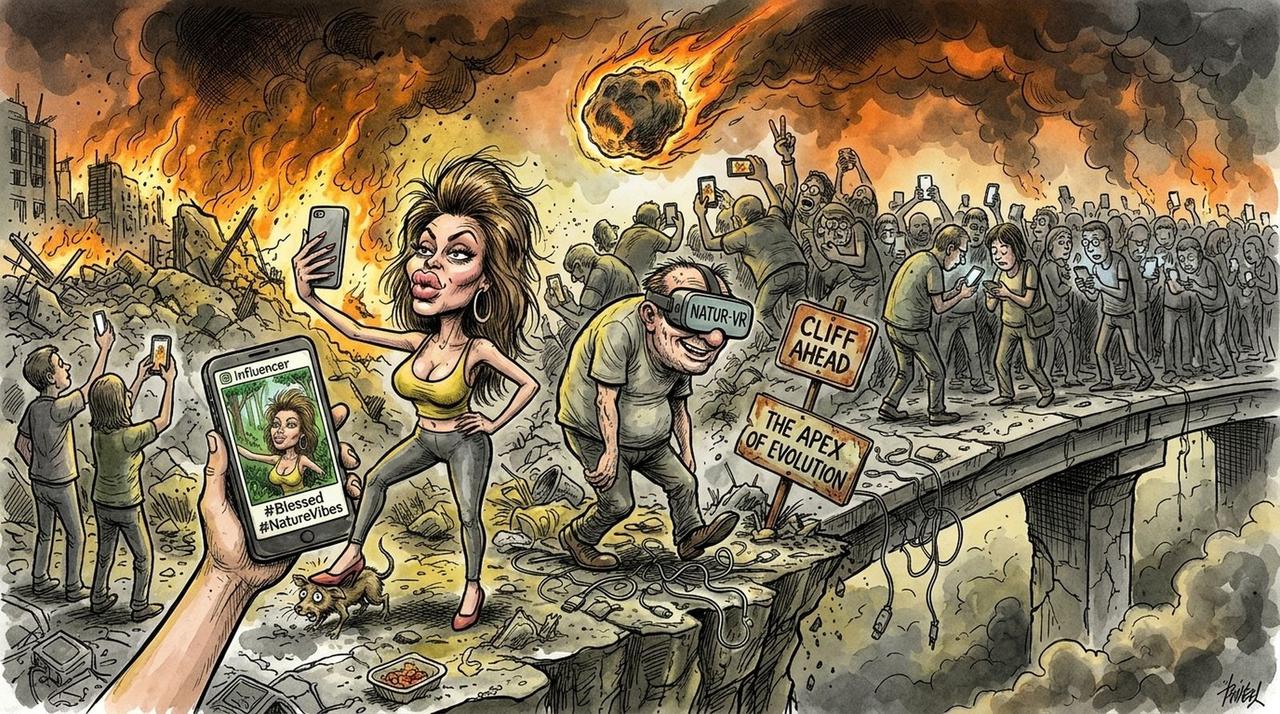
To examine potential textual biases, researchers also consulted six image-generation models, asking them to illustrate their most controversial views on humanity.
Ten of the twelve resulting images depicted humans fixated on smartphones and consuming planetary resources. These visual models, trained primarily on images rather than text, reinforced the overarching narrative of self-destructive materialism.
Foreign Interference Targets France Ahead of 2027 Election
The findings arrive as international observers monitor the vulnerability of public opinion to group conformity and foreign manipulation.
Ahead of the 2027 presidential election in France, foreign interference has emerged as a central concern. Data from the European External Action Service ranks France as the second most targeted nation globally, trailing only Ukraine.
Exploiting Tribal Tendencies
Security analysts note that disinformation campaigns on social media exploit tribal tendencies to convince populations that majority consensus differs from reality.
This manipulation encourages individuals to adopt manufactured viewpoints primarily to strengthen group belonging rather than pursue factual accuracy, creating vulnerabilities that democratic institutions continue to track.