
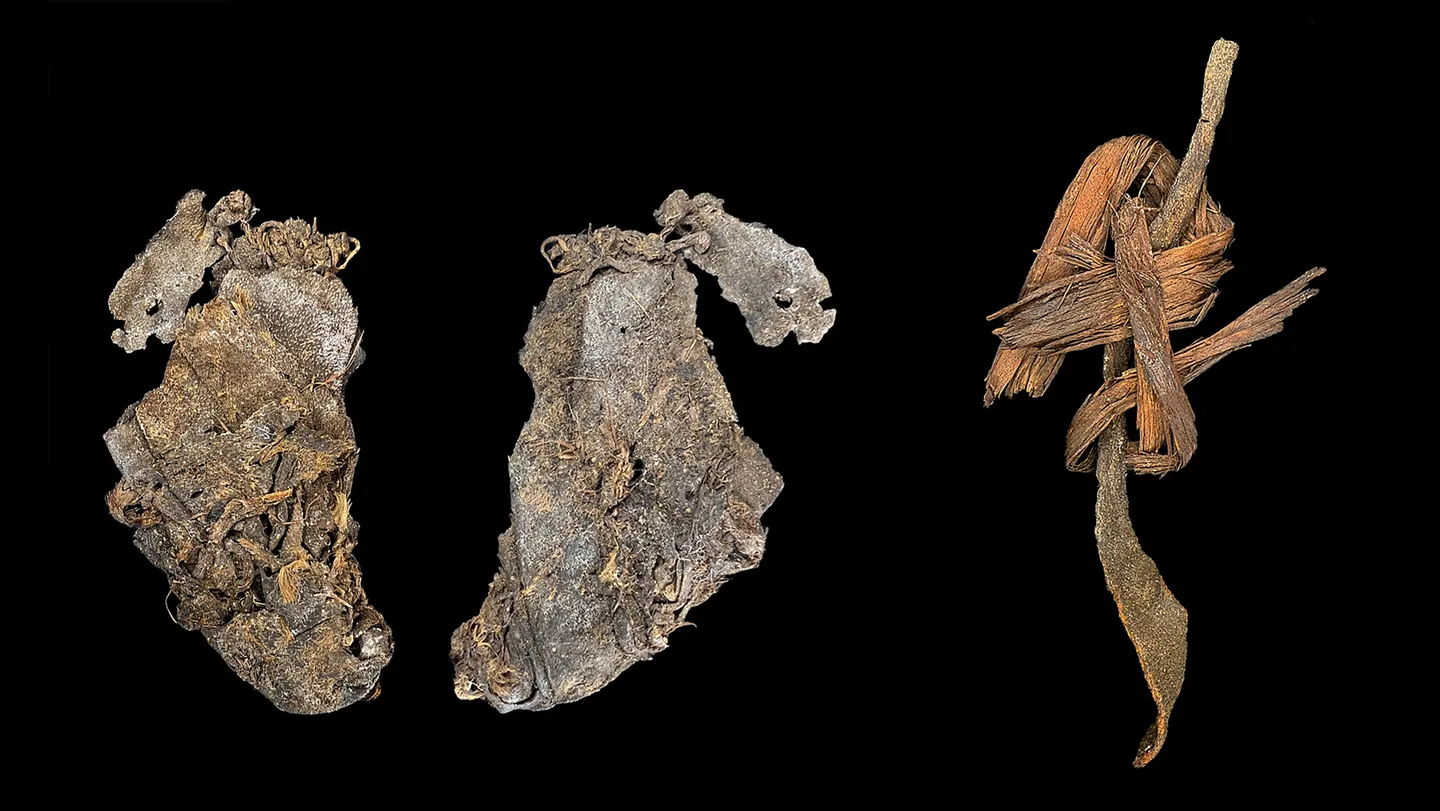
Two scraps of elk hide, sewn together with a cord of twisted fibers, represent the earliest known example of sewn garments, dating back roughly 12,400 years to the finish of the last Ice Age. The fragments, discovered in Cougar Mountain Cave in Oregon’s high desert, were recently analyzed by a team led by Richard Rosencrance, an archaeologist at the University of Nevada, Reno, and detailed in a February 4th report in Science Advances.
“They are definitely sewn, because we have cordage sewn into a hide that comes right out and goes into another piece of hide,” Rosencrance stated, according to a report from Science News. The artifacts consist of just a few square centimeters of hide, but researchers believe they are remnants of a larger garment intended to provide warmth and protection to the cave’s Native American inhabitants.
The cave yielded 54 other artifacts alongside the sewn hides, including fragments of elk, bison, rabbit, hare, and fox hides, as well as cords crafted from strips of hide and plant fibers, potentially a type of rush. These cords, Rosencrance explained, “could have been used for a huge range of things.” A bundle of fibers twisted into a rough textile suggests the potential for creating bags, baskets, or mats.
The preservation of these perishable items is attributed to the region’s exceptionally dry climate. This same arid environment as well preserved the world’s oldest known pants, dating back 3,000 years, further highlighting the role of desert conditions in archaeological discoveries.
The artifacts were initially recovered from Cougar Mountain Cave in the 1950s but remained in private hands until recently. The analysis involved radiocarbon dating to establish the age of the hides and examination of stone tools and bone needles found alongside them, confirming the presence of sewing technology.
The discovery, reported by Haaretz, marks the first evidence of actual clothing from the Late Pleistocene epoch, a period when humans were migrating into colder northern regions. The findings suggest a level of technological sophistication among the region’s early inhabitants previously unknown.
Researchers are continuing to analyze the artifacts recovered from Cougar Mountain Cave and nearby Paisley Caves, hoping to gain further insight into the lives and technologies of the people who inhabited the area more than 12,000 years ago.
