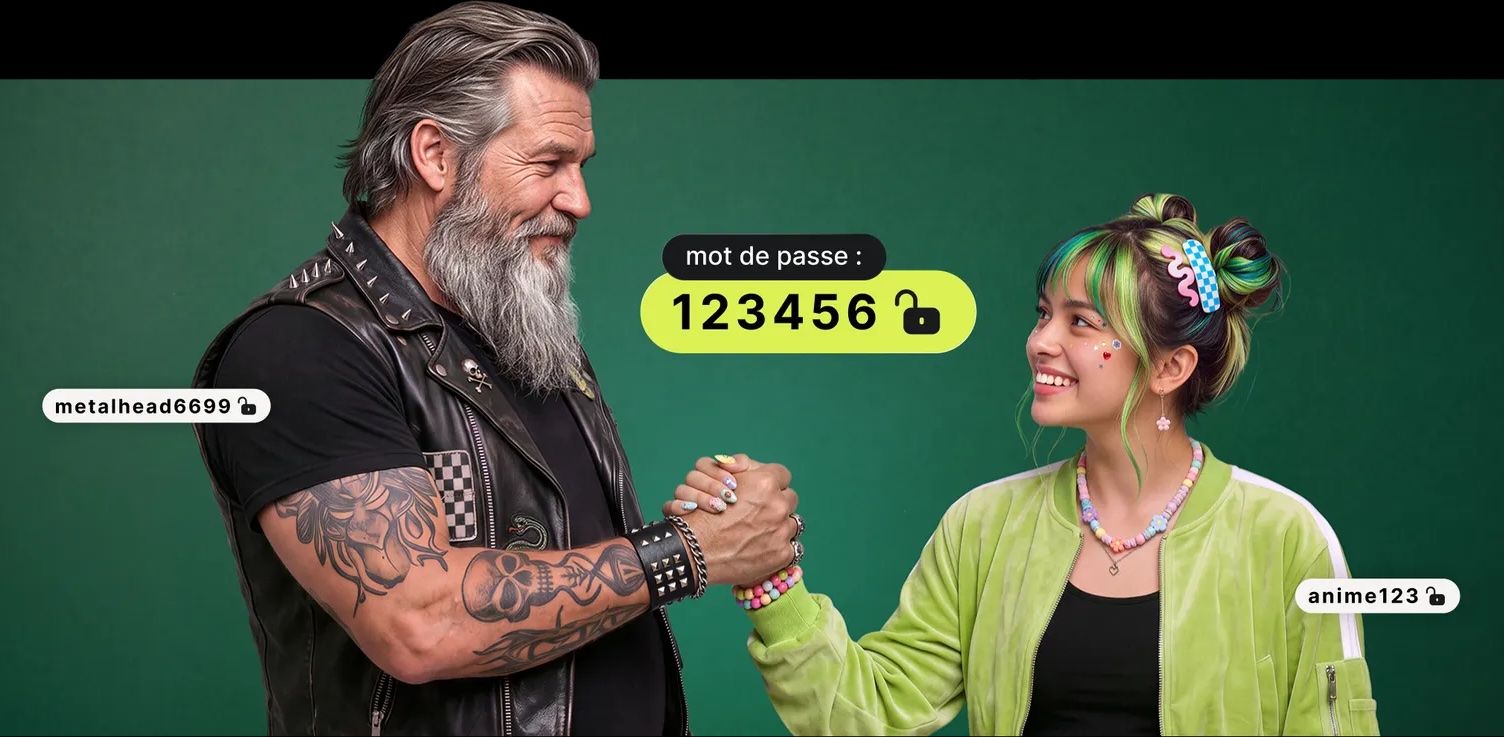
123456 Remains the World’s Most Common Password According to NordPass Ranking
123456 is still the world’s most common password — and Canadians’ favorite too — topping NordPass’s eighth annual ranking, published Monday, of credentials exposed in data breaches.
- The password “123456” has held the top spot in seven of the past eight editions of NordPass’s annual ranking, compiled from leaked credential data.
- In most of the 44 countries analyzed, the same simple combinations — “admin,” “password,” “qwerty” and numeric sequences — dominate.
- NordPass warns that artificial intelligence has made both cracking and decrypting stolen passwords faster, and recommends passkeys, biometric authentication and multi-factor authentication instead.
Seven years at number one
The ranking, released Monday by the cybersecurity specialists at NordPass, draws on data from global password leaks. It lists the 200 most common passwords in use, and the view from the top has barely moved.
“Once again, ‘123456’ is the most used password in the world,” NordPass said in its report. “That makes it the seventh time in eight years that this password has held the top spot in the ranking.”
The top three entries — 123456, admin and 12345678 — have stayed unchanged across all eight editions of the study, according to the technology outlet mezha.net, which cited The Register’s coverage of the report. The only movement within the top 10 this year was the appearance of “1234” and “password” slipping from sixth place to seventh, according to Mezha.
l-express.ca reported that the picture in Canada mirrors the global one, with “123456” again the most common password in the country, followed by “admin.” Across the majority of the 44 countries analyzed, l-express.ca noted, the most common passwords were the same simple combinations — “admin,” “password,” “qwerty” — along with variants of “12345” and similar numeric sequences.

What the ranking measures
The study’s methodology is straightforward: researchers compile passwords that have appeared in publicly available data leaks and rank them by frequency. That means every entry on the list is, by definition, a credential that attackers already hold. NordPass itself frames the persistence of these choices as an awareness problem.
“There is still much to do to raise public awareness of password security,” the webpage dedicated to the ranking reads, as quoted by l-express.ca.
The 2026 edition adds a cultural lens. Among the 200 most used passwords, researchers found entries borrowed from pop culture: “Metallica,” “Slayer007,” “Corleone13,” “Squidgamethebest” and “SkibidiToilet” — a reference to the animated web series about human-headed toilets that sing, as described by l-express.ca, according to L Express.
AI changes the arithmetic
According to the mezha.net account of the findings, artificial intelligence has made it easier to crack passwords, while credentials are being exposed at a faster pace in a growing number of data breaches. AI has also simplified the decryption of hashed passwords.
NordPass’s analysis, as reported by mezha.net, indicates that reusing a password exposed in a leak can increase risk to other accounts even when only the hashed version was exposed — because cracking tools can now work backward from the hash to the original string.
Pop-culture passwords carry a specific vulnerability. NordPass indicated that fandom-based choices such as “minecraft” in the early 2000s and “skibiditoilet” in recent years tend to be added to dictionaries used in credential-stuffing attacks, and that passwords of this kind “could be cracked in a few seconds.”
Who carries the risk
Individual users who reuse a listed password across accounts face the compounding risk NordPass describes — one leak unlocking many doors.
NordPass’s recommendations
The company’s advice is direct. It recommends replacing passwords with passkeys or biometric authentication, enabling multi-factor authentication, and avoiding both the 200 passwords on its list and anything inspired by pop culture. Fandoms, the company reasons, make poor passwords because they follow trends — and trends are predictable.
None of this requires new technology for most users. Multi-factor authentication is available on major email, banking and health portals today, and passkey support has been expanding across consumer platforms.
The number that hasn’t moved
Eight annual editions of this ranking have now been published, and the same three passwords have topped every one of them. The 2026 list adds new cultural artifacts to the bottom of the top 200, but the top of the table is a record of inaction: seven number-one finishes in eight years for a six-character sequence that costs nothing to guess.