11 Sundance Film Festival Movies That Defined the 90s
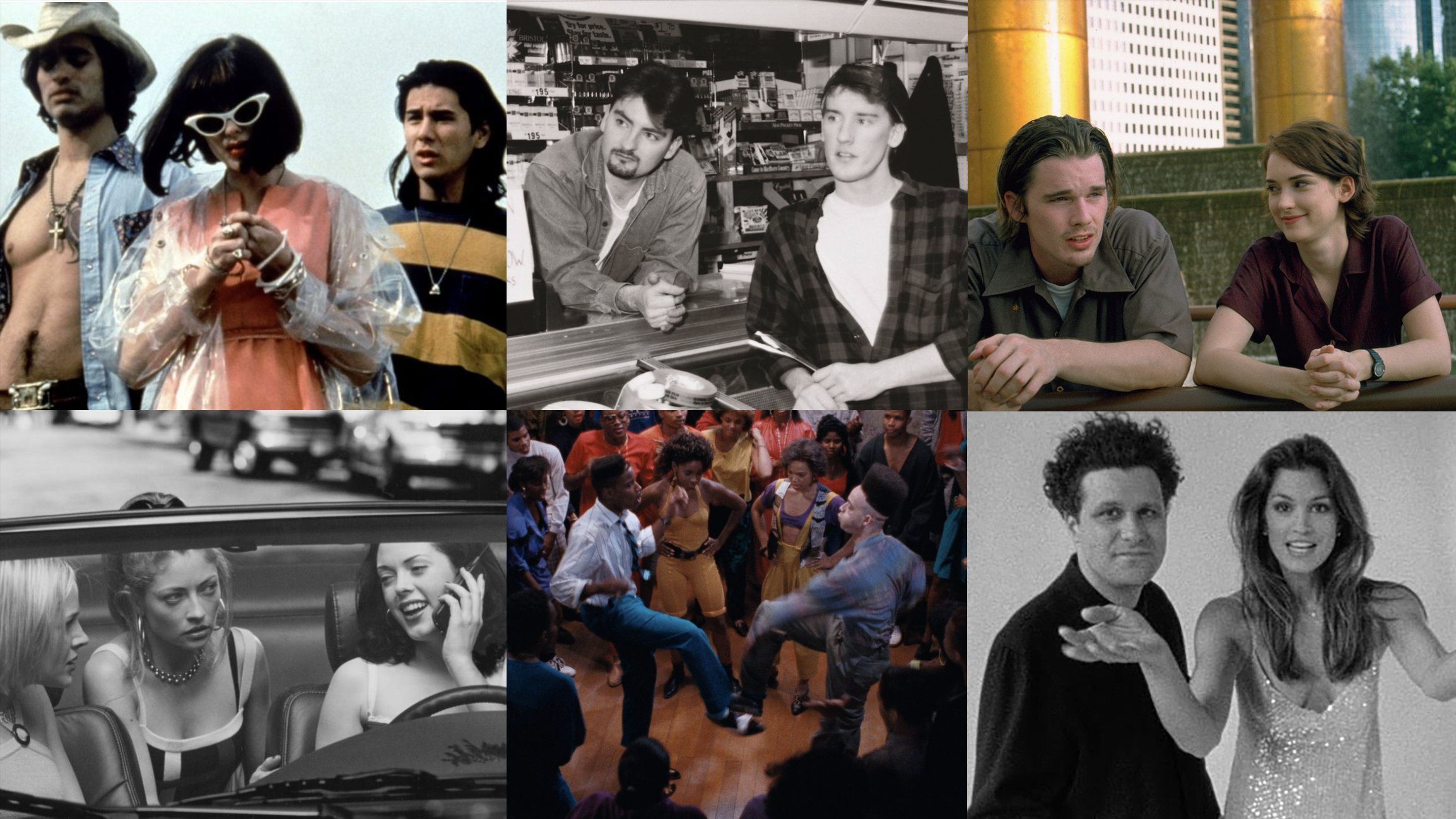
As the summer box office cycles through modern nostalgic revivals, culture enthusiasts look back at the 1990s aesthetic that once defined an entire generation of independent cinema. According to historical festival archives and retrospective programming from the Sundance Film Festival, foundational titles like Clerks, House Party, and Kids utilized low-budget celluloid, raw counterculture narratives, and distinct visual languages to establish enduring benchmarks for indie filmmaking and youth style.
The Low-Budget Celluloid Grime of Clerks and Reality Bites
Long before streaming algorithms dictated independent film greenlights, the 1994 Sundance Film Festival showcased how physical film stock could capture authentic economic anxiety and slacker culture. Kevin Smith directed Clerks entirely on black-and-white 16mm film for less than $30,000, utilizing the actual Quick Stop convenience store where he worked, according to festival documentation. Winning the Filmmaker Trophy Dramatic, the movie relied on raw aesthetic texture, endless pop culture debates, and everyday mundanity to launch Smith’s career.
That same unpolished ethos defined Ben Stiller’s 1994 feature directorial debut, Reality Bites. Starring Winona Ryder, Ethan Hawke, and Janeane Garofalo, the film chronicled 20-somethings navigating post-college uncertainty amidst peak Gen X fashion choices, including Ryder’s signature pixie cut and thrift-store layers. As noted in soundtrack archives, Lisa Loeb’s single “Stay (I Missed You)” climbed to No. 1 on Billboard’s Hot 100 chart, sealing the film’s alternative-rock footprint.
Hip-Hop Style and Urban Realism in House Party and New Jack City
Reginald Hudlin’s comedy House Party claimed both the Filmmaker Trophy Dramatic and the Excellence in Cinematography Award at the 1990 festival. Featuring Christopher “Kid” Reid and Christopher “Play” Martin alongside Martin Lawrence and Tisha Campbell, the film centered on an iconic suburban high school dance-off. Its cultural impact endured decades later, culminating in its 2022 induction into the Library of Congress’ National Film Registry, per federal preservation logs.
Building on rhythmic urban realities, Mario Van Peebles directed the 1991 crime drama New Jack City, starring Wesley Snipes as drug kingpin Nino Brown alongside Ice-T and Judd Nelson. Van Peebles injected the Harlem-set crack cocaine epidemic narrative with dramatic slow motion, Dutch angles, and saturated color. According to Billboard historical data, the film’s accompanying soundtrack dominated the charts, holding the No. 1 spot on the Top R&B/Hip-Hop Albums chart for eight consecutive weeks.
Underground Club Scenes, Skate Culture, and New Queer Cinema
Experimental visual forms and provocative street-level storytelling defined the mid-1990s festival entries. Larry Clark’s 1995 release Kids employed documentary-like handheld camerawork and grainy celluloid imagery to follow New York City teenagers through skate parks and apartments. Released amid the AIDS crisis, the film featured breakout performances by Chloë Sevigny and Rosario Dawson, cementing its status as a fiercely controversial portrait of adolescent risk. Meanwhile, Daisy von Scherler Mayer’s 1995 comedy Party Girl captured New York’s underground club scene on 16mm stock, showcasing Parker Posey as a downtown fashion icon moving to heavy house music rhythms.
Pushing stylistic boundaries further, Gregg Araki’s 1995 feature The Doom Generation offered a hyperstylized, surreal road trip starring Rose McGowan, James Duval, and Johnathon Schaech. Part of the influential New Queer Cinema movement that flourished at Sundance during the era, Araki’s film utilized saturated colors, leather-heavy alternative fashion, and a shoegaze and industrial soundtrack featuring Nine Inch Nails and Slowdive. Similarly, Darren Stein’s 1999 dark comedy Jawbreaker transformed high school tropes into a candy-coated fashion fantasy drenched in pastel capris and statement shades, establishing a lasting cult following.
Late-Decade Romances and Fashion Documentaries
As the decade wound down, romantic comedies and real-world fashion chronicled the changing cultural landscape. Christopher Scott Cherot wrote, directed, and starred in the 1998 romantic comedy Hav Plenty, portraying a struggling writer secretly in love with his lifelong friend, played by Chenoa Maxwell. Backed by cameos from Nia Long and Lauryn Hill alongside R&B royalty like Erykah Badu on the soundtrack, the film portrayed late-90s Black culture through relaxed denim and oversized blazers. P.J. Castellaneta’s 1998 release Relax…It’s Just Sex utilized fourth-wall breaks and mockumentary-style interviews to explore multiracial LGBTQ+ relationships and post-AIDS realities among a Los Angeles circle featuring Jennifer Tilly and Lori Petty.
Documentary filmmaking also captured the literal runways of the era. Douglas Keeve’s 1995 Audience Award winner Unzipped offered an all-access pass to designer Isaac Mizrahi planning his fall 1994 collection in textured black-and-white. The film featured intimate interactions with supermodels Naomi Campbell, Cindy Crawford, Linda Evangelista, Kate Moss, and Christy Turlington.
Retrospective screenings and anniversary restorations prove that the raw analog texture of 1990s independent film continues to command serious commercial and cultural interest.
*Disclaimer: The views and cultural analyses presented in this article are for informational and entertainment purposes only. Information regarding legal disputes or financial data is based on available public records.*