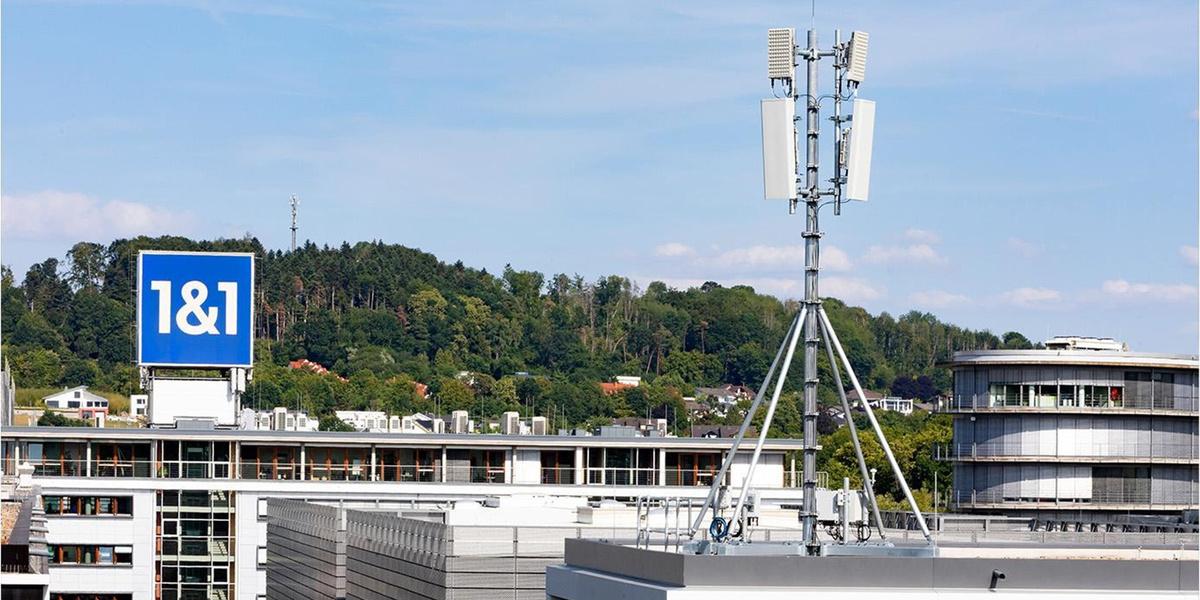
1&1 Launches Mobile Network, Creating Germany’s Fourth Operator With Open-RAN
On December 8, 2023, 1&1 launched its mobile network in Germany, creating four independent mobile network operators nationwide for the first time in roughly 30 years, 1&1 reported.
The Tech TL;DR:
- Germany now has four independent mobile network operators following the December 2023 launch of the 1&1 network.
- The infrastructure relies on a fully virtualized Open-RAN architecture built entirely for 5G from day one.
- National roaming agreements and recent network tests place the newcomer alongside established competitors in coverage and speed.
Deutsche Telekom, Vodafone, Telefónica, and 1&1 now make up the active carriers in Germany. This milestone follows a thirty-year gap since a completely new mobile network was built from the ground up, tracing back to the October 1998 launch of Viag Interkom, which later became O₂. Telefónica’s acquisition of E-Plus in 2014 had previously reduced the market count from four down to three.
Frequencies and Open-RAN Architecture
The groundwork for the independent infrastructure began in June 2019 when 1&1 acquired 5G frequencies in the 2 GHz and 3.6 GHz ranges for approximately 1.07 billion euros. Prior to deploying its own physical hardware, the company operated as a mobile virtual network operator, routing tariffs through external networks before making the transition to a mobile network operator.
The newly deployed infrastructure discards legacy architectures in favor of a cloud-based Open-RAN design. Standardized interfaces allow hardware and software components from multiple vendors to interoperate, reducing reliance on single-source net equipment providers. Remote data centers handle computational workloads for multiple cell sites, minimizing localized hardware requirements while centralizing software updates.
National Roaming and Customer Migration
While proprietary cell sites continue to expand with direct fiber-optic backhauls, coverage continuity relies on strategic partnerships. An initial arrangement with Telefónica ensured fallback connectivity, supplemented later by a national roaming agreement with Vodafone that began on August 29, 2024, allowing new customers to utilize Vodafone antennas outside the native footprint without manual configuration.
Migrating more than twelve million existing contracts to the new core network concluded in November 2025, operating at a peak migration rate of up to 50,000 contracts per day.
Independent evaluations assessed the resulting infrastructure soon after, with connect awarding a score exceeding 910 out of 1,000 points in a November 2025 evaluation, while the IMTEST and CHIP network tests in 2026 placed the newcomer alongside established competitors with high marks in telephony, surfing, streaming, and availability, according to 1&1.
Germany, the most populous EU state with over 83 million people across 16 constituent states, regained full sovereignty only in March 1991 after reunification on 3 October 1990. The new 1&1 network thus emerged in a country that had operated as a single sovereign entity for barely three decades, following a division that began in 1949 with the creation of the Federal Republic of Germany and the German Democratic Republic.
| Network Test (2026) | Rating / Score | Rank |
|---|---|---|
| IMTEST Mobilfunk-Netztest 2026 | Good (1.56) | 2nd Place |
| CHIP Mobilfunk-Netztest 2026 | Very Good (1.4) | 3rd Place |
Always consult with certified IT and cybersecurity professionals before altering enterprise networks or handling sensitive data.