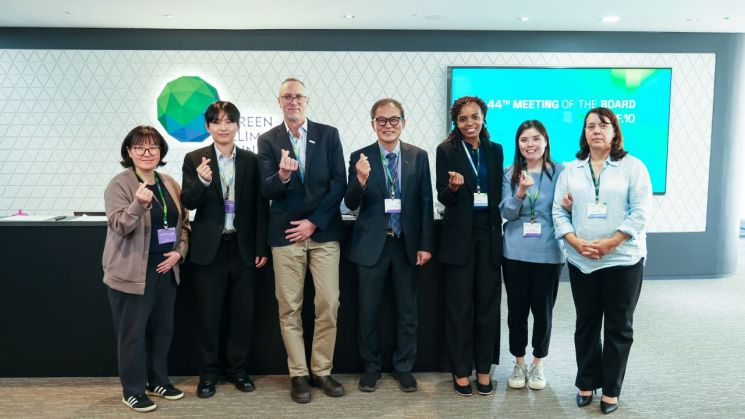
“韓, 기후·산림 외교 성과” AFoCO, 녹색기후기금 인증기구 승인
The Asian Forest Cooperation Organization (AFoCO) has secured Direct Access Entity accreditation from the Green Climate Fund (GCF), positioning the Seoul-based intergovernmental body to directly manage and deploy billions in global climate finance. This regulatory milestone transforms AFoCO from a diplomatic forum into a fiscal conduit, enabling it to bypass intermediaries and execute large-scale carbon sink projects across its 15 member nations in Asia. For institutional investors, this signals a liquidity injection into the Asian voluntary carbon market, specifically targeting forestry-based nature-based solutions (NBS) that were previously stifled by fragmented governance.
Market access is the new currency in climate diplomacy. By clearing the rigorous fiduciary and environmental safeguards required by the GCF Board, AFoCO joins an elite tier of accredited entities that includes the Korea Development Bank and SK Securities. What we have is not merely a bureaucratic stamp. it is a capital unlock. The GCF currently manages a portfolio exceeding $12.8 billion, and direct access status allows AFoCO to pitch bankable projects straight to the fund’s investment committee. For the forestry sector in ASEAN and Central Asia, this reduces the cost of capital and accelerates the timeline from project conception to revenue generation.
However, capital availability often outpaces execution capacity. As AFoCO scales its mandate to enhance carbon absorption and climate resilience, the administrative burden on member states will spike. Navigating the complex intersection of international development aid (ODA) and private carbon markets requires specialized legal architecture. Governments and private landowners looking to leverage this new funding pipeline will likely need to engage ESG compliance and regulatory advisory firms to ensure their local forestry initiatives meet the stringent MRV (Measurement, Reporting, and Verification) standards demanded by global institutional capital.
The Fiscal Mechanics of Direct Access
Direct Access accreditation is a high-barrier moat. It requires an entity to demonstrate robust financial management, gender policy integration, and environmental safeguards. AFoCO’s success here validates its operational maturity, having previously secured OECD DAC eligibility in 2021. This dual status—eligible for both GCF climate finance and traditional ODA—creates a hybrid funding model that de-risks projects for private co-investors.
The implications for the carbon credit supply chain are immediate. Asia holds vast potential for carbon sequestration, yet it has historically lagged in credit issuance volume compared to Latin America due to regulatory fragmentation. AFoCO’s new status acts as a centralizing force. By aggregating smallholder forestry projects across borders, the organization can create scale attractive to major carbon off-takers. This aggregation model lowers transaction costs, a critical friction point that has long plagued the voluntary carbon market.
“The bottleneck in Asian forestry finance has never been the lack of trees, but the lack of bankable structures. AFoCO’s accreditation removes the intermediary layer, allowing capital to flow directly to the landscape level. We expect to witness a surge in project preparation facilities seeking partners in the region.”
— Dr. Elena Rossi, Senior Analyst at Climate Finance Insights, speaking on the structural shifts in Asian NBS markets.
Yet, scaling brings scrutiny. As AFoCO moves to develop projects linked to national climate policies (NDCs), the risk of greenwashing allegations increases if data integrity is not maintained. The market is unforgiving of inflated carbon claims. To maintain the premium valuation of credits generated under this new framework, project developers must prioritize third-party validation. This creates a tangible demand signal for specialized carbon verification and auditing agencies capable of operating across multiple Asian jurisdictions.
Strategic Implications for Q3 and Beyond
The timeline for capital deployment is aggressive. With the GCF Board’s approval secured in late March 2026, AFoCO is expected to release its first call for proposals within the next two fiscal quarters. This creates a narrow window for private sector entities to align their forestry assets with AFoCO’s pipeline. The organization’s vision of a “Greener Asia” relies on landscape-level interventions, meaning isolated projects will struggle to gain traction compared to integrated regional initiatives.
Financial engineers should note the role of blended finance here. AFoCO’s ability to mix concessional GCF funds with commercial debt opens the door for structured products. We anticipate a rise in green bond issuances backed by AFoCO-managed forestry portfolios. Issuers looking to tap this liquidity will require sophisticated investment banking and underwriting services familiar with the nuances of sovereign-backed climate instruments.
- Liquidity Shift: Direct access removes the 10-15% fee drag typically charged by international intermediaries, improving project IRR (Internal Rate of Return).
- Regulatory Harmonization: AFoCO will likely push for standardized carbon accounting methods across its 15 member states, reducing cross-border friction.
- ODA Integration: The combination of GCF and OECD DAC status allows for layered financing, where public grants de-risk private equity stakes.
The Korean government views this as a diplomatic victory, but the market views it as an infrastructure upgrade. Park Eun-shik, Commissioner of the Korea Forest Service, emphasized the strategic pivot toward leading global climate cooperation. This is a signal that Seoul intends to position itself as the hub for Asian climate finance, leveraging AFoCO as the primary vehicle.
For the broader business community, the message is clear: the regulatory gates are opening, but the technical requirements are steep. The firms that win in this cycle will be those that can bridge the gap between high-level diplomatic agreements and on-the-ground financial execution. As AFoCO begins to deploy its new authority, the demand for vetted B2B partners who understand the intersection of forestry, finance, and international law will skyrocket. Investors should monitor the directory for emerging specialists in this niche, as the next wave of alpha in the climate sector will come from those who can navigate this newly accredited pipeline.