
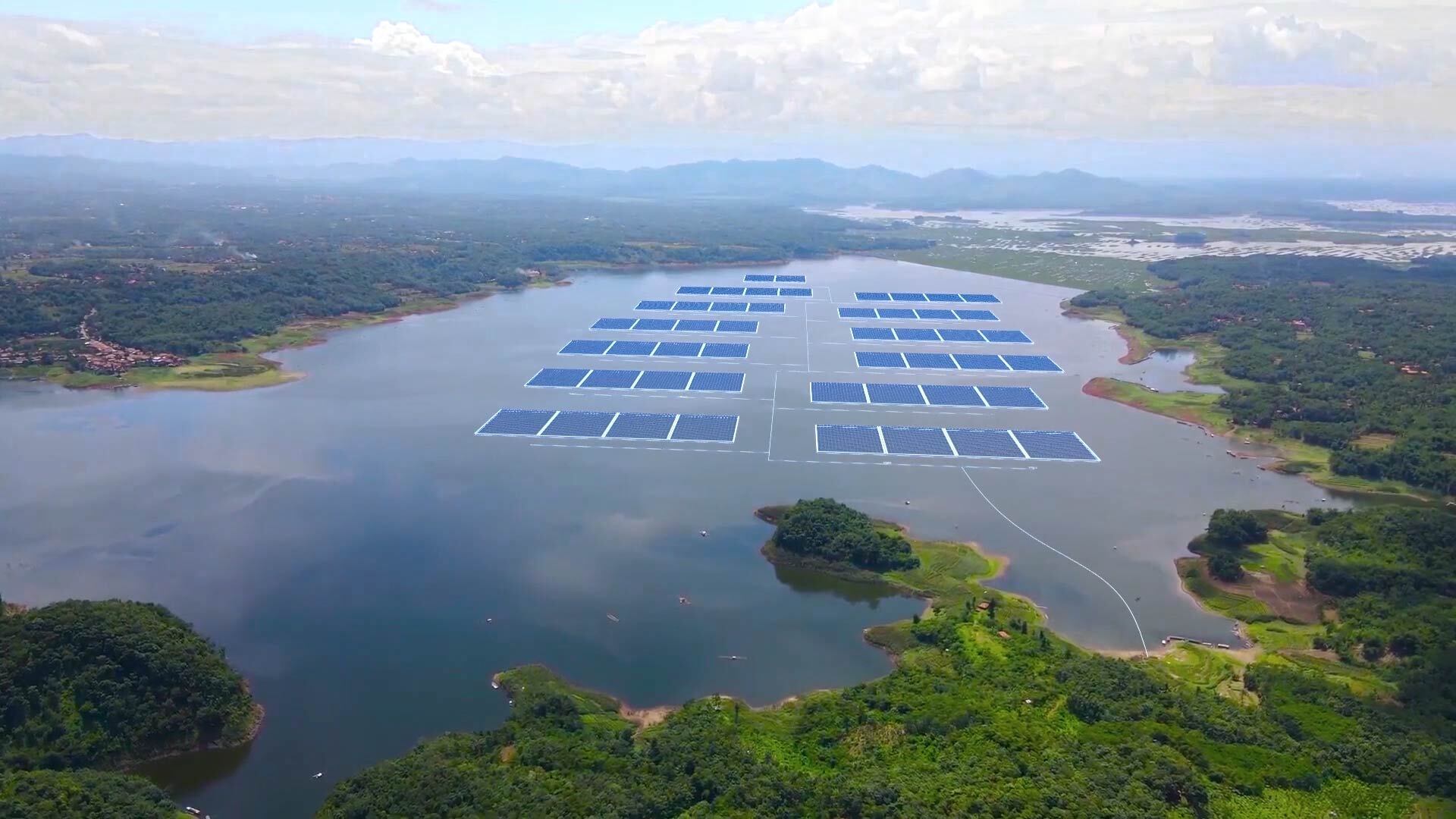
“مصدر” و”توتال للطاقة” تؤسسان شراكة بقيمة 2.2 مليار دولار لتعزيز نمو مشروعات الطاقة المتجددة في آسيا
Masdar and TotalEnergies have finalized a $2.2 billion joint venture to consolidate onshore renewable assets across nine Asian markets. Headquartered in the Abu Dhabi Global Market, the 50/50 partnership targets 6GW of new capacity by 2030, addressing Asia’s surging electricity demand through solar, wind, and battery storage integration.
The $2.2 Billion Consolidation Play
Capital allocation in the energy sector has shifted decisively. The era of exploratory pilots is over; institutional investors now demand scale. Masdar (Abu Dhabi Future Energy Company) and TotalEnergies have answered this call by merging their onshore renewable portfolios in Asia into a single, formidable entity. This is not merely a handshake deal; it is a $2.2 billion capital injection designed to bypass the fragmentation that has historically plagued renewable development in the region.

The joint venture creates a unified platform for development, construction, ownership, and operation. By pooling assets, the partners eliminate redundant overhead and leverage combined balance sheets to secure cheaper debt financing. The portfolio enters the market with 3GW of operational capacity, providing immediate cash flow. More critically, it holds a development pipeline of 6GW expected to come online before 2030. This aligns with the aggressive decarbonization targets set by the International Energy Agency, which requires renewable capacity additions to triple by the end of the decade.
For CFOs and treasury departments monitoring the energy transition, the financial engineering here is notable. The 50/50 equity split suggests a balanced risk profile, but the sheer CAPEX intensity required to bring 6GW online will test liquidity management. Companies executing similar scales of infrastructure deployment often face working capital bottlenecks during the construction phase. To mitigate this, large-scale developers frequently engage specialized project finance advisory firms to structure non-recourse debt that shields the parent companies’ core balance sheets from construction risk.
Strategic Geography and Grid Stability
The geographic spread is calculated. The JV covers Azerbaijan, Indonesia, Japan, Kazakhstan, Malaysia, the Philippines, Singapore, South Korea, and Uzbekistan. This selection targets high-growth GDP regions where grid instability remains a primary barrier to industrial expansion. In markets like Indonesia and the Philippines, intermittent renewable supply requires robust battery energy storage systems (BESS) to maintain frequency regulation. The partnership explicitly includes BESS in its mandate, signaling a move beyond simple generation toward grid firming services.
Dr. Sultan Al Jaber, Chairman of Masdar, framed the move as a response to Asia leading global electricity demand growth this decade. The logic holds. As manufacturing hubs shift deeper into Southeast Asia and Central Asia, the baseload requirement spikes. TotalEnergies CEO Patrick Pouyanné noted that this cooperation strengthens their integrated energy system strategy. For Total, this diversifies their portfolio away from volatile hydrocarbon pricing, locking in long-term power purchase agreement (PPA) revenues that behave more like utility bonds than commodity trades.
Three Macro Shifts for the Asian Energy Market
This consolidation triggers immediate ripple effects across the regional supply chain and regulatory landscape. The creation of a $2.2 billion entity alters the competitive dynamics for independent power producers (IPPs) and necessitates new operational frameworks.
- Supply Chain Leverage: By aggregating demand across nine countries, the JV gains significant purchasing power for photovoltaic modules and wind turbines. This volume allows them to negotiate priority delivery slots, bypassing the logistics congestion that has delayed projects in Vietnam and India. However, moving hardware across borders requires navigating complex customs regimes. Successful execution often depends on partnering with specialized logistics and supply chain providers capable of managing multi-jurisdictional freight and compliance.
- Regulatory Harmonization: Operating in nine distinct legal environments creates a compliance matrix that can cripple smaller developers. The decision to headquarters the JV in the Abu Dhabi Global Market (ADGM) provides a common law framework familiar to international investors. This structure simplifies dispute resolution and tax optimization, but local implementation still requires navigating domestic energy laws. Firms often retain top-tier corporate law firms to ensure local operating licenses align with the overarching JV agreement.
- Grid Integration Standards: With 6GW of variable renewable energy entering the mix, grid operators in Kazakhstan and Uzbekistan will face pressure to upgrade transmission infrastructure. The JV’s inclusion of storage systems is a direct response to this, but it sets a new technical baseline. Competitors without storage capabilities may find their PPAs renegotiated or their grid access curtailed during peak volatility periods.
The Institutional View
Market reaction to such mega-partnerships is typically positive, provided the integration risk is managed. The valuation implies a significant premium on the development pipeline, betting on continued declines in Levelized Cost of Energy (LCOE). However, execution risk remains the primary variable. Integrating corporate cultures and technical standards between a French major and an Emirati state-backed entity requires rigorous change management.

“The Masdar-TotalEnergies JV is a defensive moat against rising interest rates. By locking in long-term infrastructure assets now, they secure yield in a market where traditional fixed income is under pressure. The real test will be the speed of permitting in Southeast Asia.”
— Elena Rossi, Senior Energy Analyst, Global Infrastructure Partners
According to data from the International Renewable Energy Agency (IRENA), Asia accounted for over 60% of global renewable capacity additions in 2025. This JV captures a significant slice of that momentum. For investors, the key metric to watch over the next four quarters is the conversion rate of the 6GW pipeline into “Notice to Proceed” status. Delays here would indicate regulatory friction; acceleration would confirm the efficacy of the ADGM structure.
Final Analysis: The Road to 2030
The energy transition is no longer a narrative; it is a balance sheet event. Masdar and TotalEnergies have effectively removed the “pilot project” phase from their Asian strategy. By committing $2.2 billion to a unified vehicle, they signal confidence in the region’s creditworthiness and demand trajectory. For the broader market, this sets a precedent. Expect further consolidation as mid-sized developers seek exit liquidity or partnership to compete with these new giants.
As the fiscal year progresses, the focus shifts from deal announcement to asset integration. The companies must now deploy approximately 200 staff and align procurement strategies. For B2B service providers, the window to engage is open but narrowing. Whether providing legal structuring for local subsidiaries or managing the complex logistics of turbine transport, the demand for specialized enterprise services will scale in direct proportion to the JV’s construction velocity. The directory of vetted partners capable of handling this scale is the critical resource for stakeholders looking to participate in the next phase of Asian energy growth.