
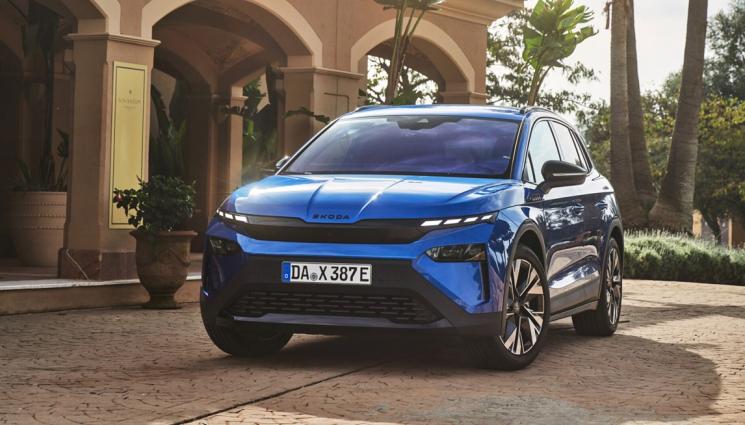
Китайският пазар мачка западните производители, един се изтегля
Skoda Auto, a subsidiary of the Volkswagen Group, is executing a complete withdrawal from the Chinese market by mid-2026, marking a significant strategic capitulation by a legacy Western automaker against the dominance of domestic Chinese electric vehicle (EV) manufacturers. This exit follows a catastrophic collapse in sales volume, dropping from a peak of 341,000 units in 2018 to a negligible 15,000 in 2024, forcing a reallocation of capital toward high-growth emerging markets in India and Southeast Asia.
The writing has been on the wall for the Wolfsburg-based giant for some time, but the speed of the capitulation underscores a brutal reality in global automotive finance: the “China premium” has evaporated, replaced by a localized pricing war that legacy OEMs simply cannot win without destroying their own EBITDA margins. When Skoda entered the Middle Kingdom, it was the golden goose, accounting for one in every four cars the brand produced globally. Today, that goose is not just dead; it is a liability.
The Sunk Cost Fallacy in Shanghai
For years, Western automotive boards treated China as a non-negotiable line item in their growth strategies. The logic was simple: 1.4 billion consumers meant infinite scale. Skoda’s trajectory illustrates the danger of this assumption. In 2017 and 2018, the brand was riding high, moving over 300,000 units annually. The strategic plan was aggressive—doubling deliveries to 600,000 by 2020. That target was not just missed; it was obliterated.
The pandemic acted as an accelerant, but the structural rot was already there. Chinese consumer preference shifted violently toward electrification and smart-cockpit technology, areas where domestic players like BYD, Nio, and Xpeng held a distinct home-court advantage in supply chain integration and software localization. Skoda’s sales didn’t just dip; they fell off a cliff. From 282,000 units in 2019, volumes cratered to 173,000 in 2020, then halved again to 71,200 in 2021. By 2024, the brand was moving a mere 15,000 units—a volume so low that maintaining a dedicated manufacturing and distribution infrastructure became fiscally irresponsible.
This is a classic case of capital misallocation. Every yuan spent propping up a dying brand in Shanghai is a euro not spent capturing market share in Pune or Jakarta. The Volkswagen Group’s decision to pull the plug is a defensive maneuver to protect the broader corporate balance sheet from the drag of a non-performing asset.
The B2B Imperative: Managing Strategic Retreats
When a multinational corporation of this magnitude exits a jurisdiction, the operational fallout is immense. It is not simply a matter of turning off the lights. There are supply chain contracts to unwind, dealership networks to dissolve, and inventory to liquidate without triggering a fire sale that devalues the brand globally. This is where the corporate machinery often seizes up without external expertise.
For companies facing similar “market exit” scenarios, the complexity of unwinding a joint venture in a regulated environment like China requires specialized legal and operational counsel. Navigating the regulatory landscape to ensure compliance while liquidating assets often necessitates engaging top-tier international market exit consultants. These firms specialize in the delicate art of corporate divorce, ensuring that the parent company minimizes reputational damage and financial leakage during the withdrawal process.
“The era of ‘growth at all costs’ in China is over for legacy auto. We are seeing a rotation of capital. Investors are no longer rewarding presence in China; they are rewarding margin preservation. If you cannot achieve double-digit margins in Shanghai, you move the capital to where the yield is higher.”
— Marcus Thorne, Senior Automotive Analyst, Global Macro Research
the physical logistics of exiting a market involve massive supply chain decoupling. Components sourced locally for the Chinese market often cannot be easily repurposed for European or Indian production lines due to differing technical standards and regulatory requirements. Efficiently dismantling this web requires supply chain liquidation specialists who can audit inventory, negotiate buy-backs with tier-1 suppliers, and manage the reverse logistics of repatriating valuable tooling and IP.
Pivoting to the Next Growth Engine: India and SE Asia
Volkswagen isn’t retreating from growth; they are retreating from a saturation point. The capital freed up by the China exit is being aggressively redeployed into India and Southeast Asia, markets that mirror China’s demographic profile from a decade ago but lack the entrenched EV dominance of local competitors.

The numbers justify the pivot. In India, Skoda reported sales of 70,600 units last year, a staggering 96.1% increase over the previous year’s 36,000. This is not just recovery; this is hyper-growth. The Indian market offers the internal combustion engine (ICE) longevity that China has abandoned, allowing Skoda to run its current platforms for longer while gradually introducing EVs like the Elroq and the upcoming Epiq and Peaq models.
However, entering these emerging markets brings its own set of regulatory and legal hurdles. From land acquisition for new plants to navigating complex labor laws and import tariffs, the friction is high. Successful market entry in these regions often depends on retaining emerging market legal counsel who understand the nuances of local corporate governance and can shield the parent company from jurisdictional risks.
The Valuation Impact of Strategic Focus
Wall Street generally rewards focus. A conglomerate trying to be everything to everyone often trades at a discount. By shedding the dead weight of the Chinese Skoda operations, VW Group simplifies its narrative. It tells investors: “We are profitable in Europe, growing in India, and we are not burning cash in a lost cause.”
This clarity is vital for the stock price. In the current fiscal climate, characterized by high interest rates and tight liquidity, investors punish inefficiency. The Skoda exit is a signal that management is willing to make hard cuts to preserve free cash flow. It is a pragmatic, if painful, acknowledgment that brand equity is finite. In China, Skoda’s equity was exhausted. In India, it is appreciating.
The broader lesson for the directory of global business is clear: geographic diversification is no longer a hedge; it is a dynamic allocation problem. Markets rotate. What was a growth engine in 2018 can be a value trap in 2026. The winners will be those who can identify the inflection point early and execute the pivot with surgical precision, leveraging the right B2B partners to manage the transition.
As the dust settles on the Shanghai exit, the focus shifts entirely to execution in the East. Can Skoda replicate its European quality perception in the price-sensitive markets of Southeast Asia? The answer will determine whether this retreat is remembered as a strategic masterstroke or merely a delayed surrender.