
Evidence of Earth’s Ancient Core discovered Through Potassium Isotopes
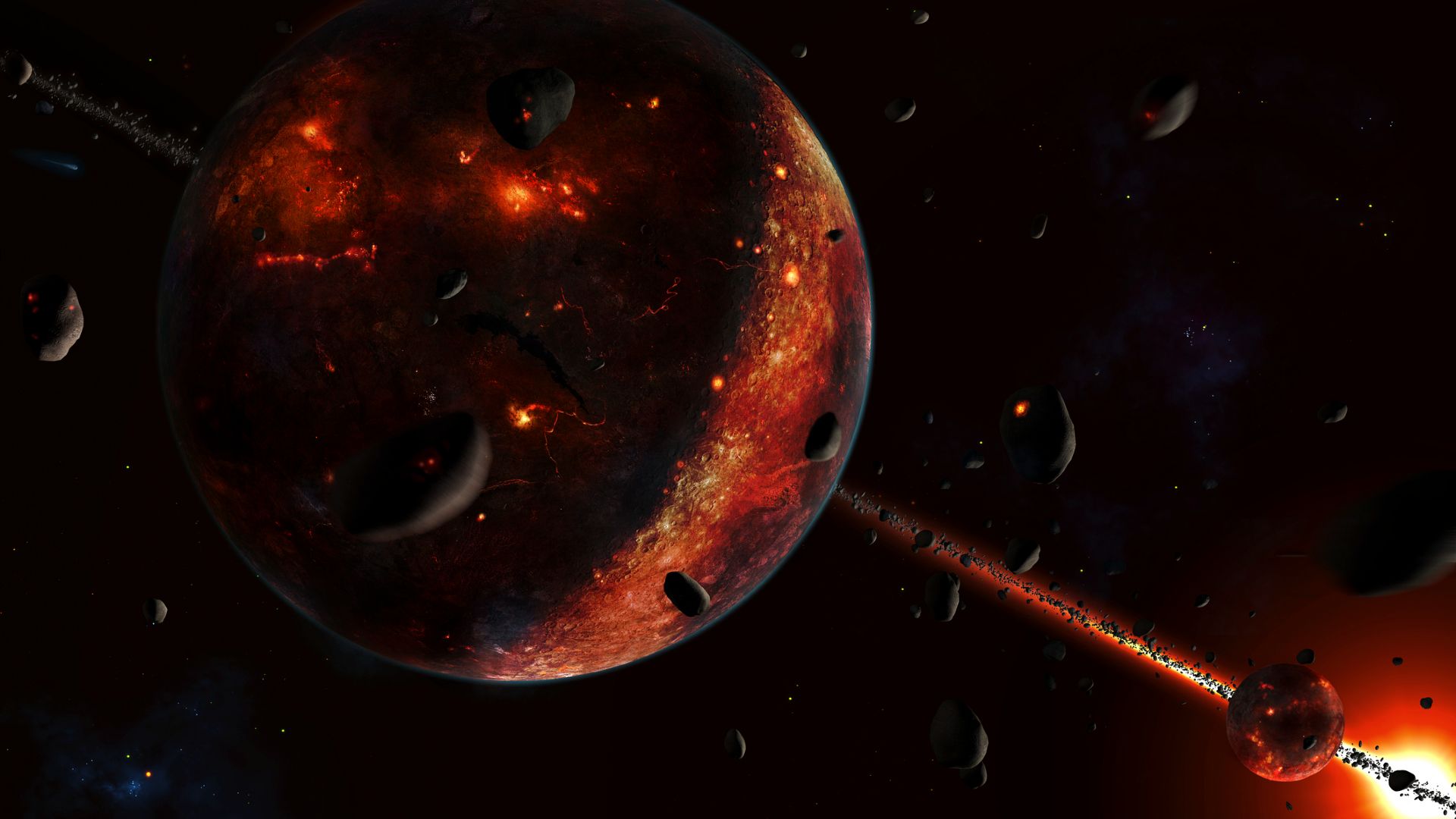
Scientists have uncovered the first direct evidence of the “proto-Earth,” the original planetary building block that existed before the giant impact that formed the Moon, buried deep within Earth’s mantle. The discovery, detailed in a new study, hinges on subtle variations in potassium isotopes found in ancient rocks from around the globe.
Researchers, led by Dr. Suhua Nie, analyzed rocks from Greenland, Canada‘s Abitibi and Winnipegosis belts, Hawaii’s volcanoes (Kama’ehuakanaloa and Mauna Loa), and the Newberry volcano in the Cascade Range of the northwestern United States.They were building on previous work analyzing meteorites collected near Earth, which revealed slight differences in the ratios of potassium-39, potassium-40, and potassium-41 – naturally occurring isotopes of the element. These differences suggested potassium isotopes could act as a “tracer” for Earth’s original components.
The team hypothesized that if a signature from the proto-Earth remained, it would be detectable in Earth’s oldest and deepest rocks. Their analysis revealed that these ancient materials contained less potassium-40 than predicted. This deficit suggests these rocks were formed from materials distinct from those that have thoroughly mixed within Earth’s mantle over billions of years.
To achieve this level of precision, researchers dissolved powdered rock samples in acid, isolated the potassium, and used a highly sensitive mass spectrometer to measure the isotopic ratios. Computer simulations were then employed to rule out alternative explanations for the observed potassium ratios,including asteroid impacts,mantle convection,and large-scale planetary melting. None of the simulated scenarios could replicate the potassium-40 deficit found in the rock samples.
The findings indicate that a portion of the proto-Earth mantle survived the massive impact that created the Moon and remains largely undisturbed deep within the planet today. Interestingly, while previous meteorite analyses showed potassium anomalies, they didn’t match the specific deficit observed in the Earth rocks, suggesting the original proto-Earth materials haven’t yet been fully identified in the meteorite record.
“Scientists have been trying to understand Earth’s original chemical composition by combining the compositions of different groups of meteorites,” Dr.nie explained. “But our study shows that the current meteorite inventory is not complete, and there is much more to learn about where our planet came from.”
This research provides a new avenue for understanding the early history of Earth and the processes that shaped our planet over 4.5 billion years ago.
(Source: https://www.science.org/doi/10.1126/science.abn1783)
