
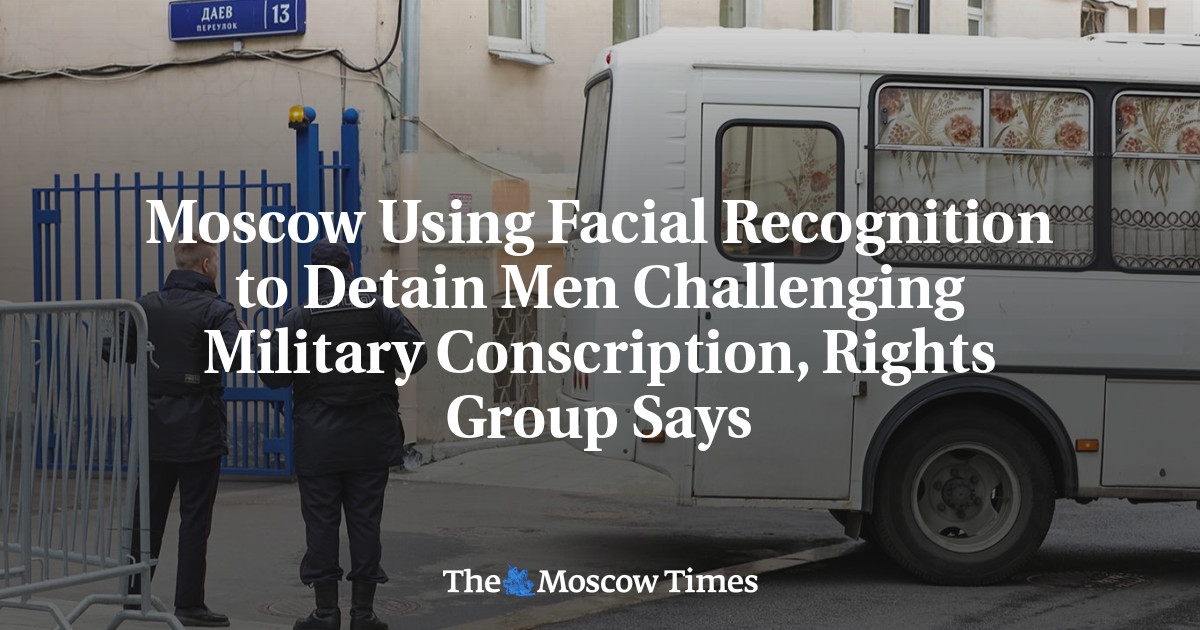
Moscow Police Deploy Facial Recognition to Detain Men Appealing Drafts, Rights Group alleges
Moscow – Moscow police are reportedly utilizing facial recognition technology to detain men who are legally challenging their military conscription orders, according to the Civil alliance of Russia rights group. The practice raises concerns about due process and freedom of movement for those exercising their right to appeal.
Oleg Filatchev, head of the Civil Alliance of Russia, stated that a 19-year-old client contesting his draft was detained in the Moscow metro on saturday and taken to a conscription center on Ugreshkaya Ulitsa. Approximately 20 other young men were reportedly held at the center under similar circumstances.
Filatchev explained that when a conscript challenges a draft decision in court, their personal data is flagged in government databases as if they were actively evading service. This flagging triggers automatic detention when the individual is identified by surveillance cameras equipped wiht facial recognition software.
Lawyers representing the detainees have reportedly been denied access to their clients at the Ugreshkaya center, even with notarized power of attorney.
In response, Filatchev advises those appealing conscription orders to avoid using the metro and, if detained, to refuse medical examinations unless presented with a legally valid draft notice. He also urges individuals to file complaints with the military prosecutor’s office.
The developments coincide with Russia’s autumn draft campaign, which aims to conscript 135,000 men aged 18 to 30 – the largest call-up since 2016, when 152,000 were drafted. This, combined with a spring draft of 160,000, will bring the total number of conscripts this year to 295,000.
Furthermore, draft notices in Moscow, the republic of Mari El, and the ryazan and sakhalin regions are now being issued exclusively in digital form. These electronic notices are considered delivered upon posting online, immediately restricting recipients from leaving Russia.
Failure to report for service carries notable penalties,including restrictions on self-employment,entrepreneurship,driving,passport acquisition,loan applications,and property transactions,as well as fines ranging from 10,000 to 30,000 rubles ($123-$370).
