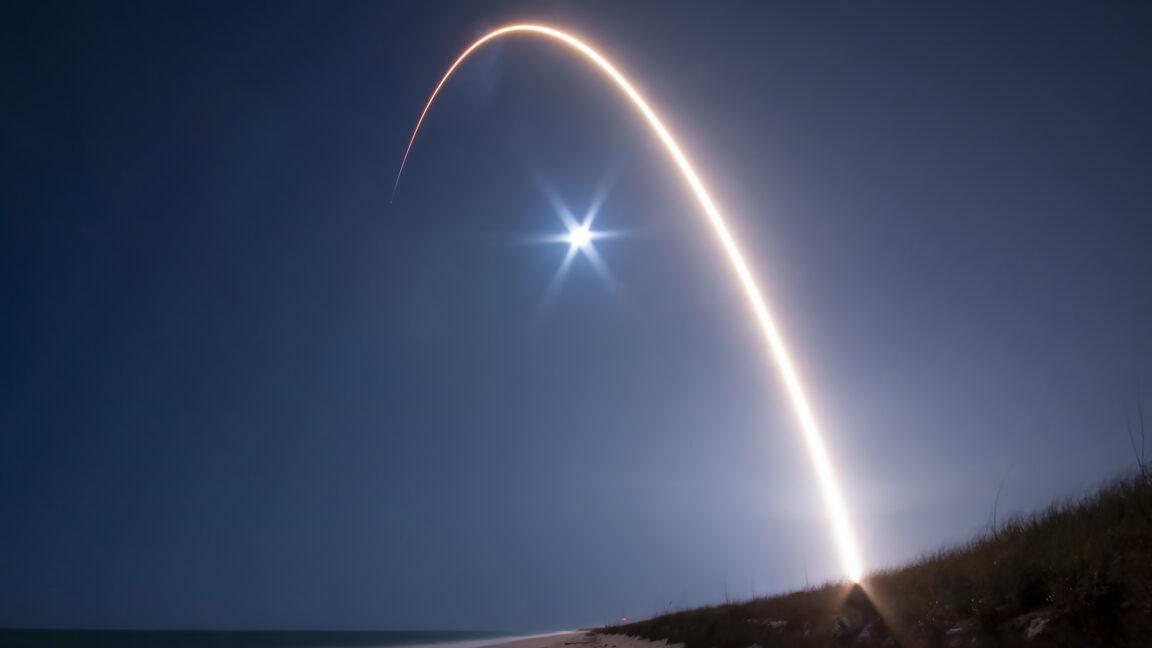
The Space Force will now launch the GPS III SV10 satellite on a SpaceX Falcon 9 rocket in late April, officials confirmed Friday, after shifting the mission from a United Launch Alliance (ULA) Vulcan rocket. The decision follows ongoing investigation into an anomaly that occurred during the inaugural launch of the Vulcan in January.
Each GPS III satellite exceeds four tons in weight, requiring a heavy-lift launch vehicle. Currently, only SpaceX’s Falcon 9 and Falcon Heavy rockets, and ULA’s Vulcan, are certified by the Space Force to handle such missions. SpaceX’s frequent launch cadence, utilizing reusable boosters, allows for quicker integration of new missions, according to the Space Systems Command.
“With this change, we are answering the call for rapid delivery of advanced GPS capability even as the Vulcan anomaly investigation continues,” said Colonel Ryan Hiserote, director of the National Security Space Launch program. “We are once again demonstrating our team’s flexibility and are fully committed to leverage all options available for responsive and reliable launch for the nation.”
The shift marks a further erosion of ULA’s dominance in military space launches. Once the sole provider for the U.S. Military, ULA has faced increasing competition from SpaceX since 2018, when SpaceX successfully bid for and began executing national security missions. This competition stemmed from a 2014 lawsuit filed by SpaceX against the Air Force, challenging the Pentagon’s initial decision to award ULA a multi-billion dollar, sole-source contract.
In 2020, the military awarded ULA 60 percent of available missions through the end of 2023, with SpaceX receiving the remaining 40 percent. However, a subsequent competition, announced last year by Space Systems Command, saw SpaceX secure the majority of launch contracts extending through the end of the decade, relegating ULA to a secondary position. Blue Origin was also added as a third launch provider.
The Pentagon has prioritized “assured access to space” since the 1990s, following a series of launch failures that resulted in the loss of expensive military payloads. For over a decade, ULA held a monopoly, with its Atlas V and Delta IV rockets offering overlapping capabilities to deliver most national security payloads to orbit. The Delta IV has since been retired, and the Atlas V is nearing the end of its service life.
Despite holding over $8 billion in military launch contracts, SpaceX currently provides the most reliable access to space, surpassing ULA’s current capabilities. The investigation into the Vulcan’s first launch continues, leaving the future of the program uncertain.
Leave a Reply