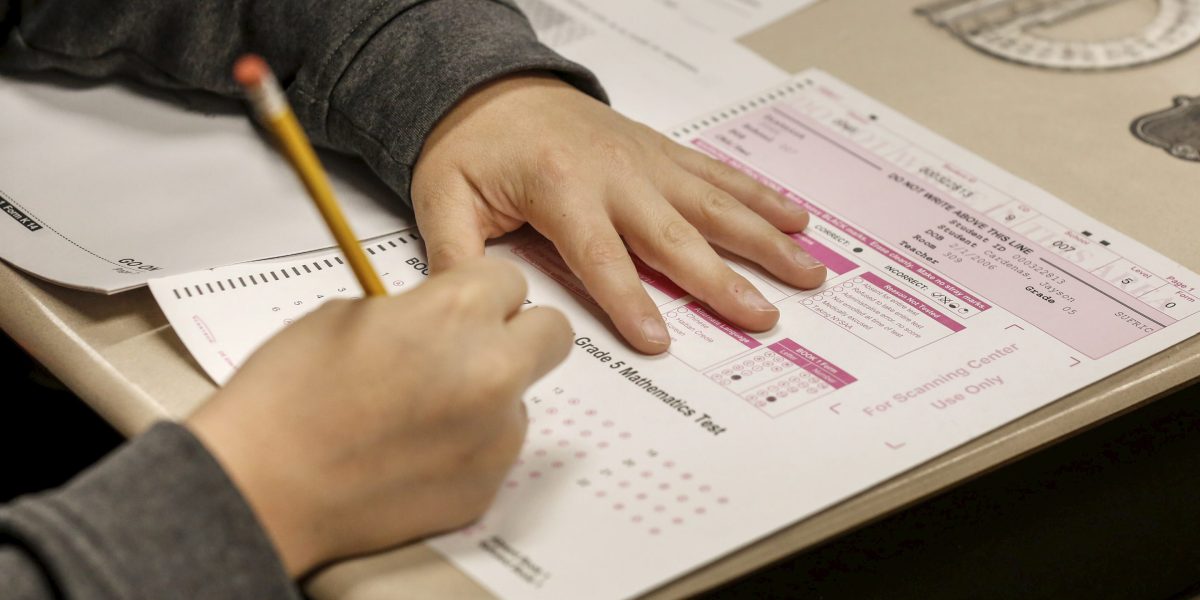
The value of an A is diminishing, and a new study suggests it’s costing students—and the economy—billions. Research from the National Bureau of Economic Research (NBER) indicates that grade inflation not only fails to accurately reflect student learning but also correlates with poorer performance on future tests, decreased likelihood of high school graduation, and lower earnings over a lifetime.
The study, titled “Easy A’s, Less Pay: The Long-Term Effects of Grade Inflation,” estimates that grade inflation can shave approximately $213,000 off the future earnings of a typical high school class—roughly $150 per year for each letter grade inflated. Researchers analyzed administrative high school records from Los Angeles and Maryland, comparing student grades to standardized test scores to measure the extent of the inflation.
“They are less likely to learn if it’s very easy to gain an A. They spend less time and effort,” explained Nolan Pope, a labor economist at the University of Maryland and one of the study’s researchers, in an interview with Fortune. The findings arrive as concerns about the cognitive performance of Gen Z—the first generation to score lower than their parents on some measures—gain traction, alongside a noted decline in reading habits.
The issue has even reached the White House. President Donald Trump, last November, announced a higher education compact linking federal funding to universities’ ability to curb grade inflation. The administration set parameters designed to prevent both grade inflation and deflation, arguing the practice could be harming young people.
Although, the study also revealed a nuanced effect: raising scores for students at immediate risk of failing—for example, from an F to a D—proved beneficial, increasing high school graduation rates. But for students receiving inflated grades beyond that threshold, the long-term consequences were largely negative.
Beyond diminished earnings, the research found a link between grade inflation and increased student disengagement. Higher grade inflation correlated with increased absences and suspensions, suggesting a lowered academic bar can lead to decreased discipline and motivation. “It ends up actually being somewhat harmful for the student,” Pope said. “Nobody really is on the side of that harm because nobody sees it until much later.”
The pervasiveness of grade inflation, researchers suggest, stems from a confluence of incentives. Teachers may seek to avoid complaints from students and parents, schools aim to present a more favorable academic profile, and students naturally prefer higher grades. “As a teacher it’s usually easier,” Pope stated. “You get less complaints. Parents are happy. Students are happier if you offer slightly higher grades. A school typically looks better if their grades are higher. It benefits everyone.”
The trend shows no sign of abating, despite the President’s intervention. The NBER study suggests the practice will likely continue as long as all parties involved continue to benefit from it.
Leave a Reply