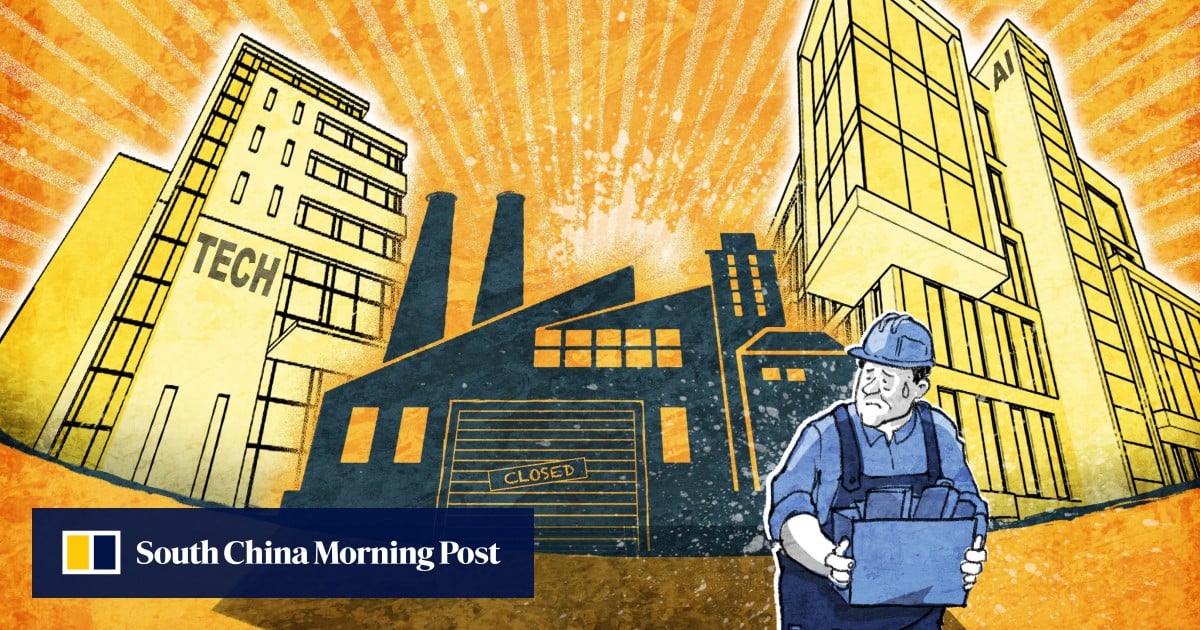
A notice appeared on the factory gates of Everwin Toys in Dongguan, Guangdong province, in December, informing workers of an immediate halt to production. The company, a major plastic toy manufacturer, cited a more than 40 percent decline in revenues driven by shrinking demand and shifts in the global economy.
For Zhang Li, a worker at Everwin Toys for over 15 years, the closure was a sudden disruption. “Now I’m in my 40s,” she said, reflecting the uncertainty faced by many of her 2,000 former colleagues. “Where will I find my next job?”
The shutdown of Everwin Toys is emblematic of a broader economic transition underway in China, where traditional manufacturing hubs are grappling with rising global trade tensions and rapid technological advancements. The company, which produces plastic toys, dolls, and accessories – including doll shoes, dresses, and furniture – had previously aligned its production with international safety standards such as EN-71, and non-phthalate and azo-free regulations, according to company information.
The situation in Dongguan reflects a growing polarization within the Chinese economy. While China achieved a record trade surplus of over US$1 trillion last year, the benefits are not evenly distributed. Many factories and workers are being left behind as high-tech firms surge ahead, leading to stagnant wages and increasing factory closures. Everwin Toys, located in Xie Keng Lu, Dong Guan Shi, Guang Dong Sheng, had been a significant player in the region’s manufacturing sector, with documented shipments to customers worldwide.
The closure of the Everwin Toys facility in Dongguan, which once employed approximately 2,000 people, underscores the challenges facing China’s manufacturing sector. The company, EVERWIN TOYS INDUSTRY Co., Ltd., integrates production, development, and trading, but has been unable to withstand recent economic pressures. The company also offers customized gift options, suggesting a previous focus on adapting to market demands.
Leave a Reply