
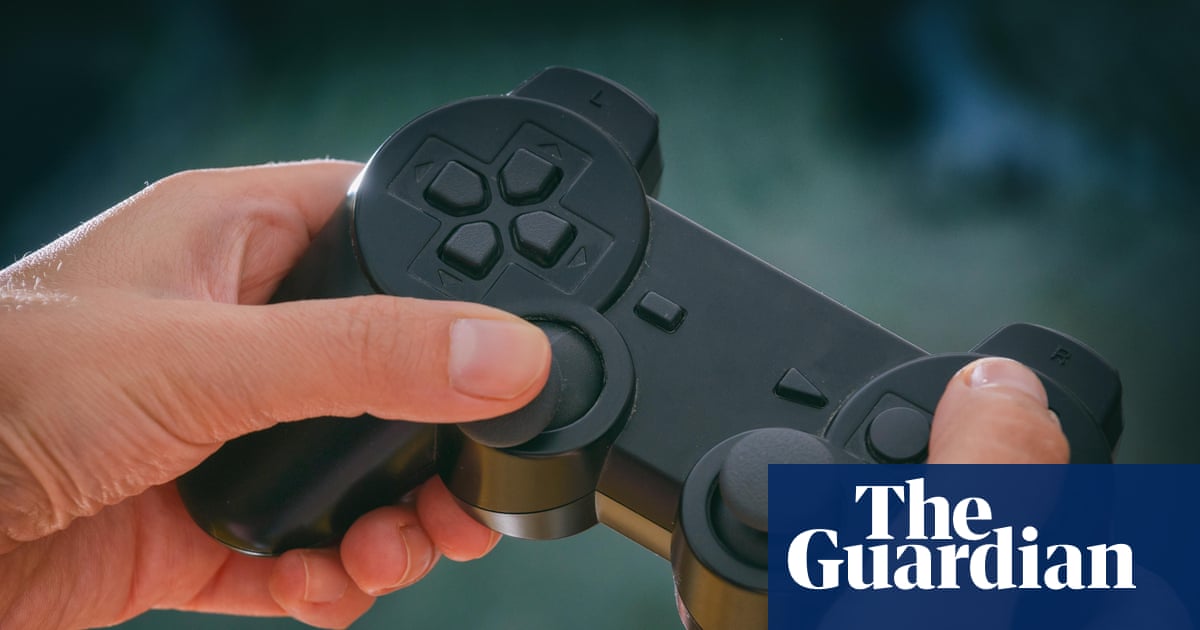
Gamers‘ Control Preferences Linked to 3D Spatial Perception, New research Reveals
LONDON – for decades, the debate has raged: why do some video game players choose to invert their controls, a setup that feels counterintuitive to many? New research from Queen mary University of London suggests the answer isn’t about habit or preference, but deeply rooted in how individuals perceive and mentally manipulate objects in three-dimensional space. The findings,published in a recent research paper,challenge long-held assumptions and could have implications far beyond gaming,impacting the design of human-computer interfaces in fields like aviation and surgery.
Researchers Dr. Rachel Corbett and Dr. Anton Munneke discovered that people aren’t naturally predisposed to either invert or not invert. Cognitive tests indicated a link between control preference and 3D spatial reasoning. “It’s much more likely that you invert or don’t invert due to how your brain perceives objects in 3D space,” Corbett explained.
The study suggests that gamers might actually improve their performance by experimenting with a control scheme opposite to their usual setup. “Non-inverters should give inversion a try – and inverters should give non-inversion another shot,” Corbett recommends.”You might even want to force yourself to stick with it for a few hours.People have learned one way. That doesn’t mean they won’t learn another way even better.” She draws a parallel to left-handedness, noting that forcing children to wriet with their right hand historically caused difficulties, and many adults may not realize their natural left-handed dominance.
Corbett and Munneke have developed a framework for assessing optimal control configurations for individuals, making it available through their research paper. They believe the work highlights the complex cognitive processes involved in controller use and its potential to enhance “human-machine teaming.”
“This work opened our eyes to the huge potential that optimising inversion settings has for advancing human-machine teaming,” Corbett stated. “Understanding how a given individual best performs with a certain setup…can allow for much smoother interactions between humans and machines in lots of scenarios…to preventing damage to delicate internal tissue while performing a complicated laparoscopic surgery.”
The research has already garnered attention, with one scientific publication citing the paper and interview requests increasing from gaming content creators.Corbett concludes, “The most surprising finding for gamers [who don’t invert] is that they might perform better if they practised with an inverted control scheme…it’s definitely worth a shot becuase it could dramatically improve competitive game play!”
