Maintaining back strength is crucial for everyday activities, from standing and walking to lifting and bending, and declines with age, particularly after 55. Experts are increasingly recommending simple, accessible exercises as a key component of maintaining independence and preventing injury.
“After 55, muscle mass in the posterior chain decreases, fascia loses hydration and becomes restrictive, spinal discs compress, and deep stabilizing muscles go quiet from underuse,” explains Chancy Gill, a licensed massage therapist and co-owner of Syringa Bodwork in Hayden, Idaho. “Decades of desk posture weaken the glutes and shorten the hip flexors, leaving the lower back to carry a load it was never meant to handle. The result: stiffness, reduced mobility, chronic fatigue, and a higher risk of injury. Floor stretches and crunches rarely fix this, especially when restricted fascia is preventing the muscles from firing correctly.”
Traditional gym workouts can present barriers to consistent exercise for older adults, including intimidation and inconvenience. At-home exercises offer a solution, allowing individuals to train at their own pace in a comfortable environment, according to Josh York, Founder & CEO of GYMGUYZ.
“At-home exercises eliminate these barriers, allowing people to train at their own pace in an environment that is comfortable,” York said. “These workouts can also be tailored to ability and mobility levels, making them impactful for functional movements.”
Experts recommend five daily exercises to assist restore back strength. The first, standing hip hinges, engage the hamstrings, lumbar extensors, and glutes. Gill advises focusing on hinging from the hips, maintaining a long, neutral spine, and driving through the heels. The exercise can be intensified with light dumbbells as strength improves. To perform, stand tall with feet hip-width apart, hands behind the head, press hips back even as keeping the chest tall, and feel a stretch in the hamstrings. Three sets of 10 to 12 repetitions are recommended.
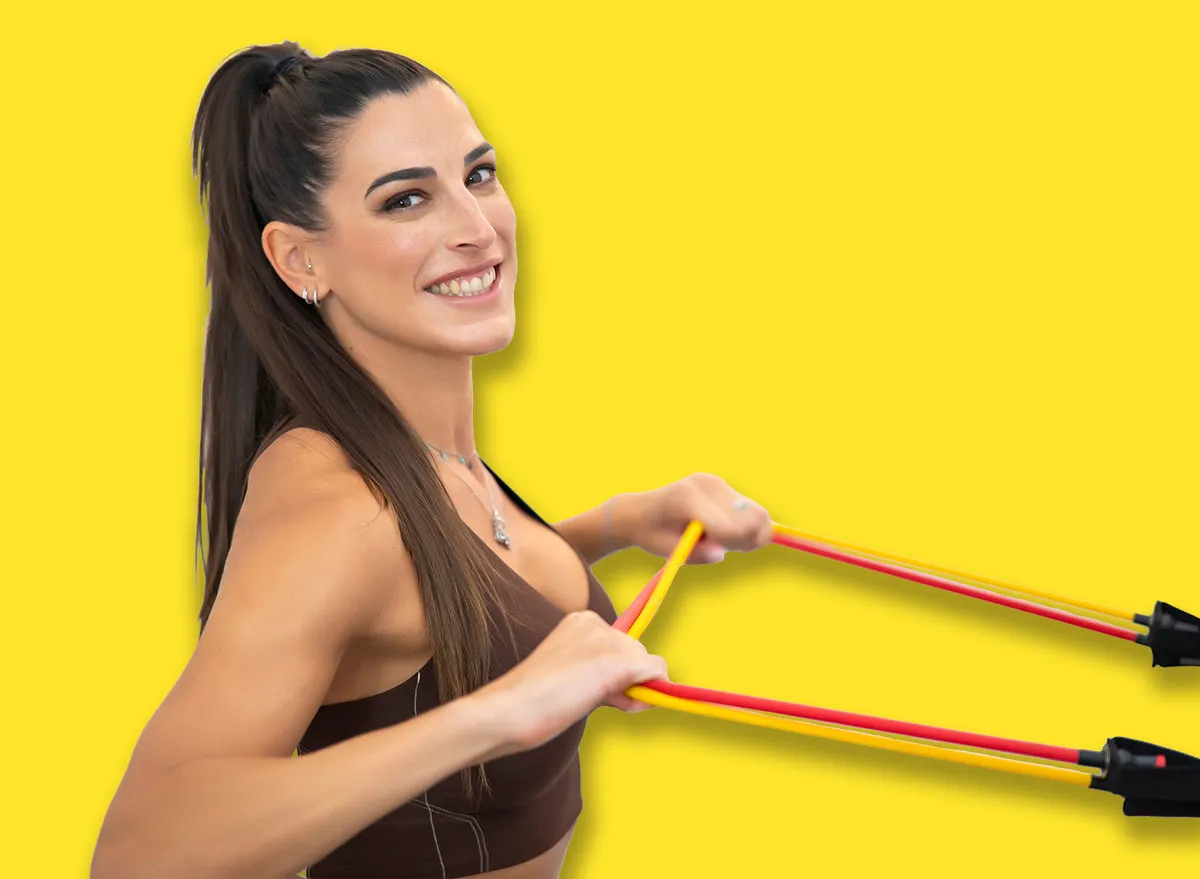
Resistance band rows are another effective exercise, targeting the lats, lower trapezius, and rhomboids. Gill suggests anchoring a band at chest height and pulling both hands toward the ribcage, squeezing the shoulder blades together. This exercise is particularly beneficial for counteracting rounded-shoulder posture and can be performed seated if needed. To perform, anchor a resistance band to a sturdy pole at chest level, stand tall facing the anchor point, hold the handles, bend elbows and pull the band toward the body, squeezing shoulder blades together, and extend arms back to the starting position. Three sets of 12 to 15 repetitions are advised.
Standing glute kickbacks fire up the hamstrings, glutes, and lumbar stabilizers. The exercise involves extending one leg straight back while maintaining an upright spine and squeezing the glute at the top of the movement. Use a sturdy chair back for balance. Three sets of 12 to 15 repetitions should be performed on each side.
Wall pushups, a modified version of traditional pushups, target the chest, shoulders, and arms, according to York. To perform, stand arms-length away from a wall, place hands shoulder-width apart, engage the core, bend elbows to lower the chest toward the wall, and press back up slowly and controlled. Three sets of 10 to 12 repetitions are recommended.
Finally, chair squats aid in strengthening the legs, glutes, and core. York explains that the exercise involves standing in front of a sturdy chair, bending at the knees and hips, and lowering slowly as if sitting down, lightly touching the chair with the glutes before pressing through the heels to rise back up. Three sets of 10 to 12 repetitions are advised.
Leave a Reply