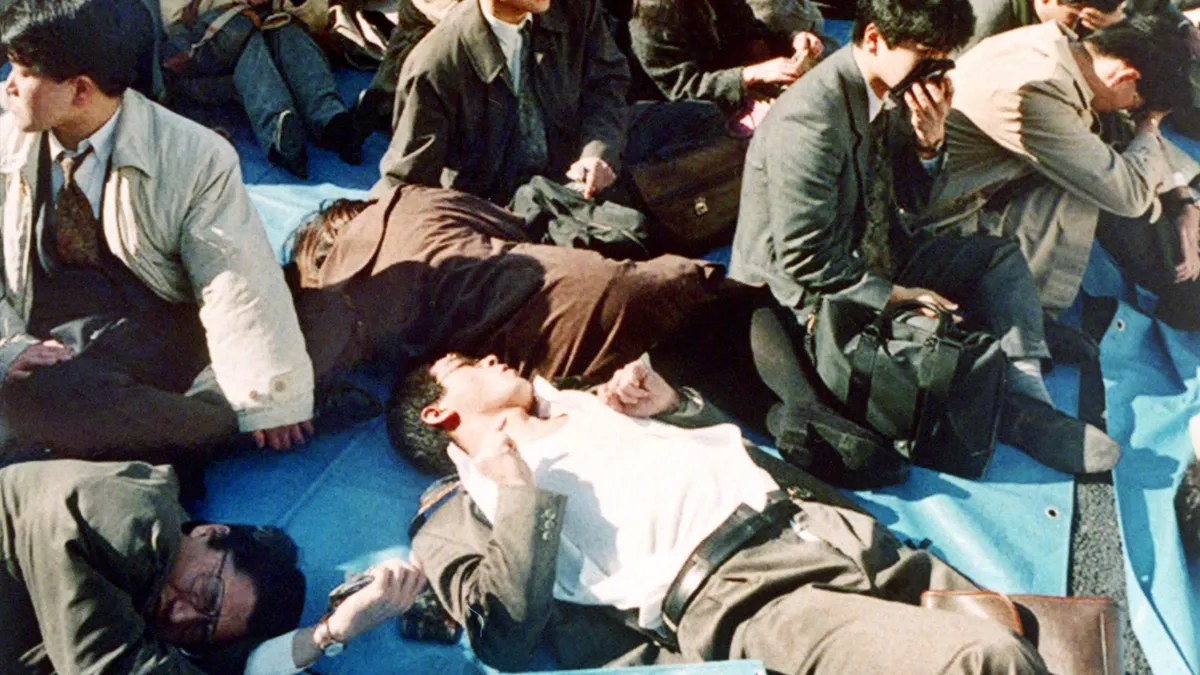
A coordinated sarin gas attack on the Tokyo subway system unfolded on March 20, 1995, paralyzing the city’s morning commute and leaving a trail of chaos and fear. Five members of the Aum Shinrikyo cult released the deadly nerve agent on multiple lines during the peak travel hours.
The attacks involved placing containers filled with liquid sarin on the floors of subway cars. These containers were then punctured with the tips of umbrellas, releasing the gas into the crowded carriages. Passengers quickly began exhibiting symptoms including breathing difficulties, convulsions, and loss of consciousness. Panic erupted at stations as commuters struggled to escape the contaminated areas, prompting a massive response from emergency services and firefighters equipped with protective gear.
The Aum Shinrikyo, founded in the 1980s by Shoko Asahara, was the perpetrator. Asahara preached an apocalyptic doctrine, predicting the imminent destruction of the world and Japan’s role in it. The group amassed considerable wealth and attracted thousands of followers while secretly developing chemical and biological weapons.
According to investigations, the cult’s leadership feared imminent raids by authorities. The subway attack was intended to sow chaos, undermine the state, and accelerate their predicted apocalypse. The plan did not trigger the societal collapse they anticipated, but it did initiate a nationwide manhunt for the cult’s members.
Subsequent police raids revealed a sophisticated weapons program operated by Aum Shinrikyo. The group had established laboratories, employed chemists and scientists, and manufactured tons of nerve agents. Sarin, a highly lethal substance, disrupts the nervous system and causes respiratory failure, even in slight doses.
More than 190 cult members were arrested following the attack. Asahara and several of his key followers were sentenced to death after a lengthy trial. The executions were carried out in Japan in 2018. While the cult formally disbanded, remnants of the organization continue to exist today.
Thirty years after the attack, survivors and families of the victims continue to seek closure, according to recent reports. The aftermath of the attack continues to be felt in Japan, with ongoing concerns about the potential for resurgence of extremist groups.
Leave a Reply