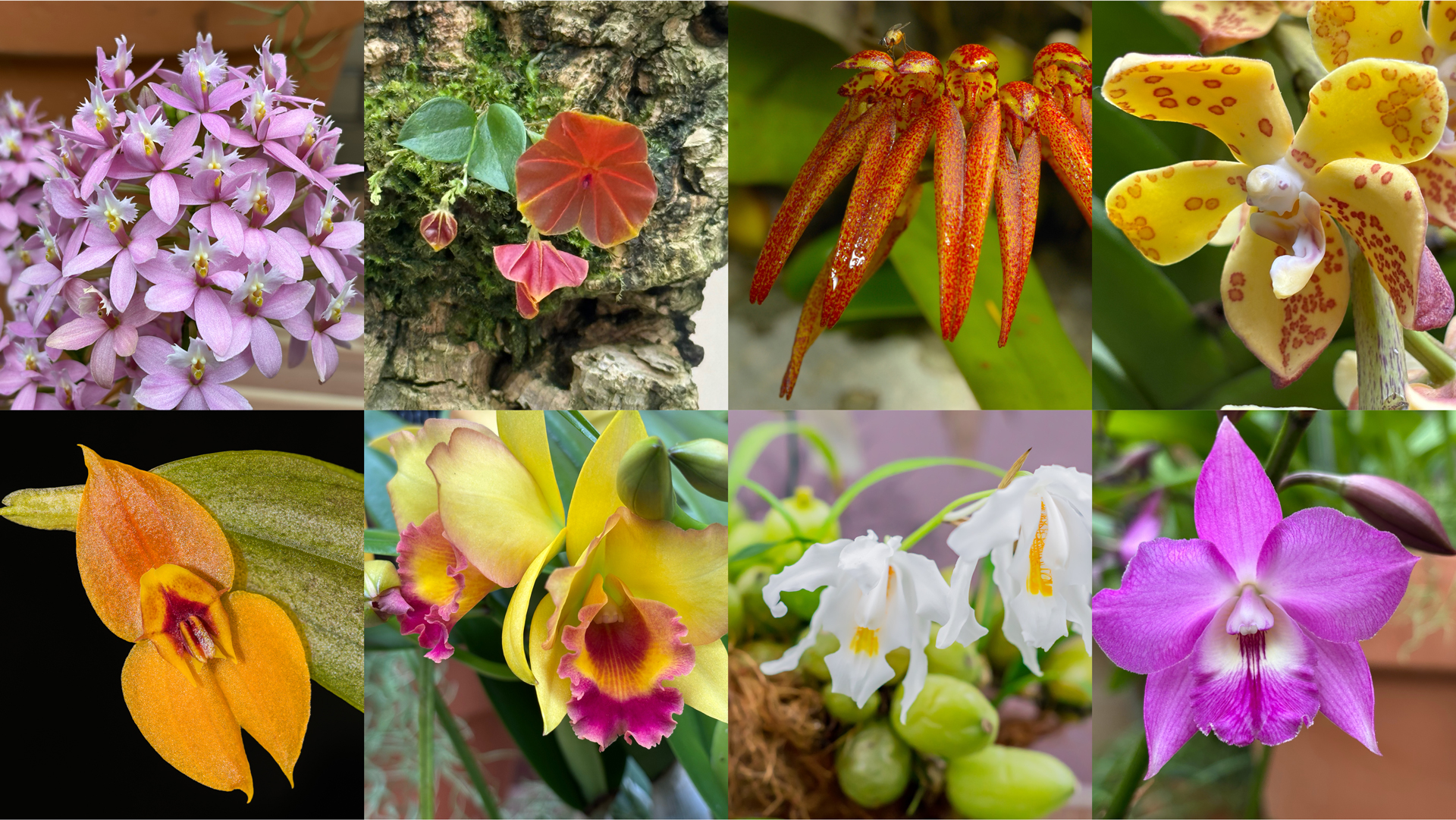
Orchids, among the largest and most diverse plant families on Earth, often employ deception to ensure their survival, according to experts at the U.S. Botanic Garden in Washington, D.C. These “masters of deception” utilize a range of strategies, from mimicking potential mates to emitting the scent of decaying matter, to trick pollinators into aiding their reproduction.
George Guenther, an Advanced Gardener at the U.S. Botanic Garden, explained the incredible diversity of orchids. “Orchids are incredibly diverse. Notice many thousands of species around the world. They’ve evolved into many different forms and growth habits and flowers and things like that, to facilitate pollination and to adapt to their environments.”
One example of this deception is the Lepanthes orchid, which utilizes sexual deception. Male fungus gnats are tricked into attempting to mate with the flower, inadvertently transferring pollen in the process. “Some species of Lepanthes have been observed to be pollinated through pseudocopulation, which means that in many cases, a male fungus gnat — small gnat, visits the flower, thinking it’s a mate,” Guenther said. “And in doing so, then transfers the pollen when it interacts directly with the reproductive structures of the flower.”
Other orchids employ more elaborate traps. The Phragmipedium Pearcei features pouch-like structures that appear to be traps for insects. Yet, Guenther clarified that these pouches aren’t designed to consume their visitors. Instead, insects fall into the pouch and must crawl out the back, depositing and collecting pollen in the process. The flowers also feature spots that mimic aphids, attracting flies whose larvae feed on them, further enhancing the deception.
Scent plays a crucial role in the reproductive strategies of some orchids. Bulbophyllum Picturatum orchids emit strong odors resembling excrement, rotten meat, or even rotting fish to attract flies. “Many of them leverage extremely strong smells to attract things like flies to visit their flowers,” Guenther explained. “They might smell like excrement, rotten meat, rotten fish, things like that that really are good at attracting flies.” A hinged lip within the flower then flips, directing the fly towards the reproductive structures and facilitating pollen transfer.
Deception isn’t always about attracting pollinators with false promises. Coelogyne Cristata orchids attract bees and wasps with a fragrance, but often offer no actual nectar reward, tricking the insects into inadvertently pollinating the flowers. Similarly, Spathoglottis Kimballiana uses bright yellow colors and sweet fragrances to lure bees, again without providing a nectar source.
Some orchids offer a genuine reward, but still rely on intricate mechanisms. Angraecum Comorense orchids emit a sweet, rose-like fragrance at night to attract moths. These moths use their long proboscis to reach the nectar at the base of a long nectary spur. A related species, Angraecum sesquipedale, famously inspired Charles Darwin to hypothesize the existence of a moth with a tongue long enough to reach its nectar – a prediction that was later confirmed decades after his death.
Despite their remarkable adaptations, many orchid species are currently considered endangered. Devin Dotson, Senior Communications Specialist at the U.S. Botanic Garden, attributed this to a combination of factors, primarily human-caused. “A lot of it is human-caused. One is over-collecting or overharvesting, but a lot of it is habitat loss… But the other is going to be the changes in climate.” Dotson explained that changes in temperature, increased frequency of droughts and floods, and the spread of pests and diseases due to milder winters all contribute to the decline of orchid populations.
The U.S. Botanic Garden serves as a plant rescue center, receiving confiscated orchids from illegal trade. These orchids are then restored to health and given a chance to bloom, contributing to the preservation of these vulnerable plants. Experts advise that if encountered in the wild, orchids should be left undisturbed, as removing them from their natural habitat is illegal and detrimental to their survival.
Leave a Reply