
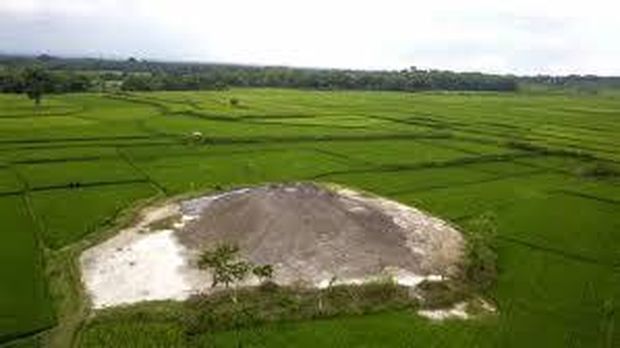
New mud Volcano Emerges in Central Java, Prompting Geological Investigation
A previously unknown geological formation has rapidly appeared in Central Java, Indonesia, startling residents and drawing the attention of geological experts. The structure, resembling a small mountain, began forming in late May 2025 and is now confirmed to be a mud volcano - a landform created by the eruption of mud, water, and gases. The emergence has raised concerns among local communities,prompting authorities to initiate investigations into the cause and potential risks.
The sudden appearance of this mud volcano is significant because it highlights the dynamic geological activity beneath Java, a region situated along the Pacific Ring of Fire.While mud volcanoes are not uncommon globally, their unexpected formation can disrupt local ecosystems, agricultural land, and infrastructure. Understanding the underlying mechanisms driving this eruption is crucial for assessing future hazards and ensuring the safety of nearby populations.Geologists are currently analyzing samples and monitoring the site for changes in activity.
According to experts, the mud volcano’s formation is linked to subsurface geological pressures and the presence of water-saturated sediments. “The pressure from below forces the mud and water to the surface through fissures in the earth,” explained a geologist in a CNBC Indonesia interview on June 3, 2025. “This is frequently enough triggered by tectonic activity, but can also be caused by the compaction of sediments or the presence of geothermal fluids.”
The newly formed structure is located in an area with known sedimentary deposits and is being closely monitored for changes in eruption rate and composition. Authorities have established a safety perimeter around the site and are advising residents to avoid approaching the area.Further research is planned to determine the long-term stability of the mud volcano and its potential impact on the surrounding environment.
