
Seoul Considers Phased Investment, Revenue Sharing too Break Tariff Impasse with U.S.
SEOUL – Negotiations surrounding a potential $350 billion investment package between South Korea and the United States are facing hurdles over allocation and control of funds, prompting Seoul to explore strategies including phased investments and revenue-sharing agreements to secure favorable tariff concessions.
While a preliminary agreement was reached in July to lower mutual tariffs – perhaps from 25 percent to 15 percent, including reductions on automobiles - details regarding the investment’s structure remain unresolved. Discussions center on options such as South Korea leading a $150 billion shipbuilding project while the U.S. manages the remainder, or granting Washington control of the entire package with corresponding tariff adjustments.
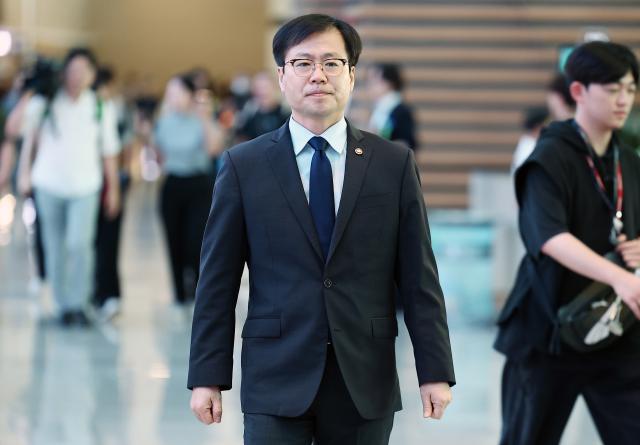
South Korea’s chief trade negotiator, Yeo Han-gu, traveled to Kuala Lumpur this week for the ASEAN Economic Ministers’ Meeting, where talks with U.S. Trade Representative Jamieson Greer are expected to address the stalled investment and other non-tariff barriers.
Experts advise against replicating Japan’s recent $550 billion pledge to the U.S., backed by a currency swap with the Federal Reserve, arguing it’s not aligned with South Korea’s economic realities. sogang University economics professor Heo Jeong advocates for a more measured approach. “It’s unrealistic to execute $350 billion quickly,” Heo said, recommending phased investments, conditional currency swaps, and targeted corporate projects. “Setting annual limits and negotiating conditional swaps with the U.S. could help South Korea maintain control.”
Heo further suggested linking investment returns to job creation and supply chain progress, and allocating 5-10 percent of funds to collaborative R&D with joint intellectual property ownership.
Kang Gu-sang, of the Korea Institute for International Economic Policy, emphasized the importance of securing benefits for korean companies, particularly within the shipbuilding sector. “Ensuring benefits for Korean companies is essential,” Kang stated.
