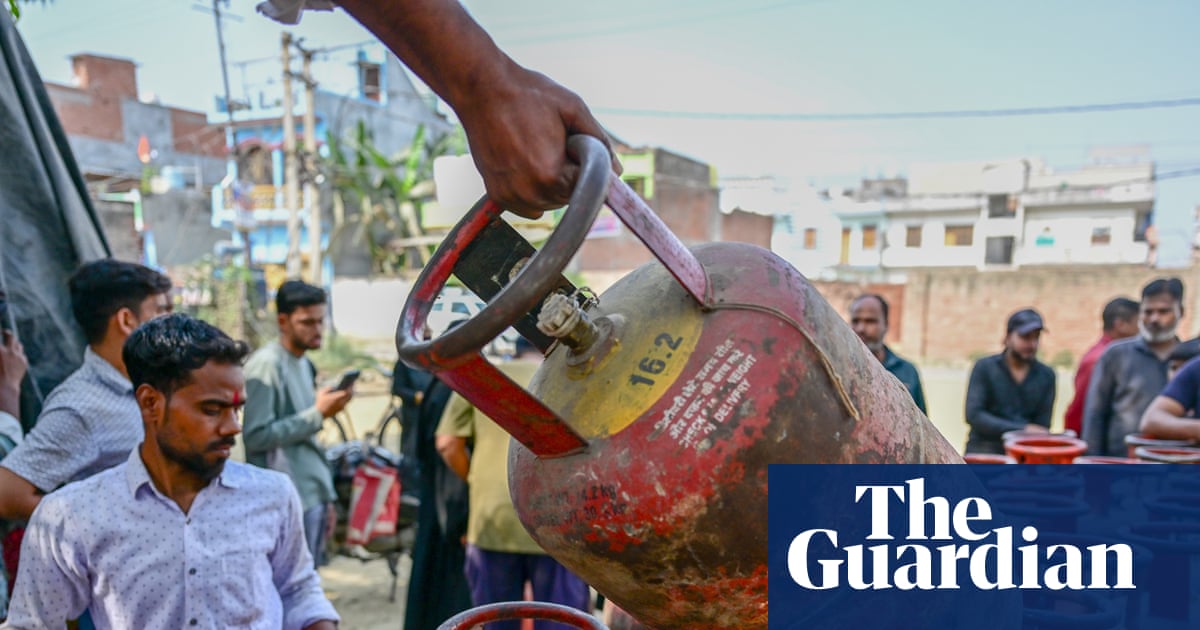
Kolkata restaurants are cutting hours and shrinking menus as disruptions in commercial LPG supply ripple across India, a consequence of escalating tensions in the Middle East. The crisis, impacting approximately a third of the country’s half a million restaurants, is a stark illustration of India’s vulnerability to energy shocks, particularly as it imports nearly 90% of its oil and half its gas, much of it from the Gulf region.
Sagar Daryani, president of the Restaurant Association of India, described the sector as operating under “severe constraints,” with businesses relying on temporary measures to remain open. In Kolkata, chefs at the Arsalan restaurant are resorting to traditional cooking pots as gas supplies dwindle. “It’s a thin line between fighting today to survive tomorrow,” Daryani said.
The supply issues are prompting calls for a shift to electric cooking. Neha Dhingra, of the India Program at the Collaborative Labeling and Appliance Standards Program (CLASP), stated that the crisis “has made us realise how critical the cooking fuel vulnerability is.” Some restaurants are already removing slow-cooked dishes from their menus to conserve gas, while others have been forced to close entirely.
The energy crisis is coinciding with significant economic headwinds for India. The rupee experienced its largest single-day drop in four years on Friday, driven by concerns that soaring oil and gas prices will dramatically increase the country’s import bill and stifle economic growth.
The repercussions extend far beyond India’s borders. In Thailand, tourism-dependent businesses are bracing for a downturn as travelers cancel bookings amid regional instability. Suwarin Nantaya, a trekking tour operator in Chiang Mai, reported a drop in inquiries from 30 per day to just three since the outbreak of conflict. “They are afraid that they will not locate any flight back home,” Nantaya said, adding that hotels, restaurants, and souvenir shops are all feeling the impact. Approximately 1,000 Thailand-bound flights have been cancelled, and the tourism ministry predicts potential losses of £934.4m if airspace closures persist for eight weeks.
Sri Lanka has reintroduced a QR code-based fuel rationing system, mirroring measures implemented during the 2022 economic crisis. Autorickshaw driver Nissanka Lakshman lamented the hardship, stating he is forced to cut back on meals due to limited fuel allocations. “I came to the fuel station at 4.30 in the morning. We obtain only 15 litres for an entire week, but I need about 6-9 litres a day to make a living,” he said. Another resident, A Sanka, expressed frustration at the government’s lack of preparedness, saying, “It’s unfortunate that a small country like Sri Lanka has to go through this, when the big guys are fighting.”
Security concerns are similarly escalating in Europe. Following airstrikes in Iran, attacks have targeted Jewish institutions in Norway, Belgium, and the Netherlands. An improvised explosive device damaged the US embassy in Oslo, while explosions and a fire struck synagogues in Liège and Rotterdam, and a Jewish school in Amsterdam. While no injuries were reported, the incidents have sparked fear within Jewish communities and prompted increased security measures. Officials are investigating potential links to the Iranian regime, with some European leaders raising concerns about “terror cells directed by Iran.”
The rising cost of jet fuel is also impacting air travel. Fly Safair, a regional airline in South Africa, has introduced a “dynamic fuel surcharge” in response to a 70% increase in fuel prices at coastal airports. Airlink has also increased prices. Economists predict that petrol prices in South Africa could rise by as much as 25% and diesel by 44% on April 1st. South Africa’s central bank is revising its economic projections, acknowledging that previous assumptions about oil prices are no longer valid.
Even seemingly unrelated sectors are feeling the effects. In Japan, snack maker Yamayoshi Seika has halted production of its popular Wasabeef crisps due to difficulties securing heavy oil for its cooking processes, prompting dismay among consumers on social media. Japan imports approximately 90% of its oil from the Middle East, with 70% of that supply transiting the Strait of Hormuz.
Beyond energy, congestion in the Strait of Hormuz is disrupting the flow of grain, building supplies, and vital chemicals. As of this week, 1,541 ships were reportedly stuck on either side of the strait, including vessels carrying bauxite, limestone, sand, sulphur, grain, and fertiliser raw materials. The International Food Policy Research Institute warns that a prolonged closure could affect fertiliser and food production costs, with 30% of global fertiliser shipments passing through the strait.
In Bangladesh, long queues have formed at bus terminals as travelers attempt to return home for Eid, with reports of price gouging and fuel shortages. Authorities have capped fuel sales, deployed troops to guard depots, and implemented energy-saving measures, but concerns remain about the potential for wider public frustration.
While net energy exporters like Norway and Canada could potentially benefit from the crisis, the overall global impact remains uncertain. The United States is considering easing sanctions on Venezuela and Russia to boost oil production, a move that has drawn criticism from sanctions campaigners.
Leave a Reply