
astronomers Record First-Ever ‘Heartbeat’ of a newborn Magnetar Following compact Star Collision
WASHINGTON – In a landmark finding, astronomers have detected the first confirmed “heartbeat” - periodic X-ray pulses – emanating from a newly formed magnetar, a neutron star with an remarkably powerful magnetic field, born from the merger of two dense stellar remnants.The observation, made possible by NASA’s Fermi Gamma-ray Space Telescope and the Neutron star interior composition Explorer (NICER) aboard the International Space Station, provides unprecedented insight into the extreme physics governing these cosmic events.
The findings, published today, reshape understanding of what happens when compact objects like neutron stars collide. Previously, it was theorized that such mergers would obliterate any nascent magnetar. This detection confirms that magnetars can survive these violent encounters, and offers a crucial link between gamma-ray bursts, gravitational waves, and the behavior of matter under immense pressure. The research team believes this is just the first of many such detections, opening a new window into the universe’s moast energetic phenomena.
The event, designated GRB 230203A, was initially identified as a short gamma-ray burst on February 3, 2023. Following the burst, NICER detected X-ray pulsations with a period of approximately 10 milliseconds – the telltale “heartbeat” of a magnetar spinning rapidly. This rapid spin and intense magnetic field generate the observed pulsations.
“This is the first time we’ve caught a newborn magnetar in the act of forming,” explained Dr. Cole Miller, a professor of astronomy at the University of Maryland and a member of the research team. “It’s like witnessing the very first breaths of a new cosmic entity.”
The merger likely involved two neutron stars,or a neutron star and a black hole. The resulting magnetar possesses a magnetic field strength estimated to be 100 trillion times stronger than Earth’s. Such extreme conditions allow scientists to probe the fundamental laws of physics in ways impossible to replicate on Earth.
The discovery has important implications for multi-messenger astronomy – the coordinated observation of cosmic events using different types of signals, including light, gravitational waves, and particles. Future observations, particularly with advanced gravitational wave detectors, are expected to reveal more details about the progenitors of these mergers and the formation processes of magnetars. This breakthrough promises to unlock further secrets of the universe’s most powerful explosions and the exotic states of matter they create.
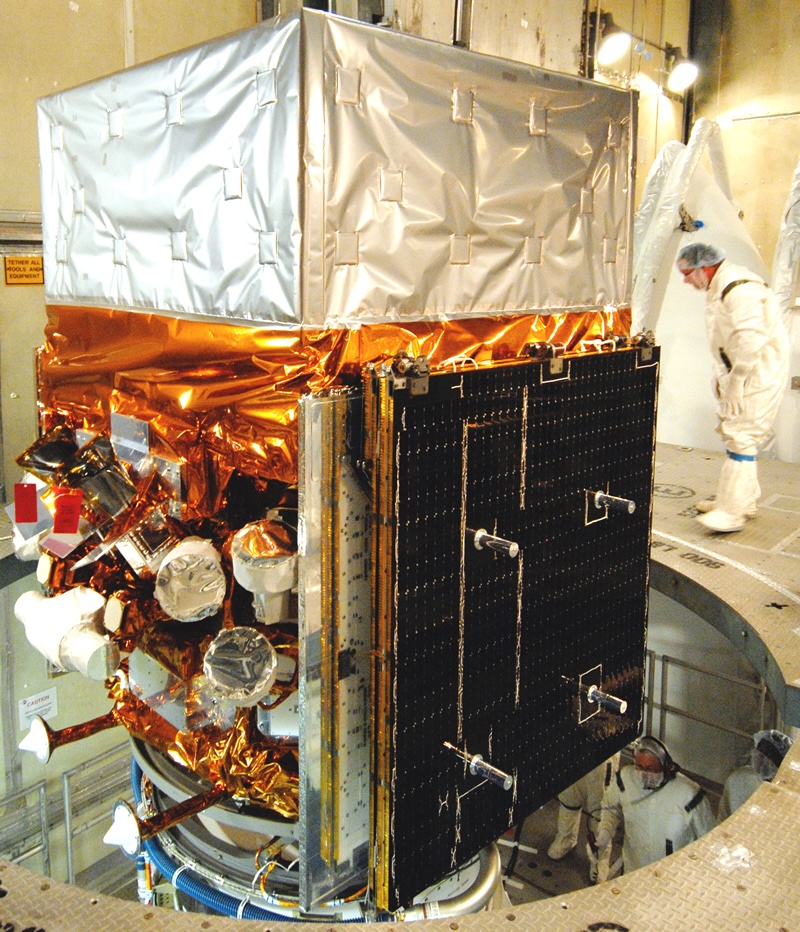
(Image credit: NASA/DOE/Fermi LAT Collaboration)
