
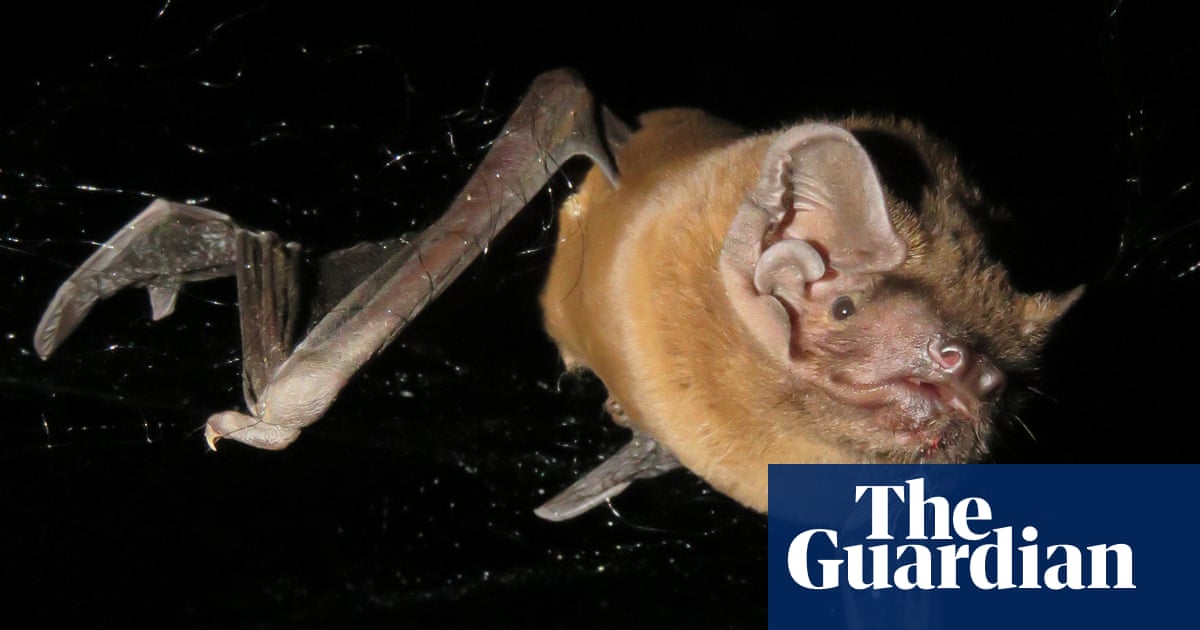
Bat Recorded Consuming Robin Entirely During Flight in Landmark study
Researchers have documented,for the first time,a bat successfully hunting,killing,and consuming a migratory bird – a robin – entirely in mid-flight. The remarkable event was captured through miniature recording devices attached to greater noctule bats in southern Spain, and the findings were published in the journal Science.
The study, led by researchers from aarhus University and the Doñana Biological Station, provides definitive evidence supporting a long-held theory that bats prey on birds, particularly during crucial periods like pre-hibernation in autumn and gestation in spring. Dr. Carlos Ibáñez, of the Doñana Biological Station, initially proposed this idea 25 years ago after discovering feathers in bat faeces, but faced skepticism from the scientific community.
To gather conclusive proof, Ibáñez and colleagues employed a range of technologies including surveillance cameras, military radar, and ultrasound recorders attached to hot air balloons. The latest research involved fitting bats taken from nesting boxes with “backpacks” containing instruments to record acceleration, altitude, and audio, including echolocation calls.
Data from one bat revealed it climbed to an altitude of 1.2km before encountering its prey. “The bat is flying in stealth mode,” explained Dr. Laura Stidsholt, a co-author of the study from Aarhus University. “It’s night-time, the bird can’t see it coming, it can’t hear the echolocation sounds. The bat has an advantage.”
The robin initially entered a downward spiral upon sensing the bat’s approach – possibly alerted by its wingbeats or shadow – initiating a chase lasting over 1km. During the pursuit, the microphone recorded 21 distress calls from the robin. As the pair descended,a final shriek from the bird was followed by 23 minutes of continuous chewing sounds,indicating the bat consumed the robin while maintaining flight and without losing altitude.
“It’s captivating that bats are not only able to catch them, but also to kill and eat them while flying,” Stidsholt stated. “A bird like that weighs about half as much as the bat itself – it would be like me catching and eating a 35-kilo animal while jogging.”
Further research, building on previous work by Ibáñez, suggests bats may bite off and discard the wings of their prey – 11 severed songbird wings were analyzed via X-ray imaging and DNA analysis – likely to reduce weight and drag.Researchers hypothesize the bats then use the membrane between their hind legs as a pouch to facilitate mid-flight consumption.
Elena Tena, of doñana Biological Station and a lead author of the study, acknowledged the unsettling nature of the finding, stating, “While it evokes empathy for the prey, it is part of nature.” The researchers emphasize the importance of understanding this behaviour, particularly as the greater noctule bat is a rare and declining species in southern Europe, facing threats from droughts and wildfires.
