
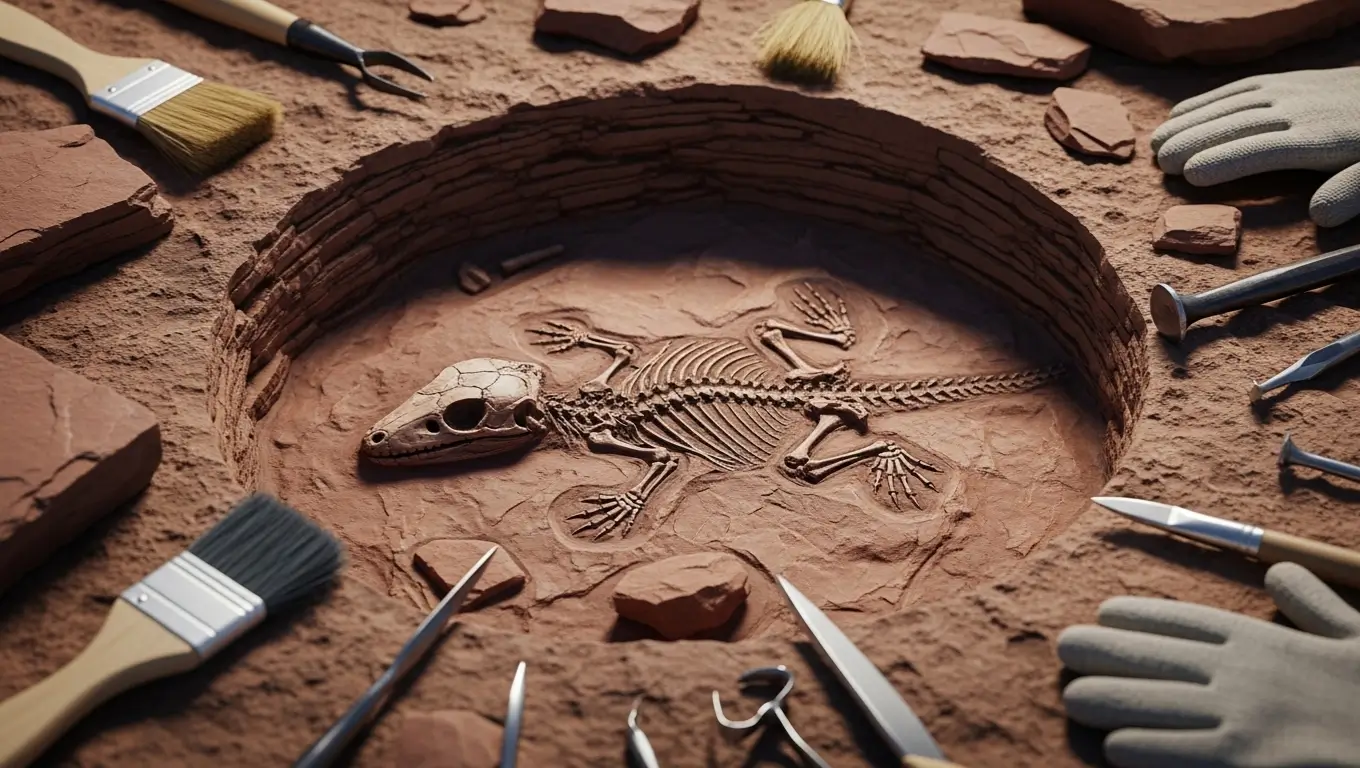
Ancient Lizard Fossil Challenges Understanding of Snake and Tuatara Origins
HELSBY, ENGLAND – A 242-million-year-old fossil unearthed in England is forcing paleontologists to re-evaluate the evolutionary history of lizards, snakes, and tuataras. The remarkably well-preserved remains of Agriodontosaurus helsbypetrae reveal a creature far removed from the simplified ancestral forms previously envisioned, suggesting the origins of these reptiles were more complex and occurred over a longer timeframe than previously believed.
The discovery, detailed in recent reports, demonstrates that the earliest ancestors of these scaled reptiles did not resemble miniature versions of their modern counterparts. Agriodontosaurus possessed specialized dentition and a rigid skull, lacking characteristics scientists traditionally expected to find in early lepidosaurs – the group encompassing lizards, snakes, and tuataras.
“This confirms that the ancestors of lizards, snakes and Tuataras did not look like a reduced version of these modern animals,” researchers state.
The fossil’s intricate details, revealed through advanced techniques like synchrotron microtomography, are prompting a reassessment of existing evolutionary models. Scientists now believe certain modern traits may have emerged later in the evolutionary process, or through convergent evolution – where similar features develop independently in different lineages.
The find also raises questions about current phylogenetic classifications, suggesting traits may have evolved in parallel across different subgroups. Agriodontosaurus doesn’t simply fill a gap in the fossil record; it “redraws the contours of the reptilian past,” offering a new starting point for understanding the rapid diversification of reptiles following the Permian extinction event. This tiny lizard underscores the power of individual fossils to fundamentally alter our understanding of life’s history.
