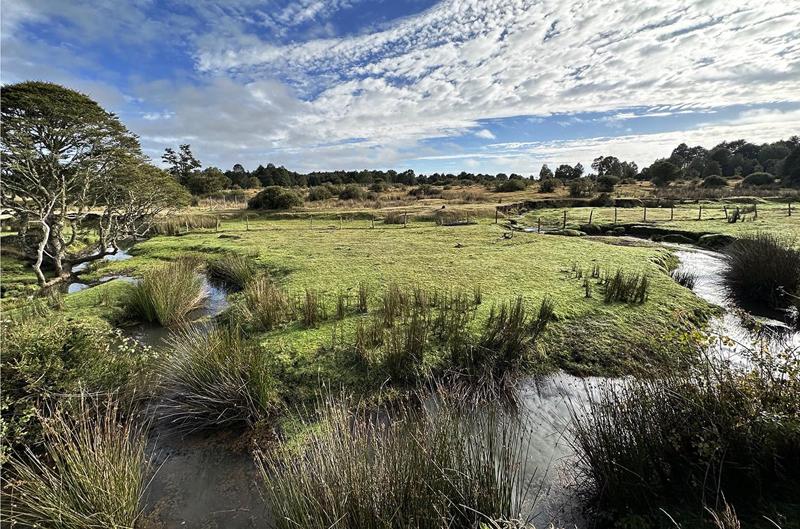
A new study published Thursday challenges the long-held understanding of when humans first arrived in the Americas, suggesting the Monte Verde archaeological site in Chile is significantly younger than previously believed. Researchers now estimate the site to be around 8,000 years old, or even younger, rather than the 14,500 years indicated by earlier radiocarbon dating in the 1970s.
The Monte Verde site, located on the banks of Chinchihuapi Creek in southern Chile, has been pivotal in the debate surrounding the peopling of the Americas. Its discovery overturned the prevailing theory that the first inhabitants arrived via the Clovis culture, characterized by distinctive fluted stone tools, approximately 13,000 years ago. Monte Verde’s initial dating suggested human presence predated the Clovis period and potentially indicated early Americans traveled by boat along the Pacific coast.
The new research, led by Juan-Luis García and Claudio Latorre, revisited the original findings and employed updated dating techniques. The study focuses on artifacts recovered from the site, including chipped stone spearpoints, mastodon ribs showing evidence of butchering, and a preserved human footprint in hardened clay. The revised dating has reignited a debate among archaeologists about the timeline of the first American migrations.
The implications of a younger Monte Verde are substantial. If the site is only 8,000 years old, it casts doubt on the idea that humans were present in South America so early, and potentially supports alternative migration routes or timelines. The findings also challenge the established narrative of how and when humans dispersed throughout the Americas after crossing the Bering Land Bridge from Asia.
Scientists agree that Homo sapiens originated in Africa around 300,000 years ago, migrating to Europe and Asia approximately 100,000 years ago, with the arrival in the Americas occurring much later. The timing of that arrival, however, remains a central question in archaeological research. The Monte Verde site is considered a key piece of that puzzle.
The Associated Press reported that the site’s importance lies in its ability to provide critical evidence for understanding how people populated the Americas. The initial dating of Monte Verde was initially met with controversy, but ultimately shifted the focus away from the Clovis-first theory. The current re-evaluation of the site’s age is expected to spur further investigation and debate within the archaeological community.
As of Thursday, no official statement has been released by the Chilean government regarding the potential impact of the revised dating on the preservation or further study of the Monte Verde site. Further research is planned to corroborate the new findings and to explore the implications for understanding the broader patterns of early human migration in the Americas.
Leave a Reply