
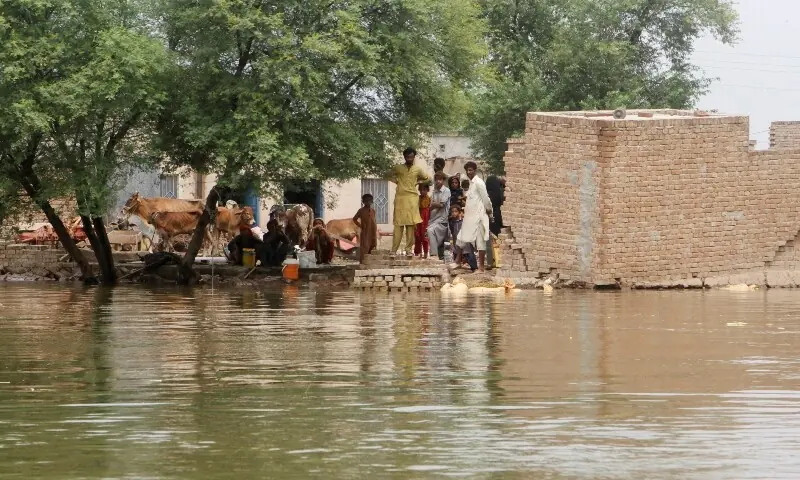
Pakistan floods Raise Fears of Widespread Displacement
recent devastating floods in Pakistan are raising concerns about potential mass migration as communities grapple with widespread destruction and economic hardship. The floods, exacerbated by glacial melt from the Himalaya and Hindu Kush ranges, have created unstable lakes and increased disaster risk.
According to Hafiz Wasi Mohammad Khan, a member of the Punjab Agriculture Research Board, unpredictable weather, shrinking agriculture, coastal erosion, unemployment, and prolonged dry spells have already driven internal migration within Pakistan over the past decade. He fears the recent floods will accelerate this trend, estimating that approximately 25% of those displaced may not be able to return home.Pakistan was ranked the country most affected by climate change in 2022 by the Climate Risk Index. Experts also highlight human factors contributing to the crisis, including unchecked land grabs and illegal construction obstructing natural drainage. Khan expressed concern that Pakistan’s flood management capabilities remain unchanged since the 2010 floods.
The 2010 floods displaced over 2 million people, with 70% permanently relocating to major cities due to the loss of homes and farmland, according to the climate change ministry. Khan warns that another large-scale migration to already strained urban centers could worsen infrastructure issues, increase crime, and deepen poverty.affected families have lost homes, land, livestock, and stored supplies, creating an urgent need for financial assistance for farmers to procure seeds and agricultural inputs.
While acknowledging the devastation, some communities, notably those downstream, have historically viewed floods as potentially beneficial, citing land regeneration and replenishment of groundwater levels.
Calls for support are growing. Chadhar advocates for a “special agriculture fund,” loan forgiveness, and utility bill waivers, emphasizing the government’s limited capacity to handle the rehabilitation effort alone. Farid Abdulkadir Aiywar, head of delegation for the International Federation of Red cross and Red Crescent Societies (IFRC) in Pakistan, urged the international community to recognize the ongoing tragedy, stating that entire communities remain underwater and access to essential resources like safe water and healthcare is critical.
Though, Irfan Ali Kathia, director General of the Punjab Provincial Disaster Management Authority, anticipates limited mass migration, citing the government’s planned “massive rehabilitation package” designed to cover crop and land losses, as well as home destruction.
