The killing of Iranian Supreme Leader Ayatollah Ali Khamenei in a joint U.S.-Israeli operation on Saturday has exposed years of covert intelligence gathering, including the exploitation of a vast network of CCTV cameras in both Moscow and Tehran, according to reports. The operation, which too resulted in the deaths of several senior Iranian military officials, including members of the Iranian Revolutionary Guard Corps (IRGC), was enabled by real-time intelligence sharing between the CIA and Israeli counterparts.
The CIA had been tracking Khamenei’s movements for months, gaining increasingly detailed insight into his daily routine. This surveillance culminated in knowledge of a Saturday morning meeting of senior Iranian officials at a compound in Tehran, which intelligence sources say prompted the acceleration of strike plans. The New York Times first reported on the CIA’s involvement in tracking Khamenei prior to his death.
While the U.S. Initially offered conflicting statements regarding its role, Secretary of State Marco Rubio reportedly assured Republican Representative Mike Turner of Ohio that the U.S. Did not directly target Khamenei or other Iranian leadership. However, President Trump subsequently confirmed the joint U.S.-Israeli operation, a statement that aligns with reports from CBS News and Al Jazeera.
The intelligence operation extended beyond traditional methods, reportedly leveraging a compromised network of CCTV cameras. According to sources, hackers provided access to camera feeds from Moscow – a city with a higher density of CCTV cameras than Tehran – allowing agents from both Mossad and the CIA to monitor the movements of Iranian leaders. This level of surveillance allowed for precise targeting and timing of the strike.
The assassination has triggered concern within the Kremlin, with reports suggesting a sense of alarm among Russian officials. Russian opposition politician Dmitry Gudkov posted on Facebook that unconfirmed but persistent rumors of fear were circulating within the Kremlin. Alexander Dugin, a prominent Russian philosopher and advisor to President Putin, reportedly expressed concerns that Iran’s fall could leave Russia vulnerable, suggesting a shift in President Trump’s approach towards “neoconservatives.”
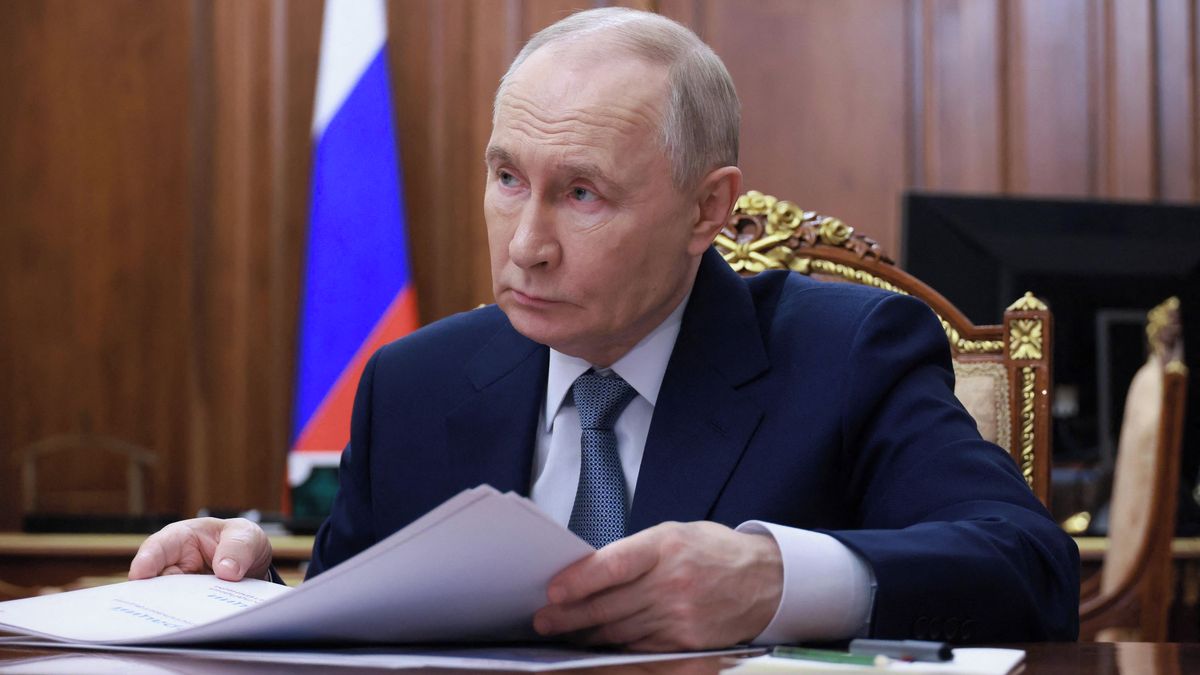
Adding to the atmosphere of heightened security, President Putin has largely disappeared from public view. His last public appearance was on March 9th, and since then, his engagements have been limited to meetings with governors, the Minister of Education, and the head of Sberbank. These meetings have been presented to the public through pre-recorded videos, raising questions about his actual location. Putin also appears to be conducting meetings from multiple, identically furnished offices in various residences, including Novo-Ogarjovo near Moscow, Sochi, and Valdai, making it difficult to verify his whereabouts.
A three-kilometer security zone is being established around Putin’s Bocharov Ruchey residence in Sochi, prohibiting construction of heliports, shooting ranges, operation of paintball and airsoft clubs, animal husbandry, waste disposal, and the display of banners. Drone flights and the mooring of vessels are also banned, with limited exceptions. These measures suggest a significant escalation in security protocols surrounding the Russian President.
The disruption of mobile internet access in Moscow in recent weeks, officially attributed to security concerns related to the “special military operation” in Ukraine, has also been linked by some Russian media outlets to the situation in Iran. The U.S. And Israel have not commented on the implications of Khamenei’s death for ongoing nuclear negotiations with Iran, or on the broader regional security implications.
Leave a Reply