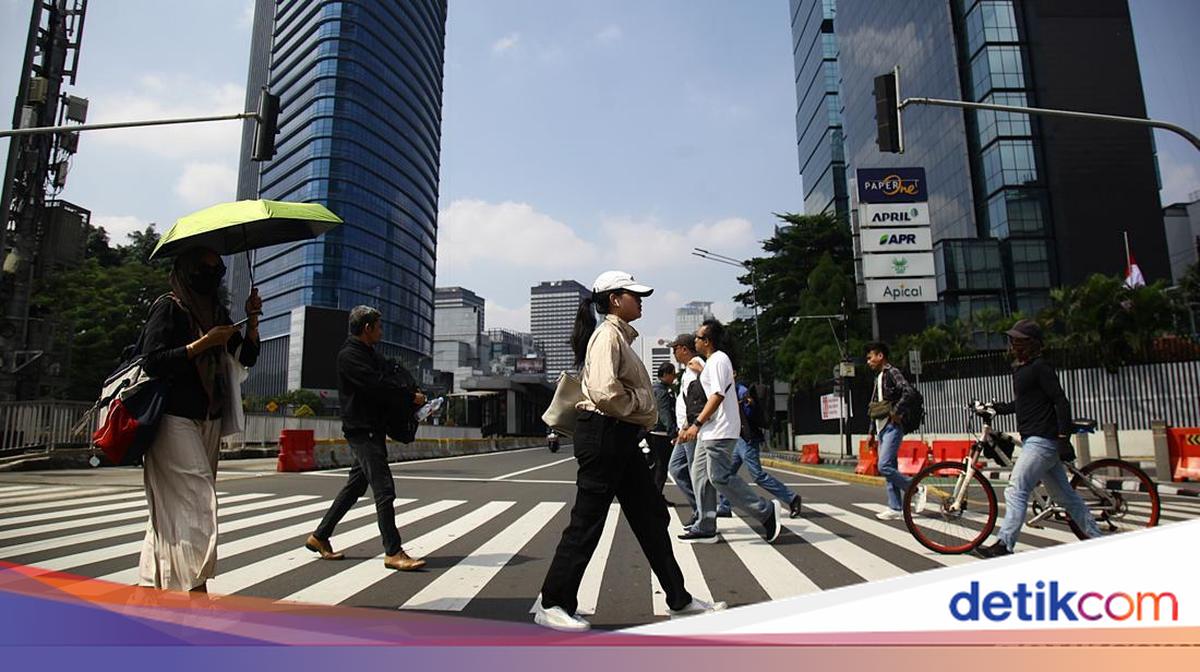
Jakarta – The Indonesian government is preparing to implement a work-from-home (WFH) policy for one day per week, citing potential budgetary efficiencies linked to the escalating conflict in the Middle East. The measure, initially intended for civil servants (ASN), is now being encouraged for implementation across the private sector and local governments, according to Coordinating Minister for Economic Affairs Airlangga Hartarto.
“The latest consideration, stemming from assessments, is that with rising oil prices, efficiency in working hours is necessary,” Hartarto stated following a meeting with President Prabowo Subianto on Thursday, March 19, 2026. “Flexibility for work from home – one day out of five working days – will be introduced.”
Details of the policy’s implementation are still being finalized, Hartarto indicated. “The technical aspects are currently being prepared, with the expectation that this will not only apply to ASN but also to private companies and regional governments,” he added. A specific start date has not yet been announced, though the government anticipates implementation “post-Lebaran,” with a more detailed public announcement forthcoming.
The timing of the policy will be adjusted based on the evolving situation in the Middle East, particularly oil prices and the progression of the conflict, Hartarto explained. “We will see the situation. The situation of oil prices, the situation of the war. So we will follow the developments,” he said.
The government projects significant savings in fuel consumption as a result of the WFH scheme. Hartarto estimated a reduction of approximately one-fifth in daily fuel expenditure. “There is a saving in terms of the use of mobility from gasoline, the savings are quite significant, one-fifth of what we normally spend,” he stated.
The move comes amid growing concerns about the economic impact of the conflict in the Middle East, as highlighted by recent reports. A report from Kaltim Tribun details the government’s broader consideration of austerity measures, including reduced working hours, in response to the regional instability.
Whereas the policy is being framed as a national efficiency measure, the Jakarta Timur administration has already emphasized the importance of in-person work for public service delivery. According to a report from Antara News, Assistant for Government Affairs of the Jakarta Timur City Administration, Eka Darmawan, conducted a surprise inspection on April 8, 2025, confirming full attendance of ASN following the Eid al-Fitr holiday, emphasizing the need for continued in-person service provision.
The government is currently developing the logistical framework for the WFH policy, aiming to minimize disruption to public services and business operations. Further details are expected to be released once the plan is finalized.
Leave a Reply