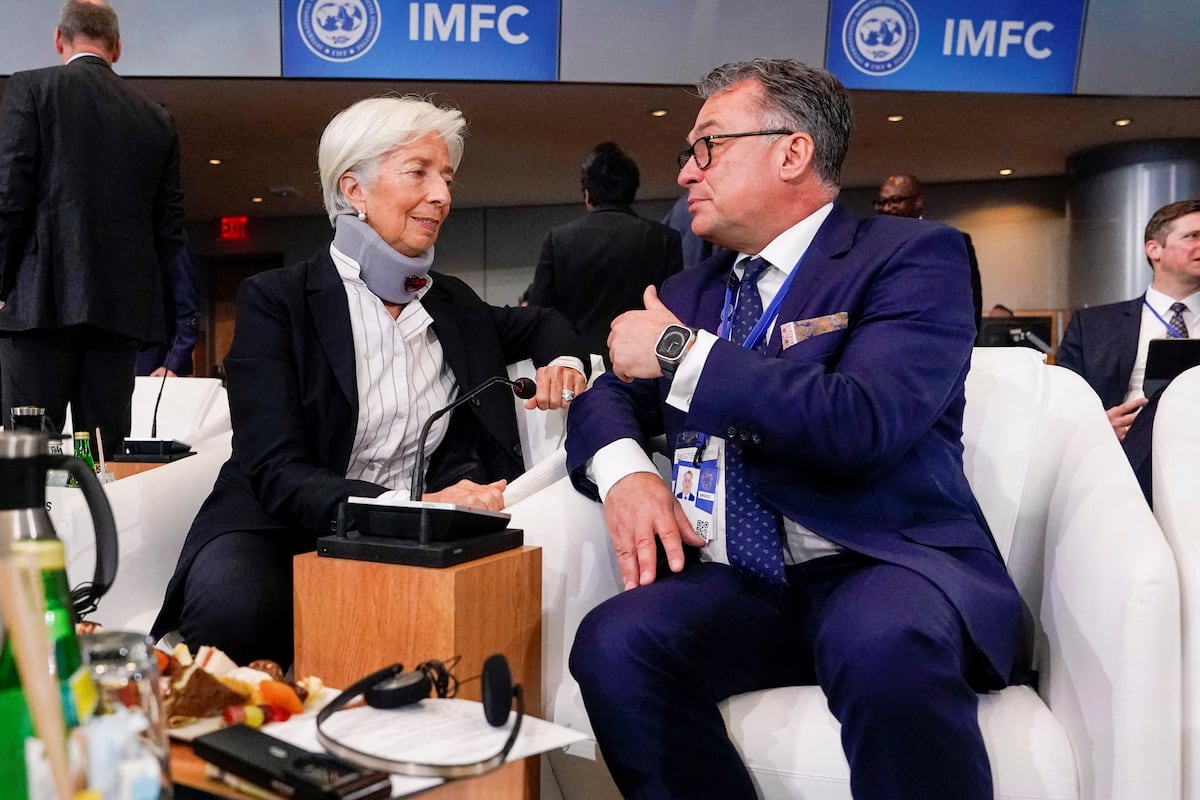
Frankfurt – Joachim Nagel, President of the Deutsche Bundesbank, has called for the European Central Bank (ECB) to consider raising interest rates at its next meeting in April should inflationary pressures intensify, a move that signals a hawkish shift within the central bank. Nagel warned that a resurgence of inflation could necessitate a more restrictive monetary policy, according to a Bloomberg interview on Friday.
The comments come just one day after the ECB held interest rates steady for the sixth consecutive time, though the tone of the meeting signaled a willingness to consider future increases. The shift follows the onset of geopolitical instability, with the ECB’s latest projections leaving little room for complacency if conditions do not rapidly improve. The central bank now forecasts inflation at 3.5% for this year, potentially rising to 4.4% in a severe scenario – a significant increase from the 1.9% previously predicted just weeks ago.
Nagel cited the ECB’s past missteps in managing the initial inflationary surge of 2021 and 2022 as a cautionary tale. He emphasized the importance of learning from the experience of initially characterizing the price increases as “transitory,” a position that ultimately required emergency intervention and substantial interest rate hikes. “That experience will play an important role ” Nagel stated.
Gabriel Makhlouf, Governor of the Central Bank of Ireland, echoed Nagel’s hawkish stance, indicating that two interest rate increases are now within the baseline scenario being considered by the ECB. However, not all voices within the central bank agree. José Luis Escrivá, Governor of the Bank of Spain, suggested that an increase may not be inevitable, stating that the ECB makes decisions based on medium-term inflation trends and that improvements in the situation could obviate the necessitate for action.
Martins Kazaks, Governor of the Bank of Latvia, also indicated a willingness to act swiftly, stating that policy measures would be analyzed. He likened the current economic situation to a broken leg, requiring months to stabilize, rather than a simple bruise.
Analysts are increasingly anticipating ECB action. JP Morgan now expects rate hikes in April and July, while Morgan Stanley and Deutsche Bank predict increases in June, and September. The Euribor, a key European mortgage rate indicator, has already begun to reflect these expectations, with rising rates threatening to increase mortgage payments for variable-rate borrowers.
The ECB’s next meeting is in six weeks, providing more time to assess the impact of current geopolitical events on the economy. Madis Muller, Governor of the Estonian central bank, emphasized the importance of a more thorough evaluation. The debate within the ECB’s Governing Council has shifted from whether to lower or hold rates to determining when increases will be necessary, with futures markets now pricing in three rate hikes this year, potentially reaching 2.75%.
As former Italian Treasury Secretary Lorenzo Codogno noted, once inflation is unleashed, This proves tough to contain. The central bank now faces a choice between demonstrating agility and commitment to combating inflation through rapid action, or adopting a more cautious approach based on confidence in a more benign scenario.
With official March inflation data expected next week, organizations like the Complutense Institute of Economic Analysis (ICAE) are tracking the impact of energy prices on the Spanish CPI. Their calculations suggest that increases in diesel, gasoline, and electricity prices are already adding 1.1 percentage points to inflation, compounded by the base effect of lower prices last year. These factors could push Spanish inflation beyond 3.5% – up from 2.3% in February – and similar price pressures are expected across Europe.
Leave a Reply