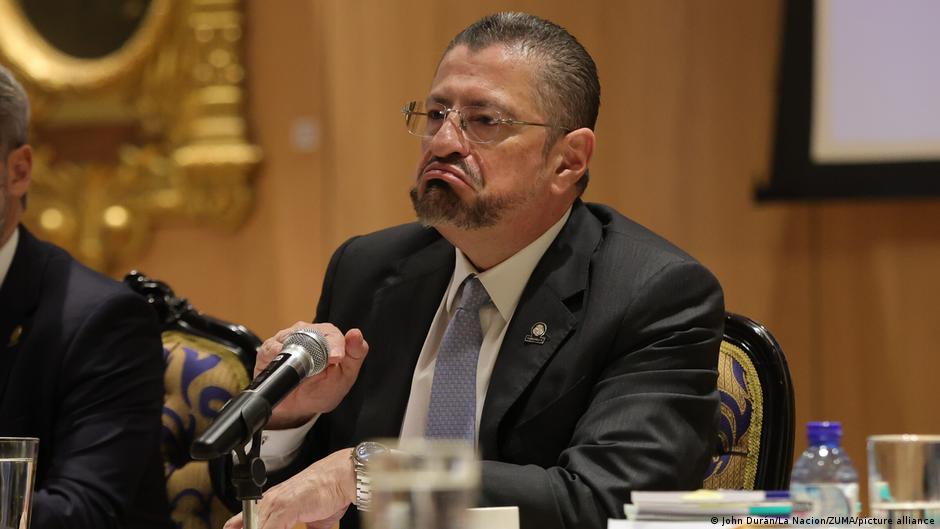
Costa Rica severed diplomatic relations with Cuba on Wednesday, ordering the closure of its embassy in Havana and requesting Cuban diplomats depart San José by the end of March. The move, announced by President Rodrigo Chaves, accompanied a stark declaration that the “hemisphere must be cleansed of communists,” according to statements made to the press.
Chaves stated Costa Rica “does not recognize the legitimacy of the communist regime of Cuba in view of the mistreatment, repression, and undignified conditions in which the inhabitants of that beautiful island live.” He framed the decision as a rejection of what he called an oppressive system, alleging widespread “mistreatment, repression and undignified conditions” for the Cuban people.
The announcement, made alongside U.S. Ambassador Melinda Hildebrand, signals a significant shift in Costa Rica’s foreign policy. Foreign Minister Arnoldo André Tinoco confirmed the rupture in relations, stating that Costa Rica had requested the withdrawal of all Cuban diplomatic personnel, with the exception of consular staff. Costa Rica’s embassy in Havana had been without diplomatic personnel since February 5th.
Although diplomatic ties have been severed, Costa Rica will allow Cuba to maintain a consular presence to serve the approximately 10,000 Cuban residents within its borders. Costa Rican citizens in Cuba will receive consular services through the country’s embassy in Panama.
The Cuban Ministry of Foreign Relations swiftly condemned the decision as “arbitrary,” attributing it to pressure from the United States. A statement released by the ministry accused Costa Rica of “subordination to the policy of the United States against Cuba” and of joining “the offensive of the U.S. Government in its renewed attempts to isolate our country from the nations of Our America.”
Chaves, who will be succeeded by Laura Fernández of his party on May 8th, characterized the move as a matter of ideological principle and human rights concerns. He argued that maintaining diplomatic relations with Havana was incompatible with Costa Rica’s democratic values. The decision follows Costa Rica’s abstention in October from a U.N. General Assembly vote condemning the U.S. Embargo on Cuba, a departure from its previous voting record.
The escalation in tensions between Costa Rica and Cuba comes after Ecuador similarly severed ties with Havana earlier this month. Costa Rica’s action, however, was accompanied by the unusually direct anti-communist rhetoric from President Chaves, raising questions about the future direction of the country’s foreign policy.
Tinoco described the rupture as “operational, not symbolic,” indicating a complete cessation of diplomatic engagement beyond basic consular services. The move leaves the future of regional relations uncertain, with Cuba maintaining its stance against what it perceives as U.S. Interference and external pressure.
Leave a Reply