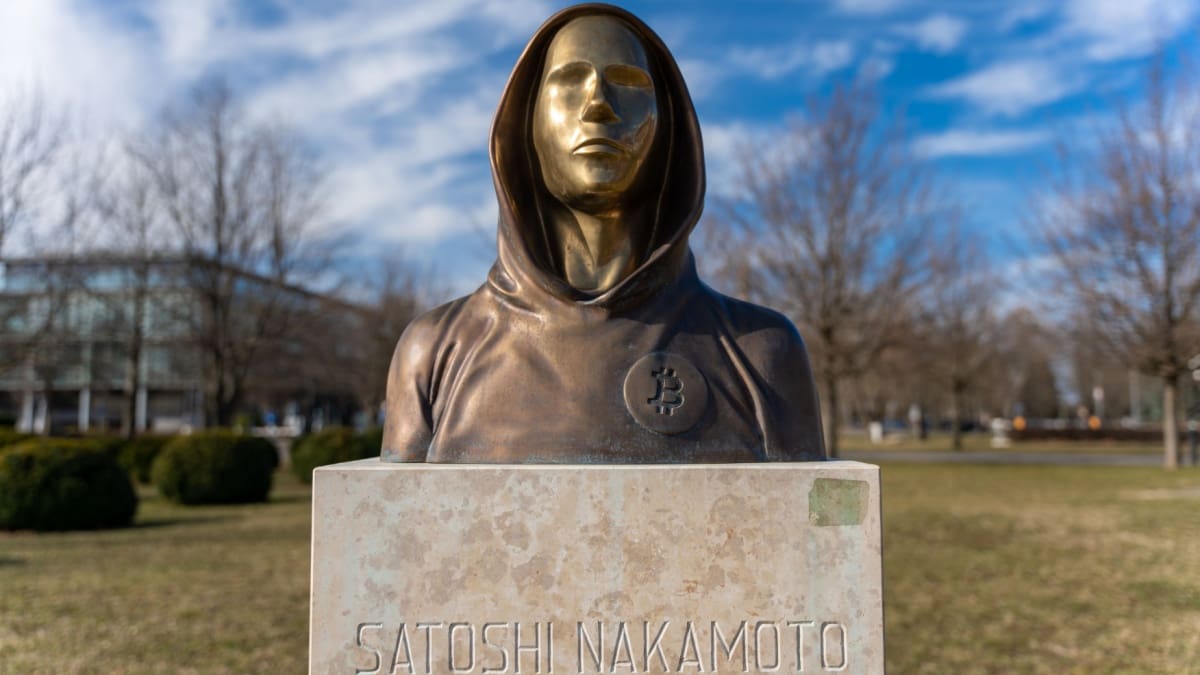
The estimated 1.1 million Bitcoin (BTC) held by Satoshi Nakamoto, the pseudonymous creator of the cryptocurrency, are increasingly viewed as a potential security risk as quantum computing technology advances. While the Bitcoin network itself is considered secure, older Bitcoin addresses, including those associated with Nakamoto, are vulnerable to potential attacks.
Quantum computers, unlike traditional computers that operate using bits representing 0 or 1, utilize qubits. Qubits can represent multiple states simultaneously, enabling them to perform certain calculations exponentially faster. Technology companies like Google and IBM are investing heavily in quantum computing, bringing systems with thousands of qubits closer to reality.
The core threat lies in the potential for quantum computers to break the cryptographic algorithms that secure Bitcoin wallets. Each Bitcoin wallet has a public and private key. Deriving the private key from the public key is currently computationally infeasible, requiring millions of years with existing technology. However, specialized quantum algorithms could theoretically accomplish this, granting access to Bitcoin in vulnerable wallets.
Satoshi Nakamoto’s early addresses are particularly susceptible because their public keys are permanently exposed on the blockchain. Users who have reused Bitcoin addresses – sending Bitcoin from an address and then receiving more on the same address – may as well be at risk. According to a report from 2025 by the Human Rights Foundation, approximately 6.5 million Bitcoin are potentially vulnerable. Of those, 1.72 million are held in the oldest addresses, believed to be lost or inaccessible, including Nakamoto’s estimated 1.1 million coins.
At current prices, estimated around $67,600 per Bitcoin as of February 23, 2026, Nakamoto’s holdings alone are worth approximately $67.6 billion. The total amount of potentially exposed coins represents roughly $440 billion, according to CryptoQuant founder Ki Young Ju.
Should Nakamoto’s Bitcoin ever be moved, the impact on the market could be significant. A sudden influx of such a large quantity of Bitcoin could increase supply and potentially depress the price. The coins have remained untouched for years, and any movement could trigger instability and panic among investors.
The Bitcoin community is actively seeking solutions. A new proposal, BIP 360, has been introduced to create an address type more resistant to quantum computing attacks. However, developers emphasize that Here’s only a first step, and further upgrades will be necessary to ensure Bitcoin’s long-term security. Implementing these changes requires consensus from the entire community, as Bitcoin lacks a central authority.
For individual users, the solution is relatively straightforward: transferring Bitcoin to more secure addresses. This option is not available for Nakamoto’s coins, which have never been moved since their creation, and the identity of Satoshi Nakamoto remains unknown. Ideas such as “freezing” vulnerable Bitcoin have been discussed, but are controversial as they contradict Bitcoin’s core principle of individual ownership and control.
Coinbase CEO Brian Armstrong has stated that the quantum computing threat is not an immediate crisis, but rather a challenge the industry can prepare for. However, the potential for disruption remains, and the Bitcoin community continues to explore and debate potential mitigation strategies.
Leave a Reply