
Parkinson’s Disease Cases Surge in South Korea, Prompting Focus on Early Detection & Management
Gyeonggi Province, South Korea – The number of Parkinson’s disease patients in South Korea has risen sharply, increasing by 13.9% over the past four years, according to recent data. This surge underscores the growing need for early diagnosis and accessible management strategies as the nation’s population ages.
Parkinson’s disease, a progressive neurodegenerative disorder, impacts movement and is increasingly prevalent wiht age. Early detection is crucial, as recognizing initial symptoms can be challenging. the Korea Disease Control and Prevention Agency (KDCA) is actively promoting resources to aid in self-assessment and provide pathways to specialist care, alongside supporting ongoing research into the disease’s causes and potential interventions.
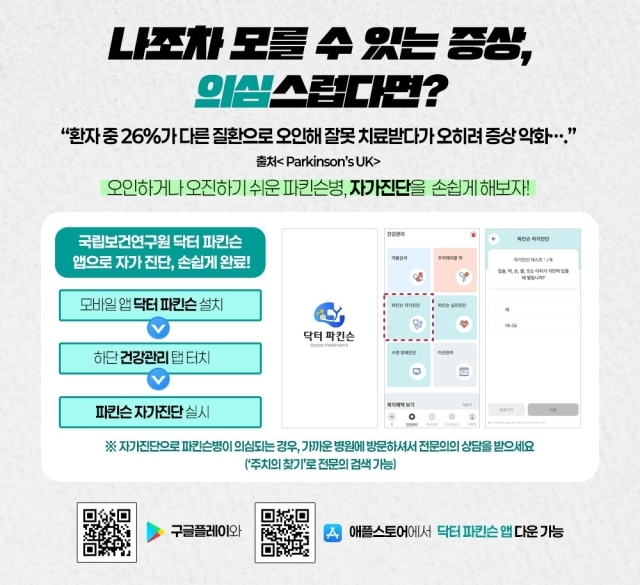
To facilitate early identification, the National Institute of Health offers the ‘Dr. Parkinson’ app, enabling individuals to conduct a self-diagnosis.The app also features a directory to locate nearby specialists for consultation should concerns arise.
Beyond diagnosis, maintaining physical activity is vital for managing Parkinson’s symptoms. The National Institute of Health website provides downloadable exercise programs specifically designed for patients, incorporating the latest research findings. The Parkinson’s Disease Exercise Research Institute complements these resources with exercise videos demonstrating easily integrated routines for daily life.
“Parkinson’s disease is a representative neurodegenerative disease that is rapidly increasing in the aging society, and early diagnosis and systematic management are of utmost importance,” stated Lim Seung-kwan, Director of the Korea Disease Control and Prevention Agency. He affirmed the KDCA’s commitment to identifying the disease’s origins and developing advanced diagnostic technologies through patient cohorts and intervention studies, aiming for tangible benefits for patients and their families.
