
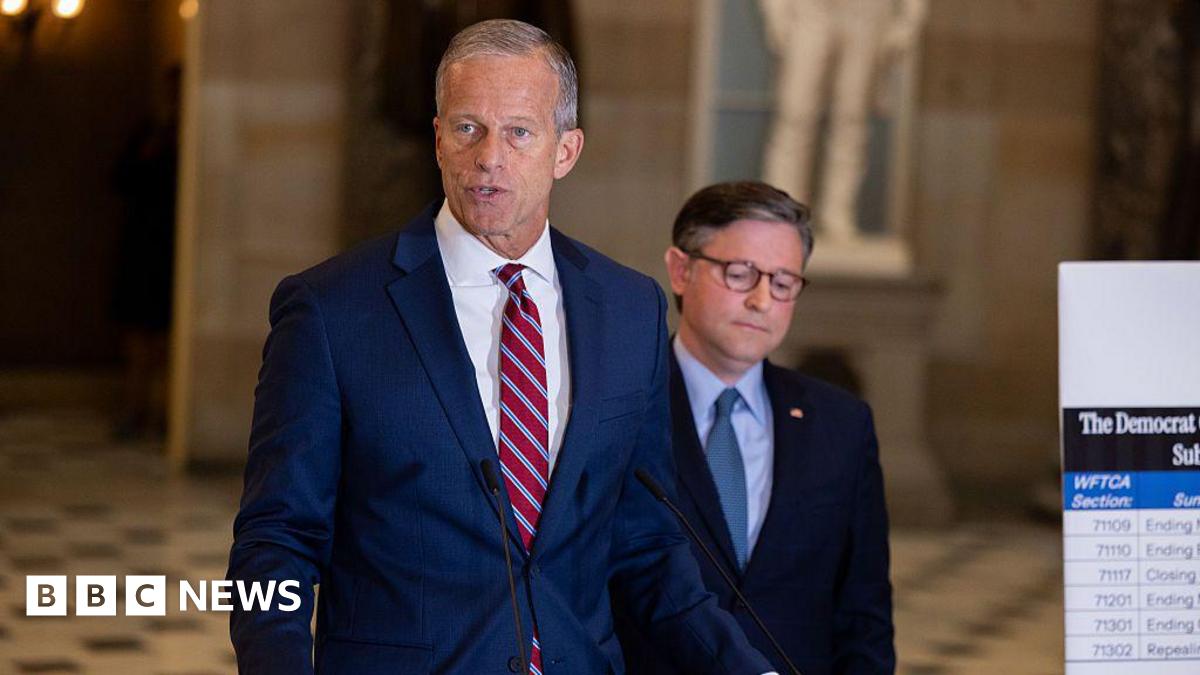
WASHINGTON – The U.S. government shutdown entered its second week as Senate negotiations remained stalled, with both a Republican-led proposal and a separate Democrat-led proposal failing to gain enough votes. The Republican proposal failed with 52 against and 45 in favour, while the Democratic proposal received 45 votes in favour and 52 against.
Both parties continue to blame each other for the impasse, with little indication of a breakthrough. Missouri Republican Senator Josh Hawley stated, “We can vote and vote and vote, but it’s up to basically five people.”
During a White House briefing, Press Secretary Karoline Leavitt accused Democrats of holding Americans “hostage over their demands,” and warned of significant economic consequences, estimating a potential loss of $15 billion (£11.1 billion) in GDP each week,alongside rising unemployment.
White House officials have repeatedly stated their intention to lay off federal workers if the shutdown persists. President Donald Trump announced he would meet with Russell Vought, head of the Office of Management and Budget (OMB), to identify “which of the many Democrat agencies” could be cut. No specific timeline or scope for potential lay-offs or agency cuts has been provided, though Leavitt indicated cuts would focus on agencies that “do not align with this administration’s values of putting our country first.”
As part of the government’s response, Vought announced the suspension of $2.1 billion in federal infrastructure funding for Chicago, adding to previously frozen infrastructure spending of $18 billion in New York City and the cancellation of approximately $8 billion in funding for federal energy projects in several Democratic-run states.
Senate Minority Leader Chuck Schumer argued Democrats are prioritizing healthcare because “we know Americans want this,” and added, “we know many of my Republican colleagues want this as well,” warning that inaction would be “devastating.”
Some Democrats, including Senators Richard Blumenthal of Connecticut and John Fetterman of Pennsylvania, have expressed a desire to hear directly from the president regarding the stalemate, citing concerns that any Senate negotiations with Republicans could be undermined by Trump, referencing his rejection of a bipartisan border bill last year.
Recent polling data reveals a divided public opinion, with a Washington Post poll conducted on October 1 finding 47% of U.S. adults blaming Republicans for the shutdown, compared to 30% blaming Democrats, and 23% unsure.
