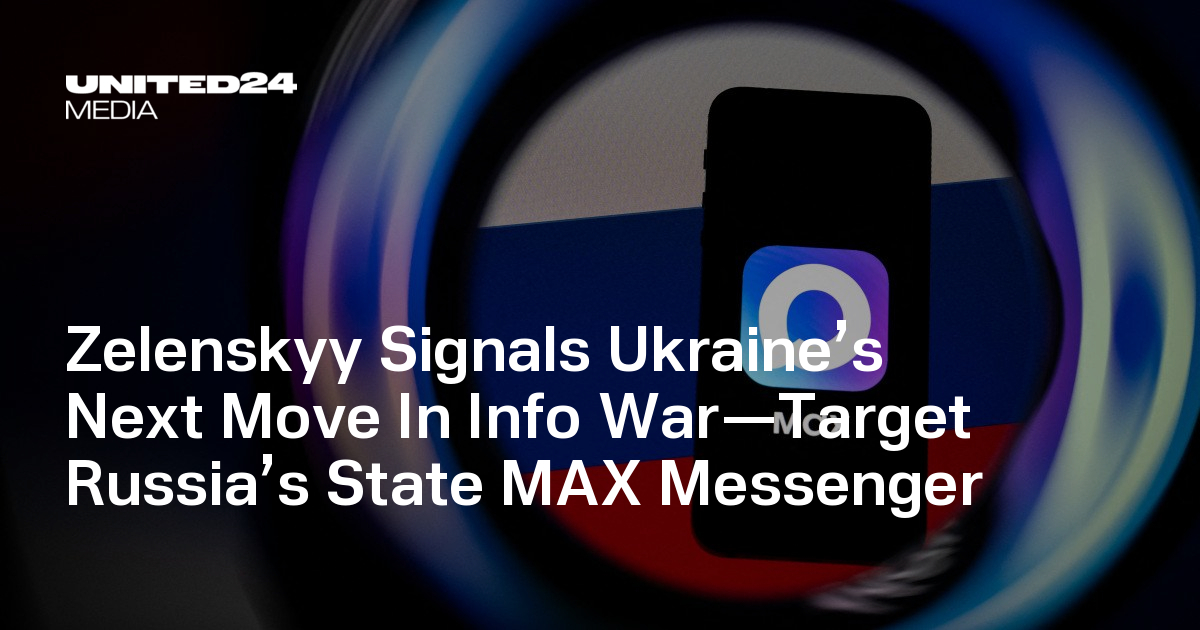
Kyiv is actively leveraging messaging platforms to influence public opinion within Russia and is preparing to extend its reach to the country’s newly launched state messenger, MAX, Ukrainian President Volodymyr Zelenskyy stated Friday.
Speaking during a press conference in Kyiv, Zelenskyy acknowledged the dual-edged nature of platforms like Telegram, which remains a significant communication channel despite increasing restrictions imposed by Russian authorities. He confirmed that Ukrainian intelligence agencies are utilizing Telegram to communicate with individuals inside Russia, while simultaneously recognizing that Russian intelligence services are employing the same platform to target Ukrainians.
“We know this, we detect it, we fight it,” Zelenskyy said, referring to Russian intelligence activity within Ukraine. He added that the increasing limitations placed on Telegram within Russia will complicate Ukraine’s ability to reach Russian audiences. “With the restriction of Telegram in Russia, it will be more difficult to transmit signals to their society,” he stated.
Zelenskyy indicated that Ukrainian officials are now focused on assessing MAX, Russia’s domestically developed messaging application intended as a replacement for Telegram. “I had a report on their modern network—MAX—we will also reach MAX,” he said.
The Ukrainian president framed the broader restrictions on social media and mobile communications within Russia as a deliberate effort by the Kremlin to exert greater control over the domestic information landscape. He characterized these measures as a move towards “total control,” suggesting a fundamental reshaping of information flow within the country.
MAX, launched in 2025 and backed by the Russian government, has been actively promoted as an alternative to foreign messaging services. Its rollout has coincided with increased pressure on platforms like WhatsApp and Telegram, which have faced operational limitations within Russia. Reports surfaced earlier this week indicating that users of MAX were automatically subscribed to pro-war and propaganda channels without their consent, and some users have been unable to unsubscribe, according to recent reporting.
Russian authorities began slowing down Telegram’s functionality in December and limited access to the app in February, though restrictions were briefly lifted following objections from the military. Since 2019, Russia has banned access to a range of social media platforms, including Facebook, Instagram, LinkedIn, YouTube, and WhatsApp.
Leave a Reply