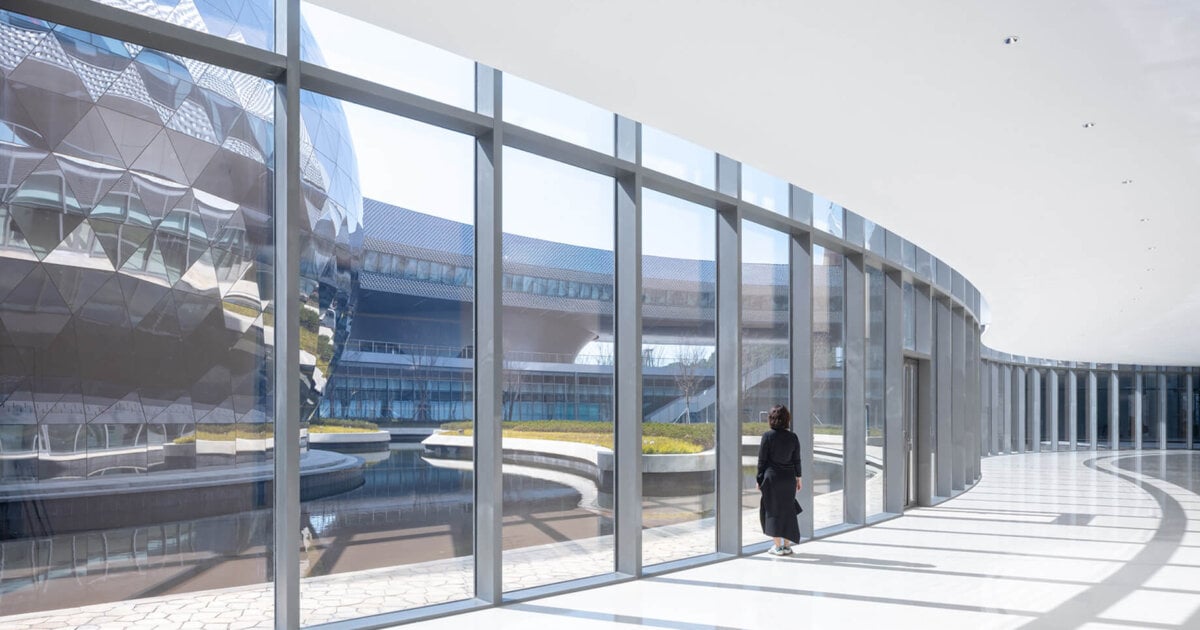
SUZHOU, China—The Suzhou Science and Technology Museum opened to the public this month, establishing a new cultural hub in the city’s High-Tech District. Designed by the global architecture firm Perkins&Will, the museum aims to integrate scientific exploration with the region’s natural landscape and cultural heritage.
Suzhou, a city renowned for its UNESCO-recognized classical gardens and historic silk production, has sought to blend its traditions with modern development. The museum’s design, described as resembling a flowing silk ribbon, reflects this ambition, emerging from the waterfront landscape at the base of Shishan, or Lion Mountain. The project is part of a larger city-led initiative to redevelop a former amusement park into a multi-venue cultural district, alongside the Suzhou Museum West and the Suzhou Lion Mountain Opera House.
Ralph Johnson, design director at Perkins&Will, emphasized the intention to create a harmonious relationship between science and nature. “Science and nature are not separate here; they are meant to be experienced together,” Johnson said. “The museum is about harmony: between past and future, nature and technology, and the city and its landscape.”
The architectural form of the museum draws inspiration from the jade ruyi, a traditional Chinese symbol of good luck and prosperity, according to Zhu Xiaoyin, general manager of Suzhou Science and Technology Museum Operation Management Co., Ltd., and deputy director of the Suzhou Science and Technology Museum. “It reflects a deep understanding of local heritage while expressing the forward-looking vision of internationally leading design,” Zhu stated.
The museum shares public spaces, pedestrian connections, and access to both the mountain and waterfront with its neighboring cultural institutions, creating a cohesive cultural experience for visitors. The design, as reported by Global Construction Review, is intended to function as a “looping ribbon,” integrating the building into its surroundings.
Leave a Reply