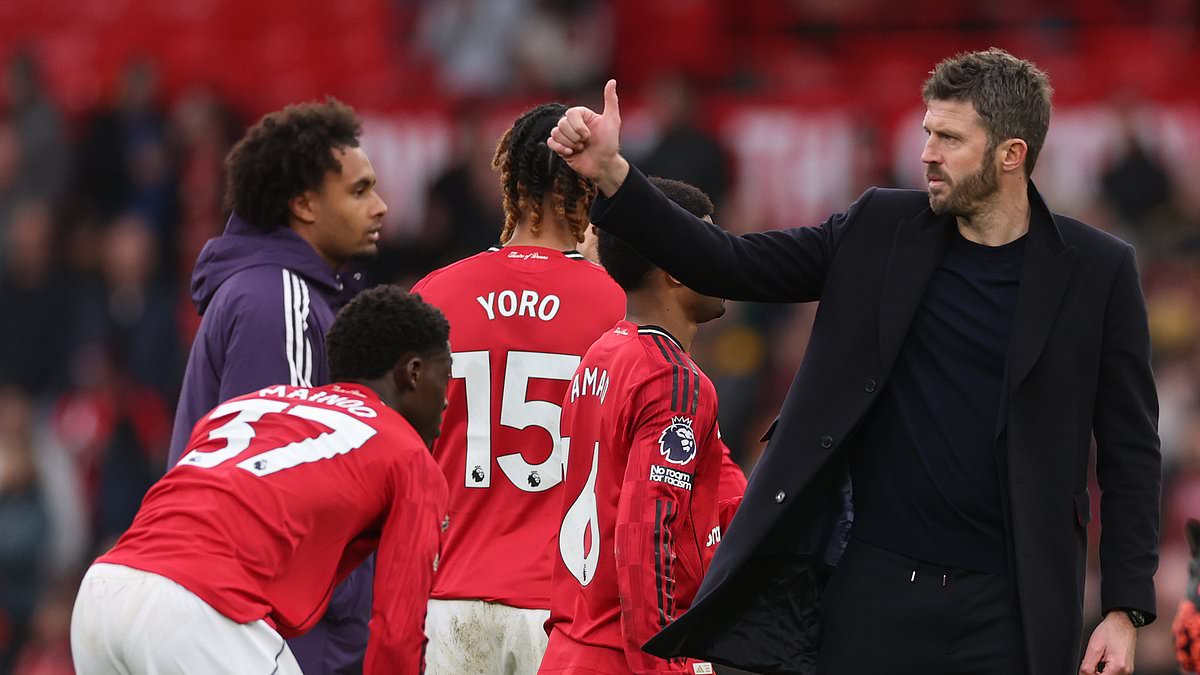
Michael Carrick’s unexpected success as Manchester United’s interim manager has presented Sir Jim Ratcliffe with a complex decision as he prepares to reshape the club’s future, according to sources close to the ownership group.
Carrick took charge following the dismissal of Erik ten Hag, inheriting a team mired in inconsistency. Prior to his appointment, United had drawn with Burnley, Leeds, Wolves, Bournemouth, Tottenham, and Nottingham Forest, and suffered a defeat to Aston Villa. Within days, Carrick orchestrated a notable 1-0 victory over Manchester City, followed by a win against Arsenal at the Emirates – Arsenal’s only league defeat at home all season.
That initial momentum has continued, with seven wins from nine games under Carrick’s leadership. Sunday’s 3-1 victory over Aston Villa, United’s closest challengers for a Champions League spot, further solidified his position. The team currently occupies sixth place, but remains in contention for a top-four finish.
The turnaround has been attributed not only to Carrick himself, but too to key additions to his backroom staff, including Steve Holland and Jonathan Woodgate. Whereas Jonny Evans and Travis Binnion were already established figures at the club, Holland and Woodgate have been credited with providing tactical and motivational input.
The question now facing Ratcliffe is whether to offer Carrick the permanent managerial role, or pursue an alternative candidate. Jose Mourinho, speaking ahead of Fenerbahce’s Europa League quarter-final against United, emphasized the importance of the club recognizing Carrick’s achievements. “It’s a myth that Ferguson’s teams won every game in swashbuckling fashion,” Mourinho said, drawing a parallel between Carrick’s pragmatic approach and the often-unacknowledged realities of Ferguson’s own successful tenure.
However, Ratcliffe has remained cautious when questioned about Carrick’s future. During practice for the Chinese Grand Prix in Shanghai on Saturday, he offered no definitive commitment, acknowledging that Carrick has only been in charge for a short period and that eight league games remain. According to sources, Ratcliffe is keen to assess Carrick’s performance over the remaining fixtures, particularly the crucial match against Bournemouth on Friday night.
The potential for overlooking Carrick after a successful interim period presents a unique challenge. Replacing a manager who has secured Champions League qualification, even if only by a narrow margin, could prove difficult to justify to the fanbase. As one source noted, “It’s common for a new manager to be brought in when the old one has failed. The bar is set low. Assuming Carrick will finish the season with a pretty impressive record, how much unnecessary pressure would that load onto his successor?”
Several high-profile managers have been linked with the United job, but their availability remains uncertain. Thomas Tuchel has extended his contract with England, and Carlo Ancelotti may do the same with Brazil. Luis Enrique’s position at Paris Saint-Germain appears secure, while the stock of Thomas Frank has diminished following his recent dismissal at Tottenham and Roberto De Zerbi after leaving Marseille. Oliver Glasner’s reputation may also be affected by his departure from Crystal Palace at the end of the season.
The club has a history of pursuing various managerial profiles since Ferguson’s retirement in 2013 – from the Premier League pedigree of David Moyes to the experience of Louis van Gaal and Jose Mourinho, the local connection of Ole Gunnar Solskjaer, and the progressive approaches of Erik ten Hag and Ruben Amorim. The lack of sustained success under each of these managers has led to a sense of urgency, but also a growing recognition that a hasty decision could be counterproductive.
Ratcliffe’s decision will likely hinge on United’s ability to secure a Champions League berth. A fifth-place finish, or even failure to qualify for Europe, would undoubtedly complicate matters. However, the club’s recent history suggests that a willingness to give Carrick a sustained opportunity may be the most prudent course of action.
Leave a Reply