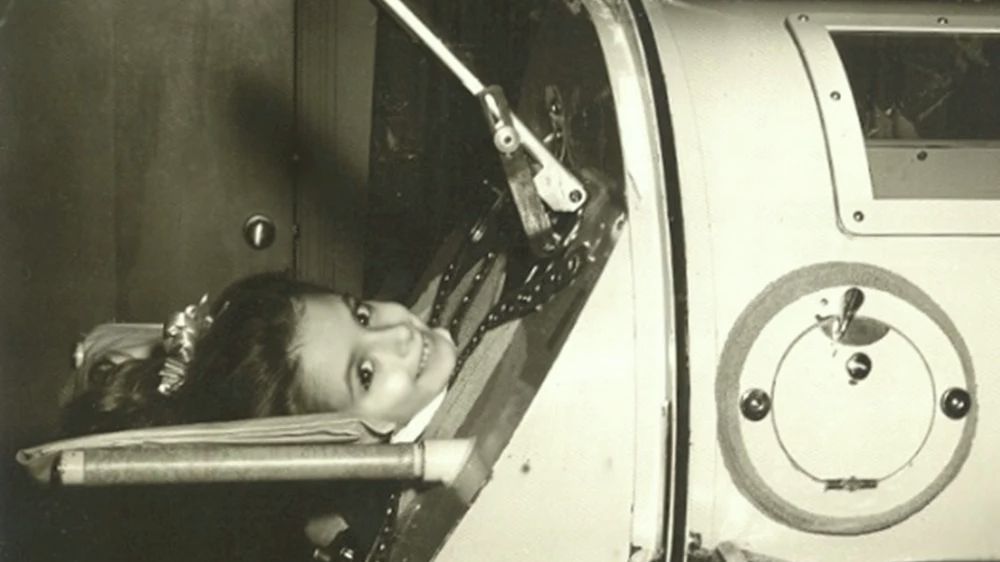
Shawnee, Oklahoma – Martha Lillard, 77, is the last person in the world still living with the aid of an iron lung, a negative pressure ventilator once common during the polio epidemics of the mid-20th century. Following the death of Paul Alexander in March 2024, Lillard now stands alone as the final patient reliant on this increasingly archaic technology.
Lillard contracted polio in June 1953, just nine days after celebrating her fifth birthday at Joyland, an amusement park in Oklahoma. What began as a sore throat and neck pain quickly escalated, leaving her unable to lift her head. Doctors diagnosed her with polio, a disease that, at the time, carried the terrifying potential for paralysis. The illness attacked the nerves controlling her breathing muscles, ultimately leading doctors to place her in an iron lung.
The iron lung, a large, cylindrical metal machine, works by creating negative pressure around the patient’s chest, effectively mimicking the action of the diaphragm and intercostal muscles. The patient lies inside the machine, with only their head exposed, and the device rhythmically expands and contracts the chest cavity to facilitate breathing. Weighing over 360 kilograms, the iron lung became a lifeline for countless children afflicted with polio in the 1940s and 50s.
While many children recovered enough to breathe on their own, Lillard remained dependent on the machine. She has used it nightly for over seven decades, and relies on it whenever illness strikes. “That’s what keeps me healthy. That’s what heals me. That’s what allows me to breathe the next day,” she told NBC News in 2012.
Lillard’s life has been profoundly shaped by her condition. Unable to attend school or participate in typical childhood activities, her world became largely confined to her home. She has never married or had children, and spends much of her time alone with her beagles, connecting with the outside world through phone calls and a computer. Despite the isolation, she has described the relief of being placed in the iron lung as a child, stating, “it was a huge relief” when she was first connected to the machine.
Despite advancements in respiratory technology, Lillard has found that modern ventilators cause her inflammation and exacerbate her asthma, a condition stemming from her polio infection. She has resisted switching to newer devices, even acknowledging that some have suggested she would be better off without the iron lung. “Some people told me I should just die rather than offer up the iron lung. That I’m not modern enough or progressive enough, but that’s not it at all,” she said in an interview with NBC News.
Maintaining the aging iron lung presents ongoing challenges. Parts are no longer manufactured, and repairs are increasingly difficult. Lillard experienced a frightening ordeal during an Oklahoma ice storm when a power outage disabled her backup generator, leaving her trapped inside the machine without heat. She attempted to call 911 but was unable to connect. “It’s like being buried alive almost, you know – it’s so scary,” she recalled.
Lillard continues to spend each night within the confines of the iron lung, a testament to a bygone era of medical innovation and a stark reminder of the enduring impact of polio.
Leave a Reply