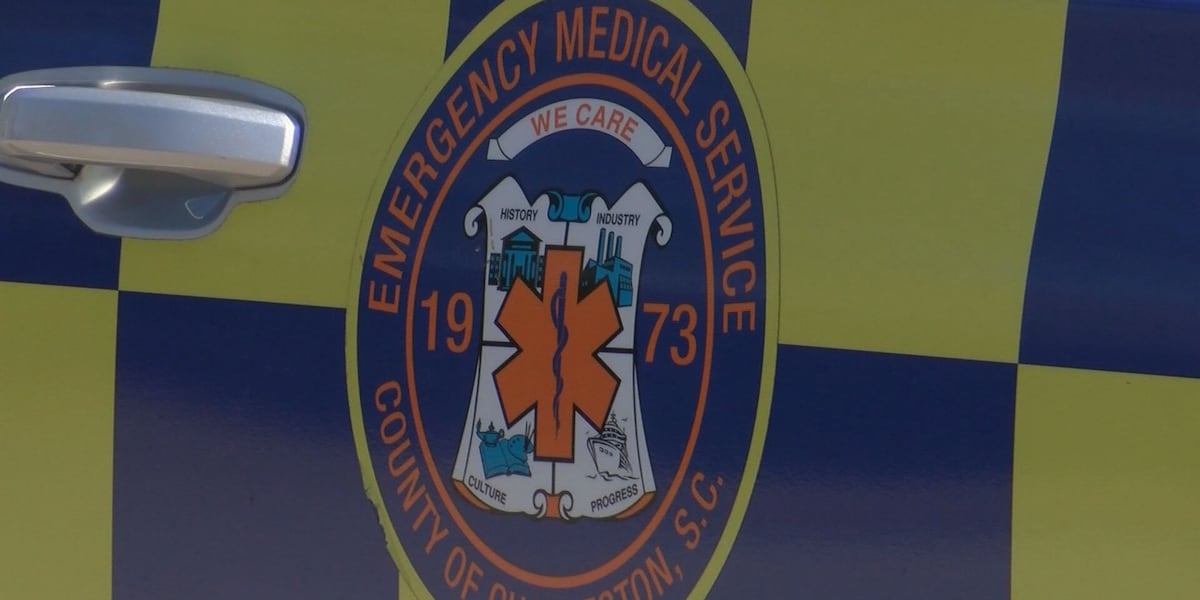
Charleston County Emergency Medical Services (EMS) will begin deploying a new mass casualty bus next week, bolstering the county’s ability to respond to large-scale emergencies. The initiative is funded by a grant exceeding $10,000 from the South Carolina Department of Public Health, according to officials.
The grant specifically targets improvements in mass casualty incident response, a priority for Charleston County EMS as the region experiences continued growth and hosts numerous large public events. “This year our focus is mass casualty incidents,” stated Christopher Way, chief of Charleston County EMS.
The new bus is designed to significantly increase patient capacity during emergencies, capable of transporting 12 lying-down patients and 12 seated patients simultaneously. In addition to the vehicle itself, the grant has funded essential management tools, including command boards, personnel identification vests, and protective tarps. The department is also refining triage protocols to ensure rapid and effective care for those affected by mass casualty events.
The deployment comes as Charleston County anticipates an influx of visitors for events such as the annual bridge run and airshow, as well as other large gatherings. “We owe it to our citizens and visitors to be prepared for such a thing,” Way said.
Christopher Way assumed the role of Charleston County EMS chief on August 22, 2025, following a career spanning over three decades in emergency services. He previously served as Fire Chief for Kootenai County Fire and Rescue in Idaho, and for seven years as Chief Officer for the Kootenai County EMS System. He began his career as a junior volunteer firefighter in Kansas at the age of 16.
Jenny Honeycutt, public safety chair, emphasized the importance of public safety as the driving force behind these improvements. “Public safety is our first and foremost priority,” she said. Officials note that the annual grant from the South Carolina Department of Public Health allows the EMS department to continually evolve and adapt to increasing call volumes and emerging hazards.
“Our operation is ever evolving, ever growing, call volume goes up, we face new what we call target hazards,” Way explained. The department is currently monitoring potential scenarios where the mass casualty bus may be needed, preparing for a range of possibilities.
Leave a Reply