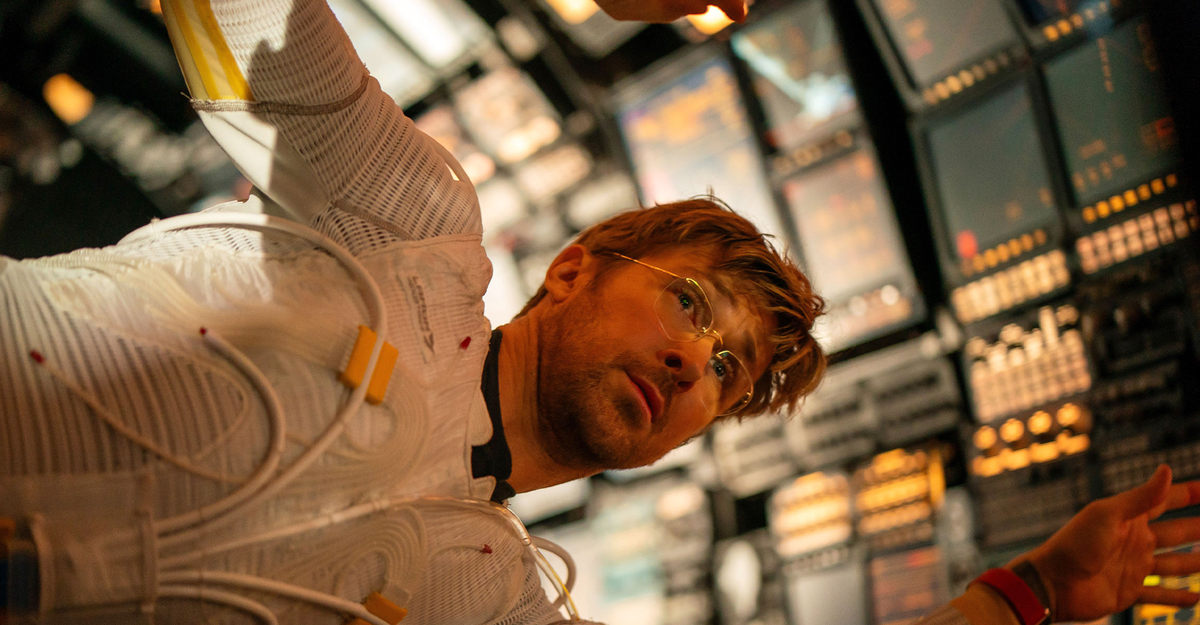
LOS ANGELES – Ryan Gosling stars in “Project Hail Mary,” a novel science fiction film directed by Phil Lord and Christopher Miller, arriving in theaters as Hollywood cautiously navigates a post-pandemic landscape. The film, based on Andy Weir’s 2021 novel, centers on a lone astronaut tasked with saving Earth from a catastrophic solar event caused by an alien microbe.
The film’s release comes at a moment when large-scale filmmaking is still regaining its footing after widespread shutdowns during the COVID-19 pandemic. As reported by The Hans India, Gosling received an early draft of the script in early 2020, a period of immense uncertainty for the film industry. Weir, known for his bestselling novel “The Martian,” approached Gosling with the ambitious request to not only star in the adaptation but also to serve as a producer.
“Project Hail Mary” distinguishes itself within the science fiction genre by portraying a unified global response to an existential threat. The premise, as described in The Atlantic, involves nations pooling resources and intelligence to combat the impending death of the sun. This optimistic vision, mirroring the spirit of Weir’s novel written during the height of the coronavirus pandemic, offers a counterpoint to narratives of international discord.
Lord and Miller, previously recognized for their work on “21 Jump Street” and the “Spider-Verse” series, have crafted a film that balances high-stakes drama with moments of levity. The 156-minute film aims for broad appeal, offering a “grown-up story that kids can also enjoy,” according to The Atlantic. However, the film’s tonal complexity – blending serious themes with “goofy physical antics and nerdy in-jokes” – presents a challenge, though one the directors are well-suited to navigate.
Gosling’s portrayal of Dr. Ryland Grace, a molecular biologist and middle-school teacher thrust into the role of humanity’s potential savior, deliberately avoids the tropes of the traditional action hero. As noted in multiple sources, Grace is characterized by his lack of stoicism and his self-awareness, making him a relatable audience surrogate as he pieces together his mission and confronts the enormity of his task.
Central to the narrative is Grace’s unlikely partnership with Rocky, an alien being composed of rock. This relationship, involving communication and collaboration between two species facing a shared crisis, forms the emotional core of the film. The animatronic puppet used to bring Rocky to life has drawn comparisons to other beloved cinematic creatures like Baby Yoda and Baby Groot, raising questions about the role of marketable “cute” characters in large-budget science fiction.
The film draws parallels to Weir’s previous adaptation, Ridley Scott’s “The Martian,” which featured Matt Damon as an astronaut stranded on Mars. Whereas both stories emphasize scientific problem-solving, “Project Hail Mary” adopts a lighter tone, prioritizing optimism and collaboration over the more intense survivalist focus of “The Martian.”
As of March 21, 2026, the long-term impact of “Project Hail Mary” on the science fiction genre and the box office remains to be seen. The film’s success may hinge on its ability to resonate with audiences seeking a hopeful message amidst ongoing global challenges.
Leave a Reply