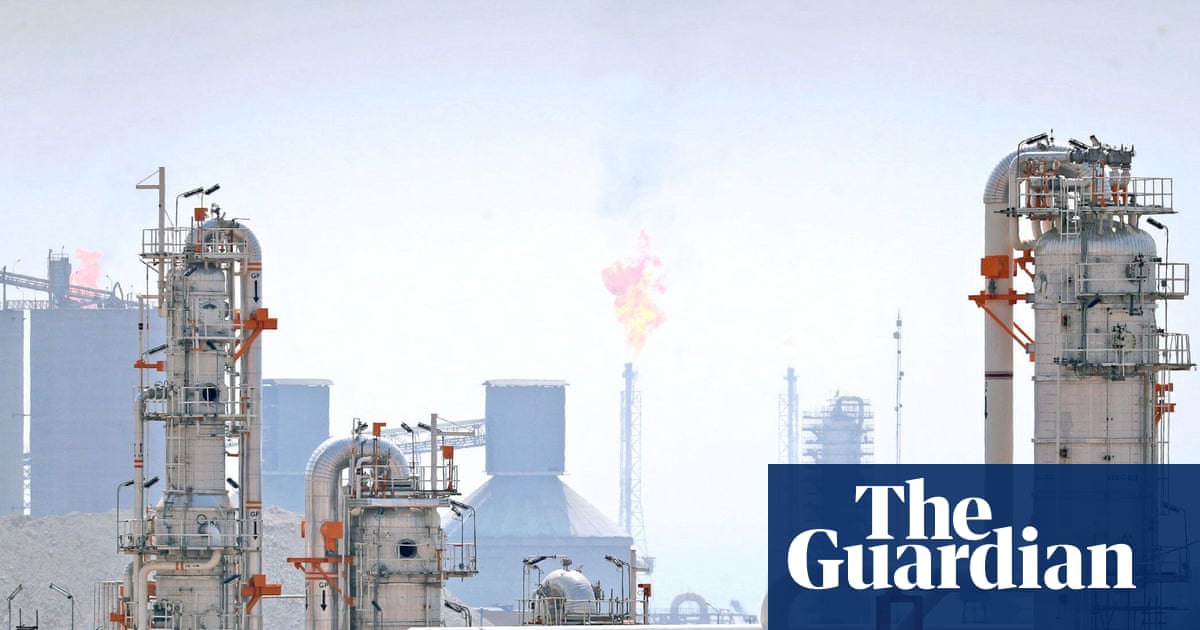
Iran warned it would show “zero restraint” if its energy infrastructure were attacked again, following an Israeli strike on its South Pars gasfield and retaliatory Iranian strikes on Qatar’s Ras Laffan gas complex and other Gulf neighbors. The escalating conflict sent shockwaves through global markets, triggering sharp increases in gas prices and a sell-off in stock exchanges.
Iranian Foreign Minister Abbas Araghchi stated on X, “Our response to Israel’s attack on our infrastructure employed FRACTION of our power. The ONLY reason for restraint was respect for requested de-escalation. ZERO restraint if our infrastructures are struck again.” The warning came as Qatar revealed that nearly a fifth of its liquefied natural gas (LNG) export capacity had been knocked out by the Iranian strikes, with repairs expected to take three to five years, impacting supplies to European countries.
QatarEnergy’s chief executive, Saad Sherida al-Kaabi, expressed shock at the attack, stating, “I never in my wildest dreams would have thought that Qatar would be… in such an attack, especially from a brotherly Muslim country in the month of Ramadan.” He estimated the damage to its facilities at approximately $20 billion, sidelining 12.8 million tons per year of gas.
Israel confirmed that the Bazan Group refinery in Haifa had also been hit and damaged in a claimed Iranian strike. The attacks prompted a sharp response from global leaders and financial markets. Brent crude, the global oil benchmark, surged as much as 10% to $119 a barrel before settling at $110, a one-day gain of 3.3%. European and UK gas prices also jumped, climbing as much as 24% before easing back. Stock markets across Asia and Europe experienced significant declines, with the UK’s FTSE 100 closing down 2.35%.
Amid warnings of an unprecedented energy crisis, former U.S. President Donald Trump claimed the Israeli attack on the South Pars gasfield had not been coordinated with Washington. He subsequently recast his denial, stating he had advised Israeli Prime Minister Benjamin Netanyahu against attacking Iranian gasfields, but struggled to explain how Israel had acted unilaterally despite being a partner in a wartime military alliance. Netanyahu stated Israel acted alone and that Trump had asked them to hold off on future attacks.
Trump, while meeting with Japan’s Prime Minister Sanae Takaichi, said, “I told [Netanyahu] don’t do that and he won’t do that.” He added, “We get along great. It’s coordinated, but on occasion he’ll do something.”
The United Kingdom, France, Germany, Italy, the Netherlands, and Japan issued a joint statement expressing “deep concern” about the escalating conflict and calling on Iran to “cease immediately its threats, laying of mines, drone and missile attacks and other attempts to block the strait to commercial shipping.” They also indicated readiness to contribute to efforts to ensure safe passage through the Strait of Hormuz, warning of the global impact of Iran’s actions, particularly on vulnerable populations.
The European Union stated its willingness to contribute to diplomatic efforts to de-escalate tensions and find a lasting solution, while also remaining vigilant for potential migratory flows from the Middle East into Europe, preparing to mobilize resources to prevent a repeat of the 2015 migration crisis.
Iranian strikes also targeted Saudi Arabia’s Red Sea refinery and two Kuwaiti oil refineries. Saudi Arabia’s foreign minister indicated that his country had not ruled out military action in response to the attacks, though analysts noted a general reluctance among Gulf states to become entangled in the conflict.
French President Emmanuel Macron, speaking in Brussels, urged all parties to “return to reason,” highlighting the potential long-term impact of attacks on infrastructure on global markets and calling for a moratorium on such strikes, as well as those targeting civilians.
U.S. Officials offered conflicting messages, with the Treasury Secretary suggesting the U.S. Might lift sanctions on some Iranian oil cargoes already at sea, while the Defense Secretary, Pete Hegseth, issued a bellicose warning to Iran. Hegseth accused the press of attempting to portray the U.S. As heading towards a “forever war,” asserting that U.S. Objectives remained unchanged and praising President Trump’s actions.
Hegseth stated, “Our objectives, given directly from our America-first president, remain exactly what they were on day one.” He continued, “Thank you for the courage to stop this terror state from holding the world hostage with missiles while building or attempting to build a nuclear bomb.”
Unnamed Israeli officials, quoted by Reuters, suggested the gasfield attack was not likely to be repeated. Possible next steps in the campaign against Iran include securing safe passage for oil tankers through the Strait of Hormuz, potentially requiring the deployment of U.S. Troops to Iran’s shoreline.
Leave a Reply