Sound Transit’s board on Monday grappled with stark choices for delivering its ambitious Sound Transit 3 (ST3) plan, considering significant cuts and delays to multiple light rail extensions across the Puget Sound region. The agency presented three primary approaches to address a multi-billion dollar budget shortfall, all of which involve substantial truncations of previously promised lines.
The options, discussed at the March 18 board retreat, range from completely cancelling certain extensions to significantly shortening others, impacting projects in West Seattle, Ballard, Everett, Tacoma and the Eastside. The largest cost overruns have consistently been attributed to the Ballard Link Extension, making it a focal point for potential savings.
The first approach prioritizes completing the West Seattle Link Extension to Alaska Junction, while cancelling the Tacoma Community College T Line and the South Kirkland-Issaquah Line. Ballard Link would be truncated to Seattle Center, foregoing a station in South Lake Union. The Sounder South DuPont Extension would similarly be eliminated. King County Executive Dow Constantine reportedly favored this option, citing its “shovel-readiness,” though other board members expressed reservations about sacrificing extensions in their districts.
A second approach reverses the priorities, focusing on building the South Kirkland-Issaquah Line while cancelling the West Seattle Link Extension entirely. Ballard Link would be built to Smith Cove, a shorter extension than originally planned, but still falling short of reaching the core of the Ballard neighborhood. The DuPont Extension would also be cancelled under this scenario. Dan Strauss, the Seattle City Councilmember representing Ballard, urged Sound Transit to find a way to extend the line further into Ballard, even if it meant exploring alternative funding or construction methods.
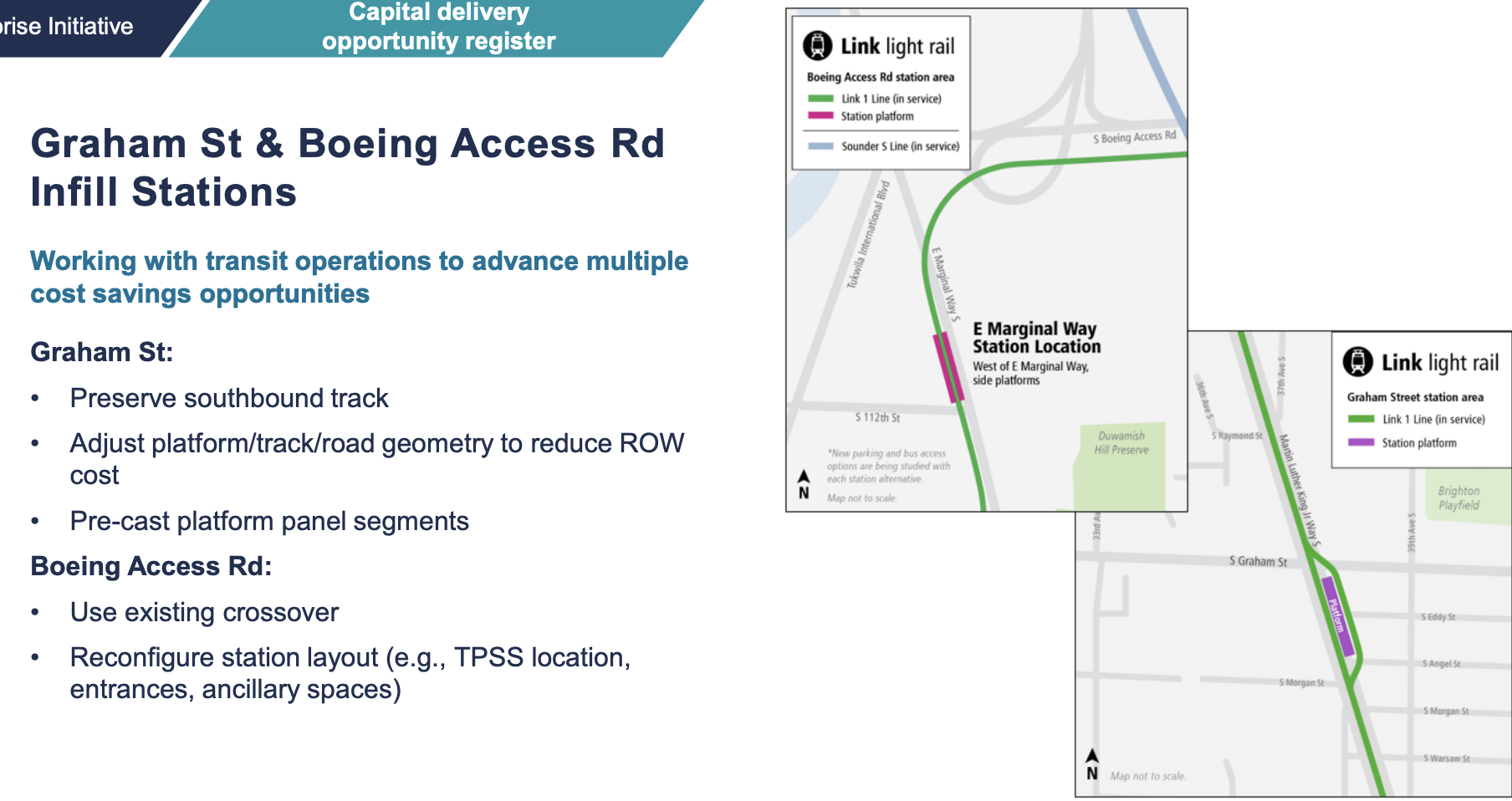
The third approach attempts a compromise, scaling back nearly all projects. West Seattle Link would be truncated to Delridge, Ballard Link to Seattle Center, and the Tacoma Dome Link Extension to Fife. The Everett Extension would end at SW Everett Industrial Center, near Boeing’s facilities. While the T Line and South Kirkland-Issaquah extensions would proceed, their initial phases would be limited. The Sounder South DuPont Extension would be built under this plan, alongside infill stations along existing lines.
Sound Transit officials acknowledged that the term “deferral” used to describe many of the potential cuts is misleading. Without a firm timeline or dedicated funding, a multi-decade delay effectively amounts to a cancellation for many residents. The agency has not yet released a detailed breakdown of the cost savings associated with each truncation, a lack of transparency that has drawn criticism from advocates and local officials.
According to agency estimates, the current cost of the Ballard Link Extension is between $20.1 billion and $22.6 billion. Truncating the line at Smith Cove could save between $1.9 billion and $2.6 billion by avoiding the construction of a new bridge to Ballard and an Interbay station. Further truncating the line to Seattle Center could save an additional $3.0 billion to $3.8 billion. Removing the planned South Lake Union station would save an estimated $1.5 to $1.7 billion.
Despite the potential savings, the bulk of the project’s cost – approximately $12 to $14 billion – would still be allocated to constructing a new tunnel from Stadium to Denny Way. Similarly, truncating the West Seattle Link Extension offers varying levels of savings. Building to Alaska Junction as originally planned would cost $7 billion. Dropping the Avalon station could save $400 million, while reconfiguring the Alaska Junction station could save between $2 billion and $4.9 billion. Truncating the line at Delridge could save up to $4 billion, but would still result in a single new station costing $3 to $4 billion.
Other potential savings include $425 to $475 million from foregoing the Boeing Access Road station and $175 to $200 million from the Graham station. The Tacoma Community College extension is estimated to cost $1.4 to $1.6 billion, while the Sounder South DuPont extension is estimated at $450 million. The full Everett Link extension is projected to cost $6.8 to $7.7 billion, with a truncation at SW Everett Industrial Center potentially saving $1.8 to $2.5 billion. The Tacoma Dome Link Extension, costing $5.4 to $6.1 billion, could save $1 to $2 billion by truncating at Fife. The South Kirkland and Issaquah Extension, estimated at $5.6 to $6.3 billion, represents a significant potential saving if cancelled.
Sound Transit’s historical approach has prioritized political expediency over cost-effectiveness, opting for more expensive construction methods and alignments. For example, the agency chose elevated stations over at-grade options for the Everett Link, added tunnel segments in both Ballard and West Seattle, and opted for deep tunnels and stations for the second downtown tunnel. The agency’s reluctance to consider at-grade or elevated alignments, coupled with a lack of transparency regarding project costs, has further complicated the situation.
The agency’s next step is to continue environmental review and public engagement, but the fundamental question remains: which projects will be sacrificed to address the budget shortfall. The Sound Transit board is scheduled to continue discussions on these options in the coming months, with a final decision expected later this year.
Leave a Reply