
Music Therapy Blossoms in Singapore, Filling a Growing Need
New Program Trains Local Practitioners to Meet Rising Demand
Singapore is witnessing a surge in interest surrounding the therapeutic power of music, driven by a growing awareness of its benefits for physical, emotional, and cognitive well-being. A new postgraduate program is now training a local workforce to meet this demand.
A Dream Realized
For Bakti Khair, a 33-year-old music educator, becoming a music therapist was a long-held ambition. He envisioned a unique stage: the hospital ward. “Music therapy connects music, psychology and healthcare,”
he explained. He pursued his passion despite a lack of formal training opportunities within Singapore for many years.
Mr. Khair considered studying abroad, but in 2024, Lasalle College of the Arts launched Singapore’s first postgraduate program in music therapy, providing a local pathway for aspiring professionals. He was on an eight-week clinical placement at St Luke’s Hospital when he spoke to reporters in March.
Expanding Access to Care
The program’s creation responds to increasing demand and a growing body of evidence supporting music therapy’s effectiveness. According to the American Music Therapy Association, music therapy services were utilized by over 70,000 individuals in the United States in 2023, demonstrating a significant rise in recognition and application. American Music Therapy Association
Dr. Indra Selvarajah, leader of Lasalle’s program, noted the course was oversubscribed. “We have 19 students, a good mix of local and international students from countries such as Malaysia, Japan and the Philippines,”
she said, highlighting regional interest in the field. The two-year program involved three years of planning and consultation with international experts.
Eta Lauw, a program lecturer, emphasized the importance of local training. “There are a lot of very specific cultural elements to it,”
she stated, explaining that therapists trained abroad often need to adapt their approaches to the Singaporean context. The program allows students to learn and practice within a culturally relevant framework.
A Growing Community
The Association for Music Therapy in Singapore (AMTS), established in 2007, has seen steady growth. It now boasts 44 professional members, up from just 11 at its founding, and a total of 74 members including associates and students. Most members work in hospitals, hospices, and nursing homes, with a small number in private practice.
Tan Xueli, president of AMTS, noted the increasing recognition of creative arts therapies in palliative care. “When that shift happens, the creative arts often play a very big part. You bring in creative art therapies at that point, because you are looking at quality of life, comfort care, pain management and more of the psychosocial aspects,”
she explained.
The Power of Resonance
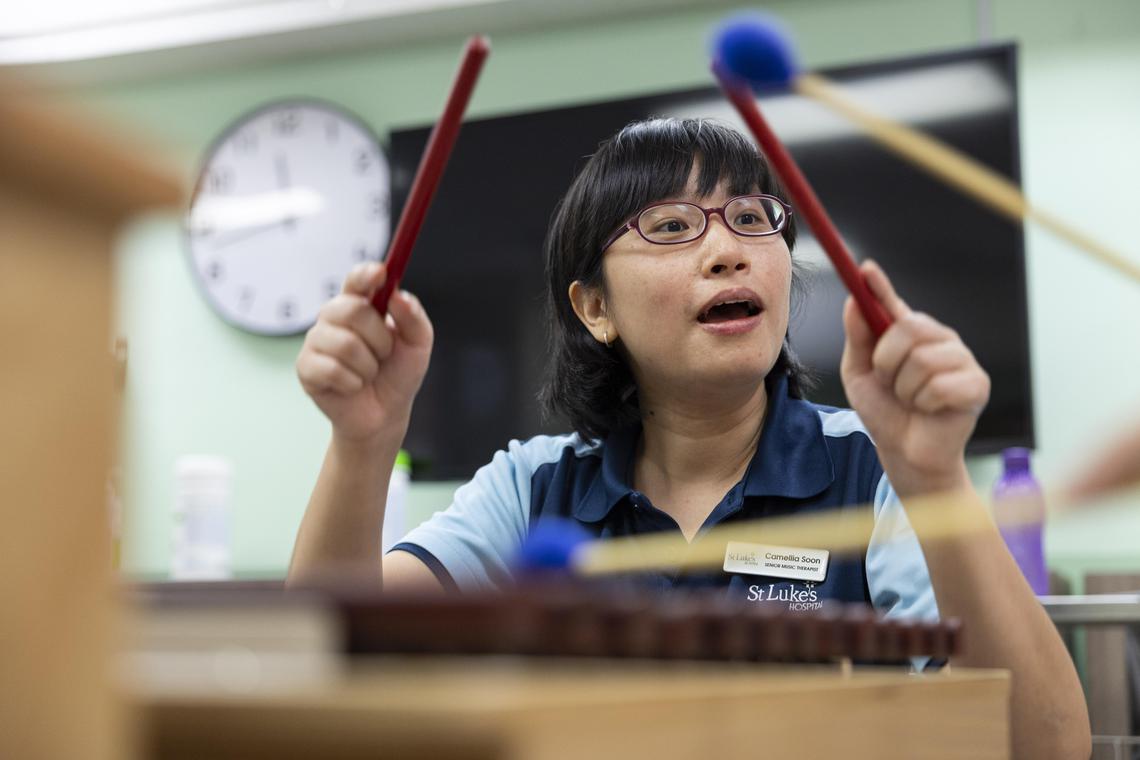
Camellia Soon, a senior music therapist at St Luke’s Hospital, specializes in palliative and dementia care. She described how music can help patients navigate grief and loss, even unlocking memories that were previously inaccessible. She recalled a terminally ill patient who, after months of therapy, shared two significant songs – Fated
by Andy Lau and First Of May
by the Bee Gees – and recounted vivid life memories before passing away the following week.
Dr. Chan Kin Ming of Chan KM Geriatric and Medical Clinic highlighted the physical and cognitive benefits of music therapy for dementia patients, including improved memory, attention, and reduced agitation.

Looking Ahead
The Singaporean music therapy community is actively advocating for formal recognition as part of the allied health sector, which would expand access to care and funding opportunities. Dr. Tan emphasized the importance of safe practice, noting that “Music is powerful. We can use music for all these benefits, but flip the coin – because music is powerful, you can also do harm.”
Mr. Bakti hopes to explore how Singapore’s multiculturalism can be integrated into music therapy practice, utilizing the collaborative aspects of Malay music or the unique scales of Chinese music to enhance therapeutic outcomes.
