
Satellite Images Reveal Damage in Iran Amidst Escalating Conflict
Military Sites and Infrastructure Targeted in Recent Strikes
Satellite images are providing crucial insights into the ongoing tensions between Iran and Israel, with strikes damaging key military installations and an airport. These visual assessments offer a rare glimpse into the situation on the ground, especially in areas where access is restricted.
Missile Base and Airport Hit
Recent satellite imagery shows significant damage at a missile base near Kermanshah, Iran. Multiple buildings appear destroyed, with debris scattered around the site. Moreover, images reveal damage to what appear to be tunnel entrances, likely used for storing critical equipment and shielding it from attacks. The images come from the company Maxar.
The international airport in Tabriz has also been targeted, with a large, blackened area visible on the main runway, potentially disabling its use. Stu Ray, a senior analyst at McKenzie Intelligence Services, stated that this damage “is a classic way of preventing the runway being used, probably achieved by using a precision munition.” Taxiways have also sustained damage.
“Kermanshah is one of Iran’s oldest ballistic missile bases,”
—Fabian Hinz, Military Analyst at the International Institute for Strategic Studies (IISS)
According to a report from the Stockholm International Peace Research Institute (SIPRI), military expenditure by countries in the Middle East reached $204 billion in 2023, a 9% increase from the previous year, highlighting the increasing tensions in the region (SIPRI 2024).
Refinery and Fuel Depot Damage
In Tehran, satellite images from the EU’s Sentinel-2 satellites have shown large plumes of smoke emanating from two energy facilities. The Shahr Rey refinery, one of the largest in the country, has been affected, along with the Shahran oil and gas depot, a crucial distribution hub for fuel in the capital’s north. Iranian officials have downplayed the significance of the strikes.
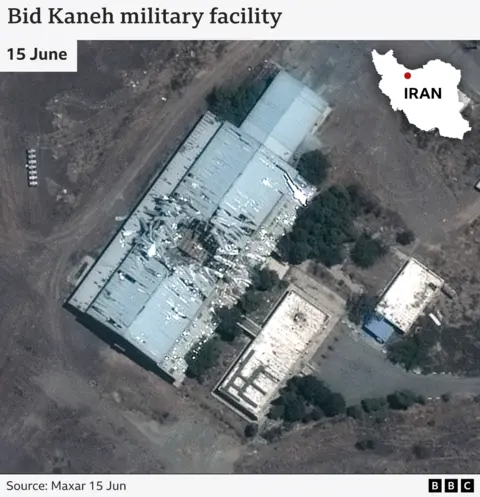
Jeremy Binnie, Middle East specialist at Janes defence intelligence, suggests that targeting these buildings could indicate “an attempt to reduce the number of personnel able to man missile launchers for retaliatory attacks”. Damage has also been observed at a facility about 30km (19 miles) west of Tehran.
As more satellite imagery becomes available, further analysis will reveal the extent of the damage and the strategic implications of these strikes. The situation remains tense, and the full impact of these events is still unfolding.
