
Protest Tactic: 3.5% Rule Sparks Debate
Activists rally around a threshold for change, but experts caution against a simplistic approach.
A widely cited metric suggests that if 3.5% of a population actively protests, a regime will likely fail. This figure has gained traction in left-leaning circles as a target for anti-Donald Trump movements, yet its application and interpretation come with significant nuance.
The Science Behind the Threshold
The “3.5% rule” originates from the extensive research of political scientists Erica Chenoweth and Maria Stephan. Their analysis of over a century of civil resistance campaigns revealed that non-violent movements were not only more successful but often larger and more representative than violent ones.
Specifically, their findings indicated that sustained active participation by 3.5% of a population marked a tipping point for success in challenging regimes. This level of engagement, Chenoweth explained, signals widespread dissent, often drawing in defectors from within the existing power structure.
Key historical examples supporting this include the 2005 Cedar Revolution in Lebanon, the 1986 People Power movement in the Philippines, and the 2003 Rose Revolution in Georgia.
Debates and Limitations of the Metric
Chenoweth herself, in a widely viewed 2013 TED Talk, acknowledged the appeal of the 3.5% figure, noting it “looks like a magic number” and is a “surprisingly modest number.” However, she stressed that it is a generalization and not a guaranteed formula for success.
“I understand why people are drawn to it. It looks like a magic number, looks like a number that provides people with certainty and guarantee. And it’s also a surprisingly modest number.”
—Erica Chenoweth, Harvard Professor
The rule applies to “maximalist” campaigns aimed at overthrowing governments or achieving independence. It refers to peak participation, not cumulative numbers, and its achievement doesn’t guarantee victory. Conversely, falling short of the 3.5% mark doesn’t inherently signal failure, as many non-violent movements have succeeded with lower participation.
Contemporary Relevance and Caveats
Experts like Hardy Merriman, former president of the International Center on Nonviolent Conflict, emphasize that while numbers matter, the “quality” of participation is also crucial. Factors such as training, commitment to non-violence, clear messaging, and diverse composition play vital roles.
Applying the rule to the current US political landscape presents challenges. Unlike consolidated authoritarian regimes, the US is considered a “backsliding democracy.” This ambiguity can disorient organizers, as institutions falter but faith in elections remains strong, making activism feel like “organizing on quicksand,” according to Merriman.
Some movements, like the UK’s Extinction Rebellion, have adopted the 3.5% figure for organizing. However, Chenoweth noted that historical movements didn’t aim for a specific number but rather hit a tipping point, with 3.5% identified in hindsight. She also observed that authoritarian governments have adapted, learning to manage or suppress protests, even those with significant numbers, leading to “uncharted territory.”
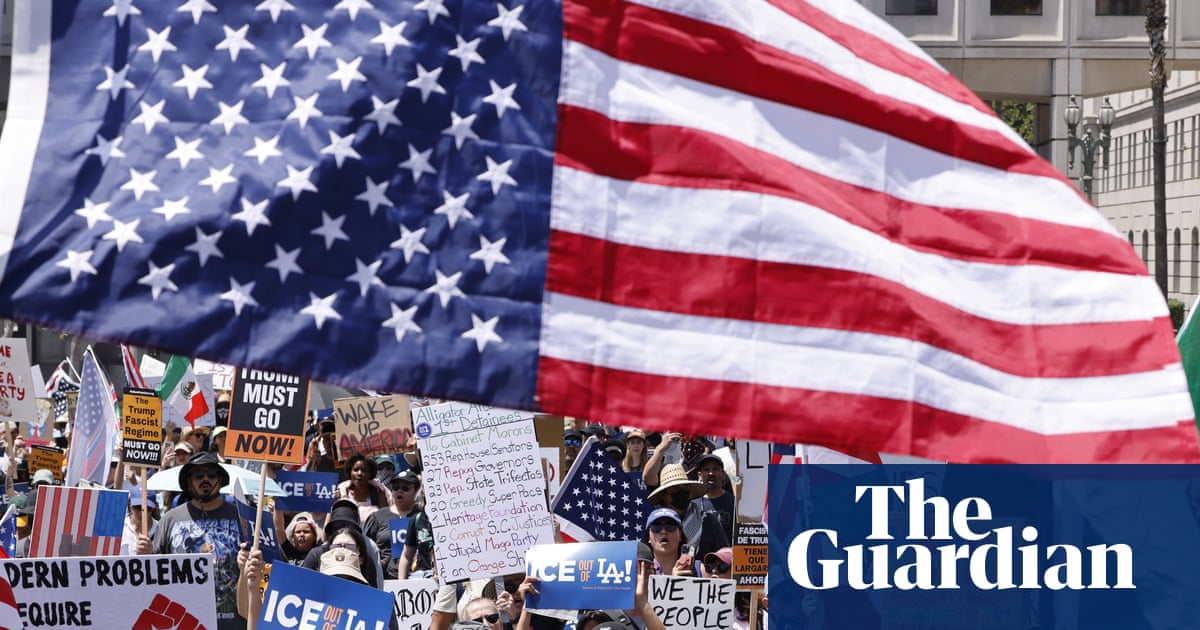
Recent large-scale protests in the US have demonstrated significant public engagement. Research from Chenoweth’s Crowd Counting Consortium at Harvard indicates protest activity has exceeded levels seen during Trump’s first term, suggesting a growing movement, even without a strict adherence to the 3.5% target.
A recent analysis by the Center for American Progress indicated that public opinion remains divided on key issues, with polls showing shifting attitudes on economic policies that could influence broader civic engagement (Center for American Progress, 2024).
