
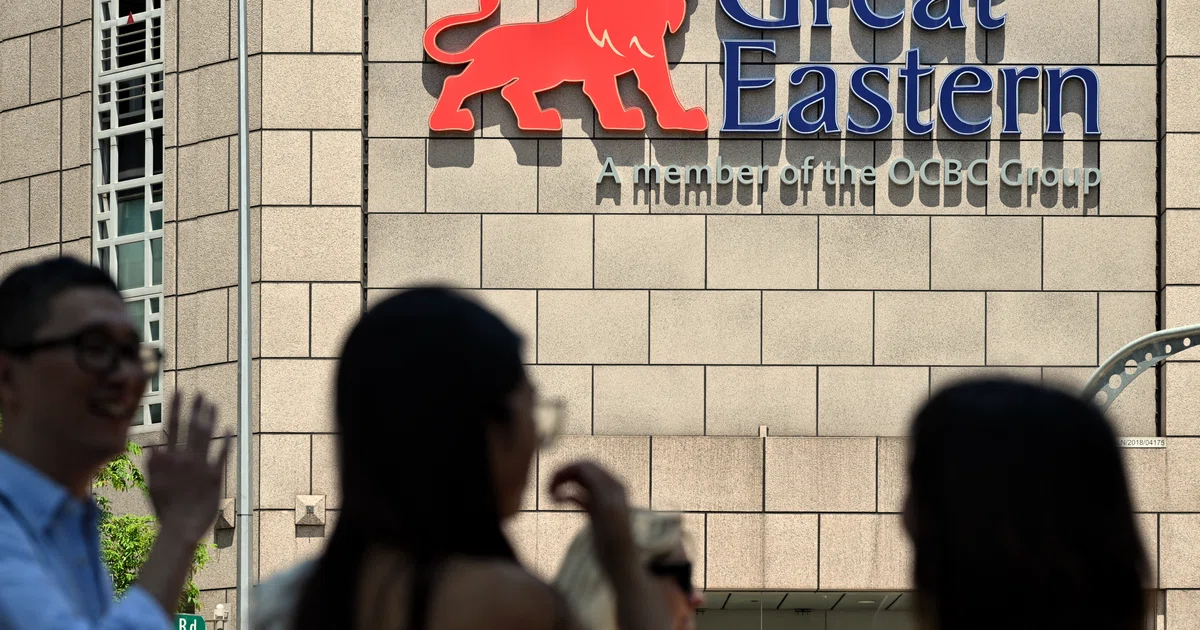
OCBC’s Revised Bid for Great Eastern Faces Shareholder Scrutiny
Insurer’s Minority Investors Weigh New Offer Amid Delisting Concerns
Singapore’s OCBC Bank is attempting to fully acquire Great Eastern Holdings, offering S$30.15 per share for the remaining 6.28 percent stake. The move comes after a previous, lower bid failed to gain full acceptance, sparking debate among shareholders about fairness and future prospects.
A Higher, Yet Contested, Offer
OCBC presented the conditional exit offer on Friday, asserting it was made at the request of Great Eastern. An independent financial advisor (IFA) has deemed the offer “fair and reasonable”
, though some investors remain unconvinced.
The current proposal represents an increase from OCBC’s initial bid of S$25.60 per share, made over a year ago. Previously, OCBC had declared that initial offer as final, despite the IFA labeling it “not fair but reasonable”
.
One current Great Eastern shareholder, who wished to remain anonymous, acknowledged the improvement but stated, “The latest exit offer is still not good enough, sitting at the lower range of the S$30 to S$36 possibility, but it is at least higher than before.”
The shareholder intends to accept the offer, despite reservations.
A Complex Exit Strategy
The structure of the deal has drawn criticism, with concerns raised about potential dilution of minority shareholder value. If the exit offer is rejected, a second resolution would involve a bonus issue to maintain a minimum public float, allowing Great Eastern to continue trading. However, OCBC would receive new, unlisted Class C shares, effectively reducing its listed stake and the overall free float.
As reported by the Singapore Exchange, delistings have increased in recent years, with 28 companies voluntarily delisting in 2023, up from 18 in 2022. (The Straits Times, 2024)
The anonymous shareholder described the situation as a “Hobson’s choice,”
arguing that OCBC has designed a mechanism to pressure minority shareholders into accepting a less-than-ideal offer. They fear this could set a negative precedent for future privatization deals.
Concerns Over Fairness to Retail Investors
Ong Chin Woo, a former remisier who has advocated for Great Eastern’s minority shareholders, expressed concern that the actions “disproportionately disadvantaged”
vulnerable investors, particularly those unable to hold suspended shares. He is currently reviewing the IFA report before making a decision.
Shareholders who accepted the original offer have mixed reactions. Heng, a long-term shareholder, expressed apathy, stating, “We’re talking about a year’s difference. Even if I hung on, I don’t know what price it would have been.”
She has already reallocated her funds.
However, Jessica, a shareholder of over a decade, voiced disappointment, saying, “I feel like I lost confidence in the stock market.”
She accepted the initial offer out of fear of being stuck with shares in a delisted company and a belief in OCBC’s commitment to not raising the price.
The Lee and Wong Families Hold the Key
The outcome of the offer may hinge on the decisions of key shareholders, including the Lee family, behind OCBC, and the Wong siblings, who collectively hold approximately 3 percent of Great Eastern’s shares – nearly half of the remaining 6.28 percent OCBC seeks to acquire.
