
Uranus‘s Unusual Radiation Belts Explained: 39-Year-Old Voyager 2 Anomaly Finally Solved
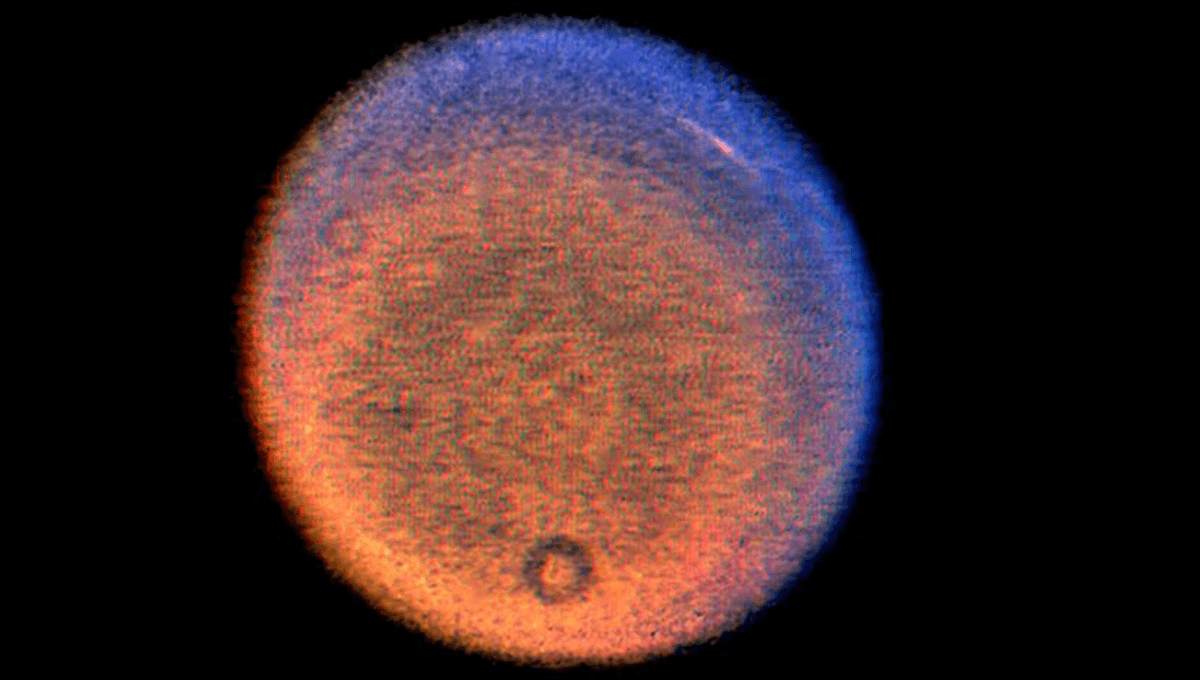
Washington D.C. – A decades-old mystery surrounding unusual observations made by NASA’s Voyager 2 spacecraft during its 1986 flyby of Uranus may finally be solved, thanks to new research comparing the Uranian system to Earth‘s magnetosphere. Scientists believe “chorus waves” – a type of plasma wave common in near-Earth space - are responsible for the unexpectedly high energy levels of electrons detected around the ice giant.
For 39 years, researchers have puzzled over Voyager 2’s detection of an intense electron belt around Uranus. Initial theories suggested these electrons would be scattered and lost to the planet’s atmosphere. However,recent findings demonstrate that under specific conditions,chorus waves can accelerate electrons,boosting their energy levels.
“Comparing the data seen by Voyager 2 to observations of the Earth’s magnetosphere, the team puts the unusual Uranus electron belt observations down to chorus waves,” researchers stated.
NASA explains that chorus waves ”play a key role in various physical processes including the formation of the Earth’s Van Allen radiation belts, the pulsating aurora, and the deposition of particle energy into Earth’s upper atmosphere.”
The team found striking similarities between the 1986 Voyager 2 data and a important electron event observed at Earth in 2019, both occurring during periods of low solar activity when Corotating interaction Regions (CIRs) – areas where fast and slow solar winds collide – are more frequent.Both events were also characterized by strong chorus emissions coinciding with high fluxes of relativistic electrons.
“The Voyager 2 Uranus flyby and the 7.7 MeV electron event at Earth in 2019 share several similarities,” the team explains in their study. “Both occurred during solar minimum when CIRs are more prevalent in the heliosphere and during times when CIRs are seen to be repeatedly passing over the planetary magnetospheres.”
The brief encounter with Uranus by Voyager 2 has left scientists eager for a return visit. “Sadly, Voyager only caught a brief glimpse of Uranus, and since then, no mission has returned to it,” researchers noted.
Dr. sarah Vines, a co-author of the study, highlighted the significance of the Earth-based event. “In 2019, Earth experienced one of these events, which caused an immense amount of radiation belt electron acceleration. If a similar mechanism interacted with the Uranian system, it would explain why Voyager 2 saw all this unexpected additional energy.”
Researchers are advocating for a dedicated mission to Uranus to gather more extensive data. “This is just one more reason to send a mission targeting Uranus,” said Allen. “The findings have some significant implications for similar systems, such as Neptune’s.” They suggest repeated measurements are needed to understand the planet’s magnetosphere under more typical conditions.
The study, published in Geophysical Research Letters, offers a compelling clarification for a long-standing scientific puzzle and underscores the importance of further exploration of the ice giants.
https://agupubs.onlinelibrary.wiley.com/doi/10.1029/2025GL119311
