
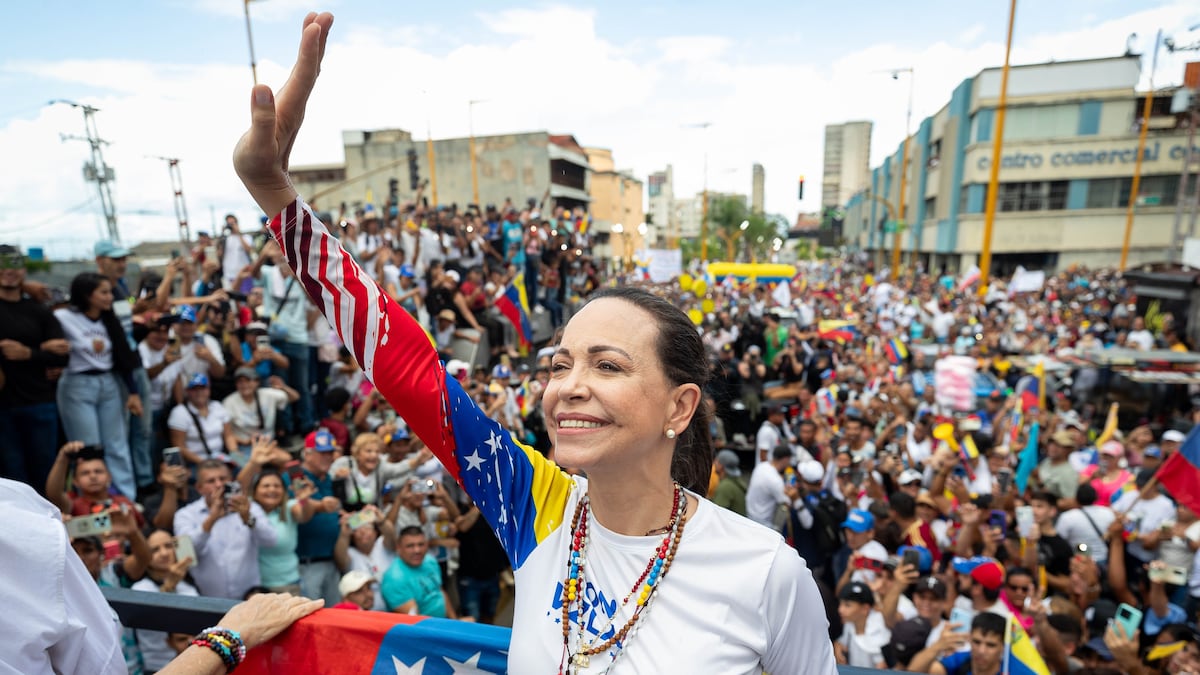
CARACAS – Venezuela‘s opposition finds itself increasingly fractured and uncertain as pressure mounts on the Maduro government, navigating between hopes for a swift transition and fears of prolonged instability. While former U.S. President Donald Trump has intensified pressure on Venezuela – tightening sanctions while simultaneously hinting at potential dialog – the opposition remains deeply divided on both strategy and desired outcome, creating a precarious situation where recognizing a path forward, even if one emerges, may prove challenging.
Washington has long viewed Chavismo as a geopolitical adversary, but the recent escalation of pressure – encompassing rhetorical attacks, military posturing, and unpredictable policy shifts – has fueled speculation ranging from the imminent collapse of the Maduro regime after 26 years in power to the risk of violent conflict.
Political scientist Carmen Beatriz Fernández cautions against viewing Venezuela solely through the lens of past crises, stating, “Between the exemplary transition and the violent outbreak there are an infinite number of grays.” She emphasizes venezuela’s history of democratic life, arguing that this “memory, hurt, but existing,” remains relevant. Fernández leans toward a “fairly orderly” transition, rejecting predictions of an immediate apocalypse.
Though, writer and academic Diego Bautista Urbaneja offers a contrasting outlook, suggesting the U.S. isn’t aiming for a decisive outcome but rather a “prolonged siege” designed to maintain high expectations and frustrate those anticipating a quick resolution. This strategy, he warns, perpetuates the “labyrinth” in which the opposition currently operates, forcing them to adapt to perpetually elevated expectations.
A more cautious voice comes from Timoteo Zambrano, an opposition figure who remained within Venezuela’s institutional framework while others abandoned it, earning him the label “scorpion” from fellow opponents. Zambrano characterizes the current situation not as a prelude to transition, but as “a process of aggression,” echoing Chavismo’s narrative. He accuses Trump of seeking to control Venezuela’s oil and gas resources, framing the situation as “psychological warfare” and asserting a national unity against perceived “invasion.” Zambrano expresses faith that “dialogue and diplomacy” will ultimately prevail.
This divergence in viewpoints highlights the core challenge facing the Venezuelan opposition: a lack of consensus on both the desired end state and the means to achieve it. Each faction clings to its own “script,” viewing the others with suspicion. The central question has shifted from if Maduro will fall, to whether the opposition can unite and recognize a shared path forward should such an opportunity arise.
