
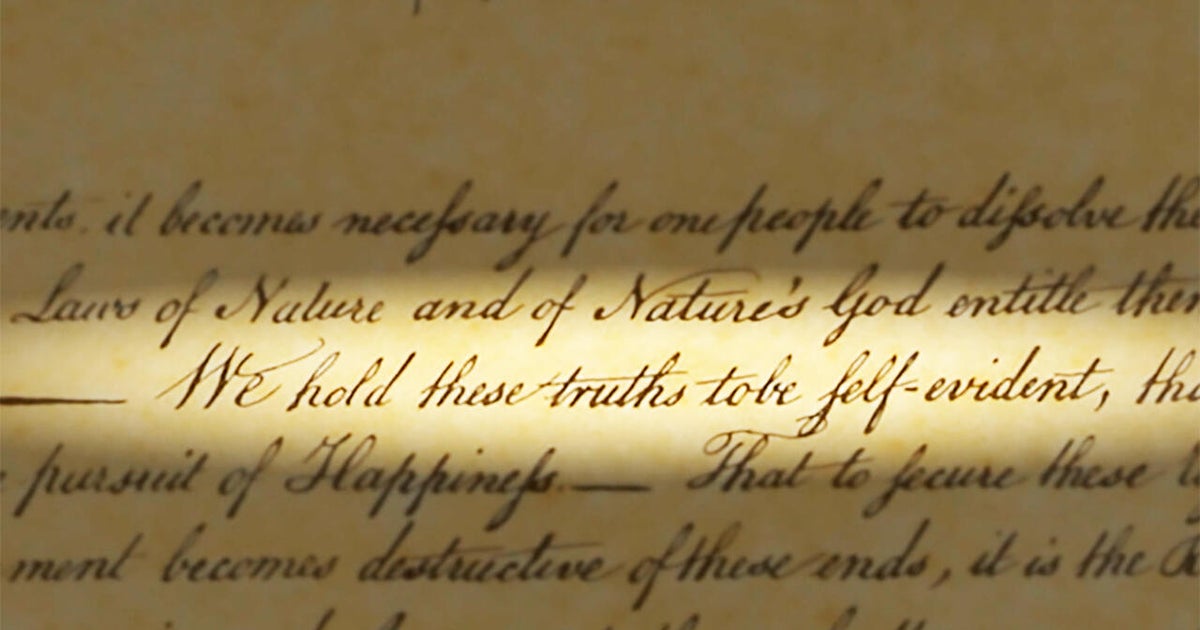
Declaration of Independence‘s Core Tenet Remains Vital in Divided Times,historian argues
PHILADELPHIA - As the United States celebrates its 248th birthday,historian Walter Isaacson spotlights the enduring power of the declaration of Independence’s most famous sentence – a statement of rights rooted in both reason and a recognition of a higher power - and warns that rediscovering the art of balancing competing ideals is crucial for national unity today.
The Declaration’s assertion that all men are “endowed by their Creator” with certain unalienable rights has long been a subject of debate, especially regarding the role of religion in defining those rights. Isaacson points out the subtle but critically important evolution of the phrasing, noting that Thomas Jefferson initially wrote that people “derive” their rights, while John Adams advocated for the concept of being “endowed” with them by a Creator. This shift reveals the Founders’ deliberate attempt to reconcile Enlightenment ideals of reason with a belief in divine providence,a balance Isaacson argues is increasingly relevant in a polarized America.
The ancient context underscores the precariousness of the nation’s founding. Facing potential execution should the revolution fail, the signatories understood the necessity of unity.John Hancock’s bold signature and the exchange between Hancock and Benjamin Franklin – “We must all hang together, or most assuredly we’ll all hang separately” – epitomize the high stakes and the imperative for cohesion.Isaacson contends that this same spirit of unity, forged through acknowledging fundamental principles, is essential to navigate contemporary divisions.
“Our life-or-death challenge as a nation is this: When there are so many forces dedicated to dividing us,how can we best hang together?” Isaacson writes,emphasizing the Declaration’s core message as a potential unifying force. Reflecting on these foundational principles, he suggests, offers a path toward bridging divides and reaffirming a shared national identity.
