
The PETM, Methane, and a Warning for Today’s Arctic
The Paleocene-Eocene Thermal Maximum (PETM), a period of extreme global warming and ocean acidification 56 million years ago, continues to fascinate scientists due to its striking parallels with modern climate change. Despite this, the precise mechanisms driving the carbon cycle during the PETM have remained elusive – until now. A new study reveals that sulfate levels acted as a critical “chemical switch,” dictating how methane was processed in the ancient oceans, and offers a concerning parallel to the rapidly changing arctic today.
Researchers have discovered that a severe shortage of sulfate during the PETM fundamentally altered methane oxidation pathways. Normally, in modern oceans, approximately 90% of methane is broken down by microorganisms in oxygen-deprived sediments, a process likened to a “slow-burning power plant.” This process utilizes sulfate as “fuel,” efficiently converting methane into energy and simultaneously producing alkaline substances that help counteract ocean acidification.
However, during the PETM, sulfate concentrations in the Arctic Ocean were less than one-third of current levels. This scarcity effectively starved the “slow-burning” bacteria, forcing methane to be oxidized by a different type of oxygen-loving bacteria. This option pathway involves “rapid combustion,” directly consuming oxygen and releasing significant amounts of carbon dioxide – analogous to high-temperature exhaust.
The team successfully “reconstructed” this ancient process by analyzing unique molecular tracers – specifically, the compound hop-17(21)-ene and its carbon isotope composition. these “identity cards” left by ancient bacteria revealed a notable surge in the activity of these “fast-burning” methane-decomposing bacteria during the late stages of the PETM.
Further analysis of CO2 concentrations,reconstructed from marine phytoplankton molecular tracers,showed a dramatic shift in the Arctic Ocean’s role during the PETM recovery phase. Initially a “sponge” absorbing carbon dioxide, the Arctic transformed into a “chimney” emitting it, with CO2 levels 200-700 ppm higher than the global average. This change was directly linked to the freshening of seawater and the reduced sulfate levels, forcing methane decomposition through the CO2-releasing “fast-burning” method.
The study highlights the profound influence of geological activities – including crustal movement, rock formation, continental weathering, and volcanic eruptions – on ocean sulfate content, and consequently, on methane decomposition. Low sulfate levels were a characteristic feature of ancient oceans throughout the Mesozoic and early Cenozoic Eras, suggesting a long-term impact on global carbon cycling and climate. as lead researcher Zhang Yige explains, Earth’s system processes effectively control the ocean’s “fuel supply system,” influencing how methane energy is utilized and the overall climate.
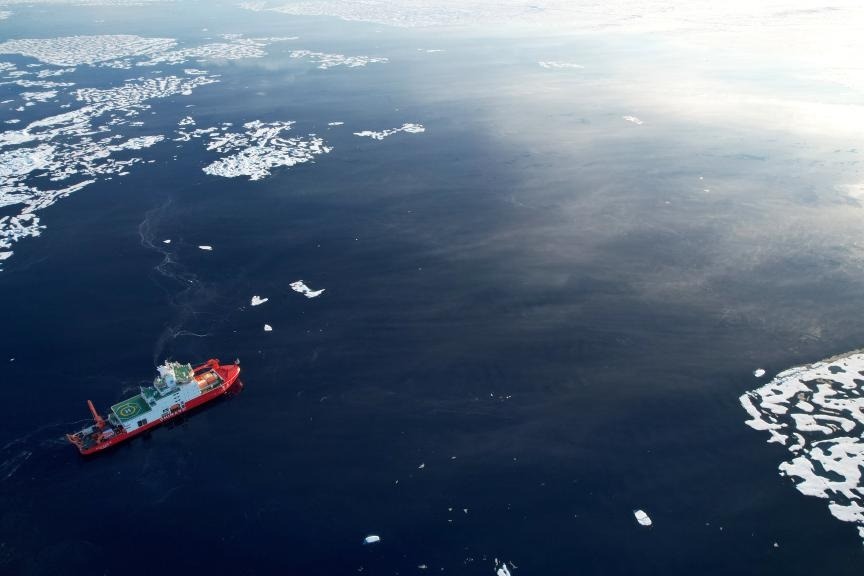
Crucially,the research suggests that similar methane oxidation mechanisms could be reactivated as the modern Arctic Ocean warms and freshens. The study serves as a stark warning: as Arctic seawater becomes less salty and its chemical environment shifts, the scenario from 56 million years ago – a shift from efficient methane utilization to rapid CO2 release – may be poised to repeat itself.This underscores the urgent need for close monitoring of changes in this vulnerable region.
