
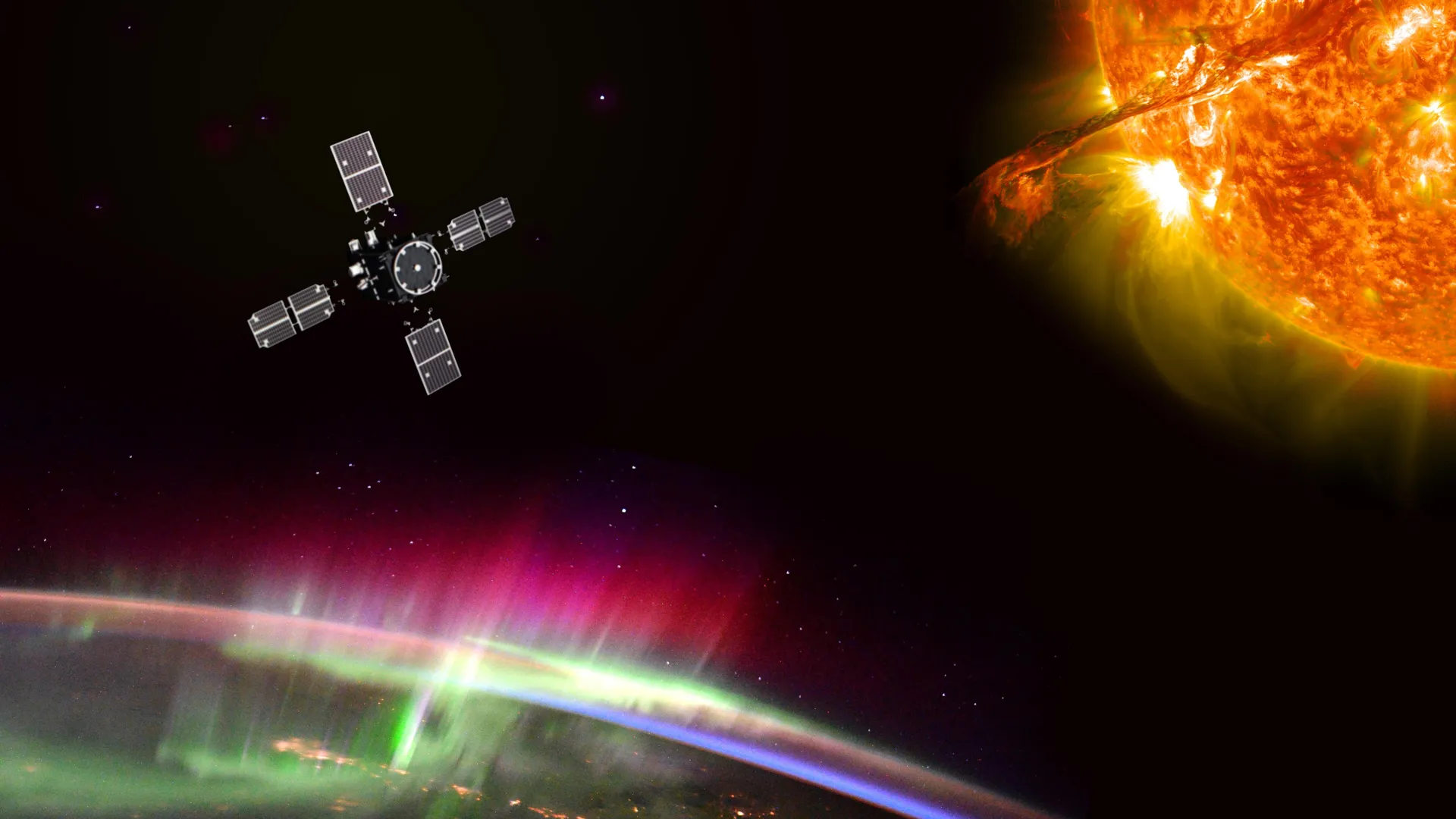
Summary of the Arase Satellite’s Observations of the May 2024 Superstorm:
This text details how the JAXA’s Arase satellite provided unprecedented data on the impact of the May 2024 superstorm on Earth’s plasmasphere. Here’s a breakdown of the key findings:
* Record Plasmasphere Compression: The superstorm, caused by major solar eruptions, compressed the plasmasphere - a region protecting Earth from harmful charged particles – from 44,000 km to a record low of 9,600 km above the surface, shrinking it to roughly one-fifth its usual size.
* Prolonged Recovery: The plasmasphere’s recovery was unusually slow, taking over four days – the longest recovery time recorded by Arase since 2017.
* Role of Negative Storms: The slow recovery was linked to a “negative storm,” a phenomenon where intense heating alters atmospheric chemistry, reducing oxygen ions needed to create hydrogen particles that replenish the plasmasphere. This connection between negative storms and delayed recovery was a new discovery.
* Impact on Ionosphere: Monitoring both the plasmasphere (via Arase) and the ionosphere (via ground-based GPS) revealed how the storm dramatically contracted the plasmasphere and why recovery was delayed due to a drop in charged particles in the ionosphere.
* Expanded Auroral Displays: The storm’s strong compression of Earth’s magnetic field allowed auroras to be seen in unusually low latitudes,including Japan,Mexico,and southern Europe.
* Technological Impacts: The storm caused disruptions to satellites (some experienced electrical problems or stopped transmitting), GPS accuracy, and radio communications.
* Meaning: The findings provide crucial insights into how the plasmasphere behaves during severe space weather events, which is vital for improving space weather forecasting and protecting technology in space and on Earth.
In essence, the arase satellite’s observations during this superstorm have considerably advanced our understanding of the complex interactions between the Sun, earth’s magnetic field, the plasmasphere, and the ionosphere, and the resulting impacts on our technology.
